
Long Sleeve Button Down: The Ultimate Fit Guide
You reach for a long sleeve button-down because the day calls for order, but the second layer matters just as much as the shirt itself. A cashmere sweater can make the outfit feel polished, yet the wrong collar, cuff, or fabric weight will bunch under a jacket and throw off the whole line. The fix is mechanical, not mysterious, and it starts with how the shirt was built.
Table of Contents
- The Modern Long Sleeve Button-Down Evolution
- Understanding Fabric Options and Care
- Mastering Fit and Measurements
- The Market for Quality Button-Downs
- Layering with Cashmere and Outerwear
- Building Your Essential Collection
The Modern Long Sleeve Button-Down Evolution
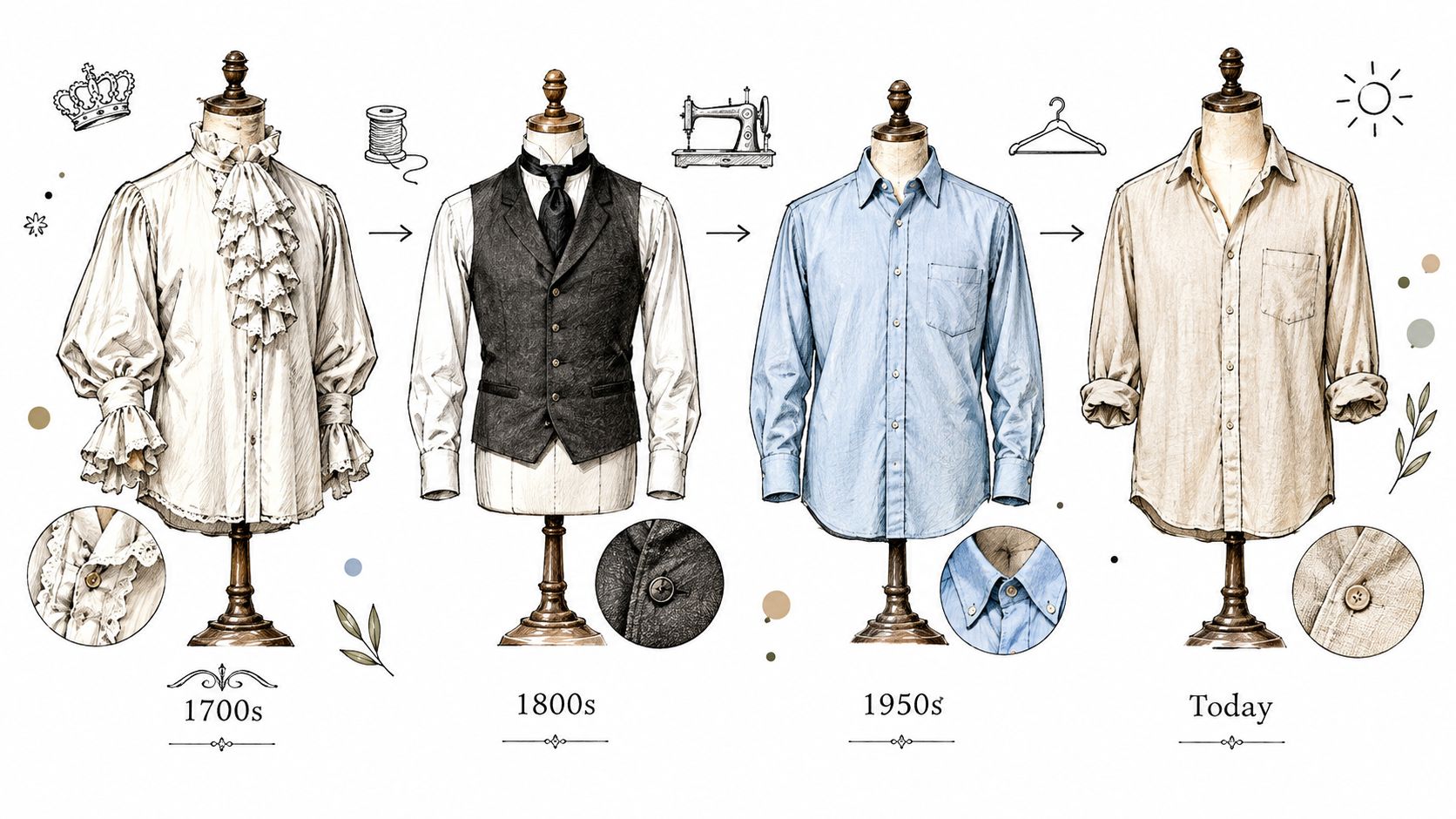
The modern long sleeve button-down didn't appear as a sudden invention. It came out of a long shift in menswear, from simple standing collars in the mid-1400s to more structured styles by the 17th century, then to detachable collars in 1827 when Hannah Montague created a removable collar in Troy, New York, and finally to the button-down collar Brooks Brothers popularized in 1896 for polo players. That history matters because each change solved a real problem, mainly comfort, laundering, and collar control. The collar's evolution is outlined clearly in this historical overview.
A client usually feels this history in the fitting room, not in the archive. A rigid collar looks sharp alone, but under a cashmere crewneck it can press into the knit, and under a jacket it can either collapse or peak awkwardly depending on how the points are built. The shift from detachable, starched collars to attached collars in the 1920s and 1930s made shirts easier to wear every day, and by the 1960s detachable collars had largely disappeared as laundering became simpler. That's why the modern shirt feels more adaptable, it was engineered for real life, not just ceremony.
Practical rule: if a collar feels bulky before you've even layered it, it'll feel worse after you add cashmere.
For anyone comparing custom options, how to choose a custom shirt maker is a useful reference because collar shape, cuff balance, and fabric hand all influence whether a shirt layers cleanly or fights your sweater.
Understanding Fabric Options and Care
Fabric choice decides whether a long sleeve button-down feels crisp under knitwear or fussy under pressure. A fine plain weave or twill weave cotton, or a cotton blend, gives the shirt enough structure to sit cleanly under a jacket while still flexing with movement. The tighter the weave and the better the collar interlining, the better the shirt holds shape at the neck and under a cashmere layer.
That structure only works if you treat the shirt well after purchase. For cotton garments, heat and agitation are the main shrinkage triggers, and preshrunk cotton typically shrinks about 2% to 5% while untreated cotton can shrink up to around 20%. The care lesson is simple, cold water and low heat or air drying reduce dimensional change, and a denser weave with a pre-shrunk finish usually keeps the shirt more stable over time. Those care basics are especially important when a shirt has to keep fitting smoothly beneath a sweater, then later under a blazer.
If you already own knitwear that needs careful treatment, the washing guidance at Cashmere Boutique's care instructions is a smart companion read. Cashmere and cotton behave differently, but the practical idea is the same, fibers respond to heat, friction, and drying method.
What to look for before you buy
- Dense enough weave: lighter fabrics can feel easier at first, but they're more prone to fit drift after laundering.
- Stable collar construction: the collar should stand on its own before the sweater ever goes over it.
- Low-fuss care label: if the shirt requires extra handling, make sure you're willing to keep up with it.
A shirt that keeps its shape saves you from constant adjustment, and that matters more when it sits under layers all day.
Mastering Fit and Measurements
Fit is where most layering problems begin. A shirt can look fine on the hanger and still fail once you add cashmere because the collar is too tight, the sleeve is too long, or the body pulls at the waist. The target is clean movement without looseness, which means the shirt needs to follow your frame without trapping it.
Measure the shirt the way you'll wear it
Start with the collar, because that's the first point of friction under knitwear and jackets. You want about two fingers of space at the neck, which keeps the collar from choking the base layer while still looking neat. The body should skim the chest and waist without button strain, and the cuff should land at the wrist bone with roughly half an inch of cuff showing under a suit sleeve. Those fit rules come from shirt construction standards, and they're the fastest way to spot whether the shirt will layer cleanly. This dress shirt fit guide gives a concise technical frame.
If you need a simple shopping benchmark, find your classic shirt fit before you compare silhouettes. That's especially helpful when one brand calls a fit “slim” and another uses “custom-cut” for almost the same cut.
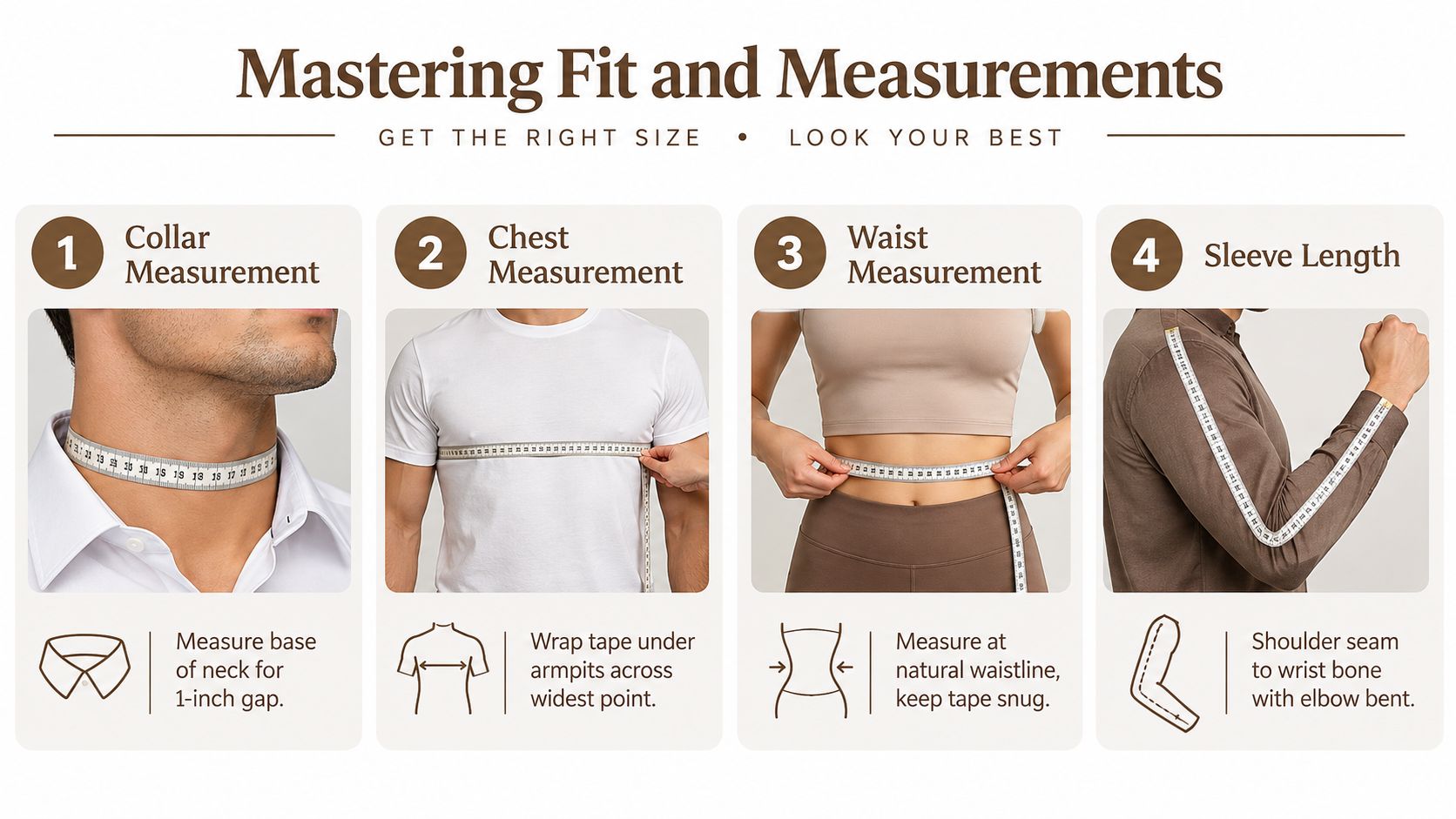
The shirt should solve the layering problem before you buy it. If you have to tug the collar, roll the sleeve twice, or size up just to make it wearable, the pattern is working against you.
For a size reference while comparing options, Cashmere Boutique's size guide can help you translate measurements into a better match, especially if you're choosing something meant to sit comfortably under knitwear.
Compare the common fit choices
A slim fit usually works best when you want a clean line under a sweater, because excess fabric is the enemy of a smooth chest and waist. A classic fit gives more room through the body, which can be useful if your jacket is structured or if you dislike the shirt catching at the midsection. The right choice depends less on fashion labels and more on how the shirt behaves when buttoned, tucked, and layered.
If the collar sits correctly, the body follows naturally. If either one is off, the shirt will announce it every time you move.
The Market for Quality Button-Downs
A long sleeve button-down is a staple partly because the category is large enough to support many grades of quality. One market report projects the global dress shirts market at USD 18,539.8 million in 2026 and USD 26,981.85 million by 2035, with a 4.3% CAGR over that period, while another estimate places the U.S. men's dress shirt market at roughly $12 billion to $16 billion in 2026, with annual unit volume between 300 million and 400 million shirts. Those figures show why you can find everything from basic work shirts to carefully built tailoring pieces in the same category. The market overview is laid out in this industry report.
For a buyer, the lesson is practical. A bigger market usually means more variation in fabric weight, collar shape, cuff design, and finishing, so the shirt that looks similar online may behave very differently in daily wear. If you're shopping for layering, use three checkpoints: the collar should sit cleanly under knitwear, the body should lie flat without tension, and the cuff should not disappear under your jacket sleeve.
Quality is also easier to recognize when you think in use cases. A shirt for office wear needs structure. A shirt for weekend layering needs a softer hand but still enough body to keep the collar from folding into the sweater neckline. A shirt for formal dressing needs the cleanest build of all, because it has to stay composed under a tie, jacket, and outerwear.
Layering with Cashmere and Outerwear
The best layers work because the fabric weights speak to each other. Cashmere is soft and insulating, but that softness can expose weaknesses in a shirt's collar, shoulder line, or cuff if the shirt is too bulky or too flimsy. A button-down with a structured collar sits more predictably under a V-neck cashmere sweater, while a looser collar can collapse into the neckline and create a sloppy edge.
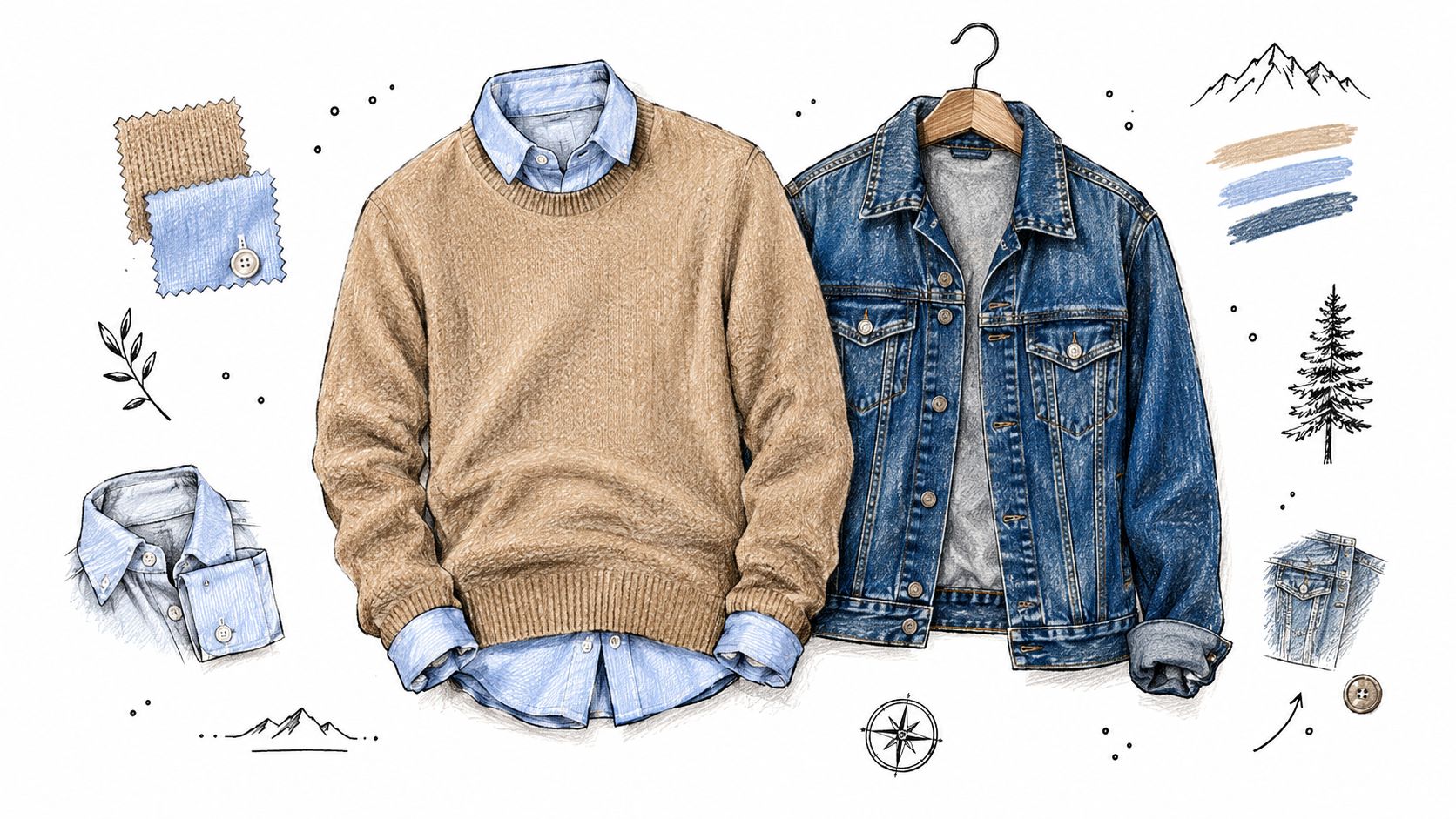
The shirt weight matters too. A fine, tightly woven shirt gives you less visual bulk under cashmere and a jacket, which helps the collar roll stay neat and the placket stay flat. A heavier or looser shirt can work on its own, but under knitwear it may push the sweater outward at the chest and make the whole outfit feel overbuilt. If you want to browse knit layers that pair naturally with shirts, Cashmere Boutique's sweater collection shows the kind of silhouettes that work with a collar underneath.
A simple layering sequence usually solves most problems.
- Start with the shirt: make sure the collar lies flat, the sleeves end cleanly at the wrist, and the body doesn't pull.
- Add the cashmere layer: check whether the neckline lets the collar rest instead of folding inward.
- Finish with the jacket: the lapel should frame both layers without trapping the collar points.
A good collar under cashmere doesn't shout for attention. It gives the neckline shape, then disappears into the outfit.
That's why sleeve management matters too. If the shirt cuff is too long, it will snag at the sweater cuff and bunch under a coat sleeve. If it's too short, the outfit loses definition. The cleanest result usually comes from a shirt that fits close enough to stay controlled, but not so close that movement makes the fabric fight the knit.
Building Your Essential Collection
A strong long sleeve button-down rotation does not need to be large. It needs to be dependable, with shirts that keep their shape through layering, washing, and repeat wear. The best wardrobe is usually the one that does more with fewer pieces.
Start with how the shirt behaves on its own. A firm collar keeps its outline when you want a crisp look under a jacket, while a softer collar can feel easier for relaxed, standalone wear. The body fit should stay honest too, because a shirt that pulls at the waist will look strained before you even add anything over it.
Build the collection by role, not by volume. One shirt can serve formal days, one can handle casual wear, and one can be your backup after laundering. For cashmere layers that pair with shirts, Cashmere Boutique carries sweaters, cardigans, and related pieces that help you match the shirt to the right outer layer.
The long-term payoff is straightforward. Better fabric choice helps the shirt hold its shape, better fit reduces constant adjustment, and better collar construction keeps layering tidy instead of improvised. That is the value of buying carefully.