
Article: Ladies Brown Cashmere Sweater Buying and Styling Guide

Ladies Brown Cashmere Sweater Buying and Styling Guide
You're standing in front of your wardrobe before a work trip, holding two sweaters. The gray pullover looks sensible but feels scratchy and tired. The brown crewneck drapes properly, works with your trousers and jeans, and is the piece you reach for whenever you want to look polished without looking overdone.
That's the practical test for a ladies' brown cashmere sweater. It shouldn't just be beautiful on the day you buy it. It should earn its hanger space through repeat wear, easy coordination, flattering fit, and manageable care. Brown has become a particularly smart neutral for wardrobes moving beyond the usual rotation of black, gray, and beige, but the shade alone won't make a sweater a good investment. Fiber quality, silhouette, shoulder fit, and maintenance decide whether it becomes a favorite or an expensive mistake.
Cashmere also has a genuine scarcity story behind its premium positioning. World production of cashmere hair is commonly estimated at about 15,000 to 20,000 tons annually, with usable yield falling to roughly 6,500 tons after processing, as explained in this cashmere fiber overview. Sweaters represented 38.4% of global cashmere sales in 2025, and that segment is projected to grow at 6.4% annually through 2034, according to cashmere market data. The point isn't to buy because the market is growing. It's to buy one excellent brown sweater you'll really wear.
Table of Contents
- Finding the Right Brown Cashmere Sweater for You
- What Makes a Cashmere Sweater Worth Buying
- Silhouettes That Flatter Every Body Type
- Choosing the Perfect Shade of Brown
- Sizing and Fit That Looks Tailored
- Caring for Your Sweater So It Lasts
- Why a Brown Cashmere Sweater Earns Its Place
Finding the Right Brown Cashmere Sweater for You
You are getting dressed for a full day that moves from meetings to dinner, and the same brown sweater needs to work under a blazer, with jeans, and on its own. That is the right buying test. A ladies' brown cashmere sweater should earn repeated wear through reliable coordination, flattering proportions, and care you can manage.
In 2026, earthy tones are taking the place of basic black and gray in many wardrobes. Brown is a strategic neutral because it works with black, ivory, cream, denim, olive, camel, and warm metallics without looking predictable. The color feels softer than black, but it still gives an outfit structure. Choose it for the number of outfits it supports, not because brown happens to be fashionable.
Start with the sweater's job. For office travel, choose a smooth crewneck or refined V-neck that fits beneath a blazer. For weekends, a softer, roomier shape works well with denim. If one sweater must handle both settings, I recommend a medium-weight crewneck with a clean shoulder line and enough ease for a shirt underneath.
My stylist's rule: buy the sweater that solves at least three dressing problems. If it works with only one pair of trousers, it is not a strategic purchase.
Before comparing brands, settle the decisions that affect wear. Choose a close fit or relaxed shape, a cool taupe-brown or rich chocolate, and standalone wear or regular layering. Check the product page for fiber diameter, staple length, composition, garment measurements, and care instructions. Vague phrases such as “luxury feel” give you little useful information.
Then calculate likely cost per wear. Divide the purchase price by the number of times you can realistically see yourself wearing it across work, travel, weekends, and evenings. A versatile sweater with a higher initial price can make better sense than a cheaper one that stays in the drawer. Cashmere's history, from Kashmir-associated textiles to nineteenth-century European fashion, explains its reputation for softness and lightness, but your wardrobe should determine the purchase.
For online clothing sellers, presentation affects how clearly shoppers judge a brown sweater. Use clean product photography that shows its shade, texture, and styling potential without distracting props. This resource can help you create flat lay images for ecommerce.
What Makes a Cashmere Sweater Worth Buying
A brown cashmere sweater earns its place in a 2026 wardrobe when it combines softness with repeatable wear. Earthy tones are replacing basic black and gray as practical neutrals, but brown only becomes a smart purchase when the fiber, construction, and fit justify its price.
Start with micron count, the average diameter of each fiber. Finer fibers usually feel softer against the skin, while coarser fibers can feel sturdier but less refined. True cashmere is generally defined as having an average fiber diameter of 19 microns or less. Luxury-grade material is often associated with the 14 to 16.5 micron range, and Grade A cashmere is cited at about 14 to 15.5 microns in this cashmere buying guide.
Staple length matters just as much. High-quality sweater cashmere typically uses fibers around 34 to 36 mm long. Longer fibers help create a more stable yarn, reduce surface fibers, and make the knit less prone to breaking during wear. They do not make a sweater pill-proof, but they support a cleaner surface and better shape retention.
Read the product page like a buyer
Do not choose a sweater because a photograph makes it look exceptionally fluffy. A dense knit made with finer, longer fibers is usually the better choice for repeated wear. Brushed or very fuzzy finishes can look plush, yet loose surface fibers rub together more readily and require more maintenance.
Construction deserves the same attention as softness. Check for even stitches, tidy ribbing at the cuffs and hem, secure seams, and a neckline that lies flat. A quality brown cashmere sweater should feel soft without feeling fragile. Stretch the cuff gently. It should recover its shape rather than stay distorted.
| Grade | Micron Count | Typical Ply | Hand-Feel | Expected Lifespan |
|---|---|---|---|---|
| Luxury grade | 14 to 16.5 microns | Multi-ply construction is common | Soft, light, and refined | Stronger choice for repeated wear when cared for properly |
| Grade A | About 14 to 15.5 microns | Depends on the maker | Smooth and gentle against the skin | Good long-term potential with careful care |
| Standard cashmere | Up to 19 microns | Depends on the maker | Can feel softer or more rustic | Varies widely with staple length and construction |
Micron guidance is based on industry buying guides. Treat “Grade A” as a useful starting point, not a complete quality guarantee. A transparent brand should also state fiber origin, yarn construction, garment measurements, and finishing. “Cashmere” identifies the fiber category, not the complete quality story.
Use this guide to choosing a high-quality cashmere sweater for a practical product-page checklist. My recommendation is a dense, smooth knit with enough structure to hold its line through commuting, sitting, and carrying a bag. That structure supports a higher rewear count across work, weekends, and evenings. A sweater may feel wonderfully soft at first, but if the surface is loose and the elbows thin quickly, the lower price will not represent good value.
Silhouettes That Flatter Every Body Type
The best silhouette depends on what you want the sweater to do. A close crewneck creates a neat frame around the face and works beautifully under a blazer. A V-neck opens the upper body and gives fuller busts more breathing room. A relaxed cocoon shape creates volume, but only looks polished when the proportions are controlled.
Choose the neckline first
The classic crewneck is the safest one-sweater purchase. It suits apple and inverted-triangle shapes particularly well because it creates a clean upper frame without adding a dramatic point or bulky collar. Choose a ribbed neckline that sits close without pressing into the throat. For work, wear it with well-fitted trousers and a long coat. At the weekend, add straight-leg denim and loafers.
The V-neck lengthens the visual line of the torso and is often the most comfortable option for a fuller bust. Keep the V moderate if you want a professional result. A white or ivory shirt underneath makes a chocolate-brown V-neck feel deliberate rather than bare, while a fine camisole turns it into an evening layer.
The turtleneck balances a long neck and narrow shoulders, but it can overwhelm a petite frame if the collar is tall and bulky. Choose a smooth, close-fitting knit under a jacket for a sleek office outfit. A heavier turtleneck is better worn alone with a slim skirt or trousers because adding another substantial layer can make the upper body look crowded.
Match proportion to your frame
The mock neck is my favorite compromise for petite women. It gives the warmth and polish of a high neckline without creating a tall column of fabric around the face. It also works well for video calls, dinners, and minimalist outfits where the neckline should provide the detail.
A relaxed boyfriend or cocoon cut softens a rectangular frame and adds ease through the torso. On a petite woman, it can still look intentional if the hem finishes around the high hip rather than drifting to the widest point of the thigh. Wear it with a narrow trouser, a straight skirt, or a controlled front tuck. Don't pair a very oversized sweater with equally oversized bottoms unless you're deliberately creating a dramatic silhouette.
Sleeves change the mood. Wrist-length sleeves look polished and make a sweater easy to layer. Slightly longer cuffs feel relaxed and work well with denim, but excess fabric bunching at the wrists can make an expensive garment look careless. Cropped bodies suit high-waisted trousers and skirts, regular lengths are the most versatile, and tunic lengths need a slim lower half to keep the outfit balanced.
For more ideas on combining warmth, proportion, and polish, see this guide to style and warmth combined with women's cashmere apparel. My strongest recommendation is simple: if you're buying only one ladies' brown cashmere sweater, choose a classic crewneck unless you already know a V-neck or turtleneck performs better in your wardrobe.
Choosing the Perfect Shade of Brown
Brown isn't one color. The wrong brown can make your complexion look dull, while the right one can brighten your face and make ordinary basics look expensive. Assess the sweater in natural daylight, next to your face, without relying on a warm shop spotlight.
Four brown families worth considering
Chocolate brown is deep, polished, and easy to style. It looks especially good with cream denim, ivory, dark wash jeans, and gold jewelry. Warm complexions often suit chocolate with a red or golden undertone, while cool complexions should look for a neutral chocolate that doesn't turn orange.
Camel is lighter and more traditional. It's excellent with stone, ivory, white, navy, and pressed charcoal for work. If your wardrobe already contains warm beige, tan, and cream, camel will blend easily. If those shades make you look washed out, choose a deeper brown instead.
Taupe is the quietest option. It usually contains gray or muted beige, which makes it a strong layering color under navy, black, or a structured blazer. Cool and neutral undertones often handle taupe well, but check that it doesn't pull green or ashy against your skin.
Rust-tinged mahogany brings more personality. It can look striking with deep navy, oxblood, dark denim, and antique gold for evening. Be careful if your complexion is cool. A mahogany brown that pulls orange can compete with the skin rather than complement it.
| Brown Shade | Best For | Pair With | Skin Undertone Match |
|---|---|---|---|
| Chocolate | Weekend polish and casual luxury | Cream denim, ivory, gold jewelry | Warm, neutral, or cool if the brown stays balanced |
| Camel | Office dressing and soft tailoring | Stone, ivory, navy, charcoal | Warm and neutral |
| Taupe | Quiet layering under jackets | Black, navy, gray, muted white | Cool and neutral |
| Rust-brown mahogany | Evening and richer seasonal outfits | Deep navy, oxblood, dark denim | Warm undertones, with care for cool complexions |
Color can also vary between dye lots. If you're buying online and your outfit depends on a precise match, don't assume a shade photographed on one garment will look identical on another production run. Check the retailer's color description and return policy, and compare the sweater beside your own trousers or coat as soon as it arrives.
My default recommendation is deep chocolate for the broadest wardrobe use. Choose camel if your closet is light and warm, taupe if you wear tailoring often, and mahogany only if you want the sweater to act as a color statement rather than a background neutral.
Sizing and Fit That Looks Tailored
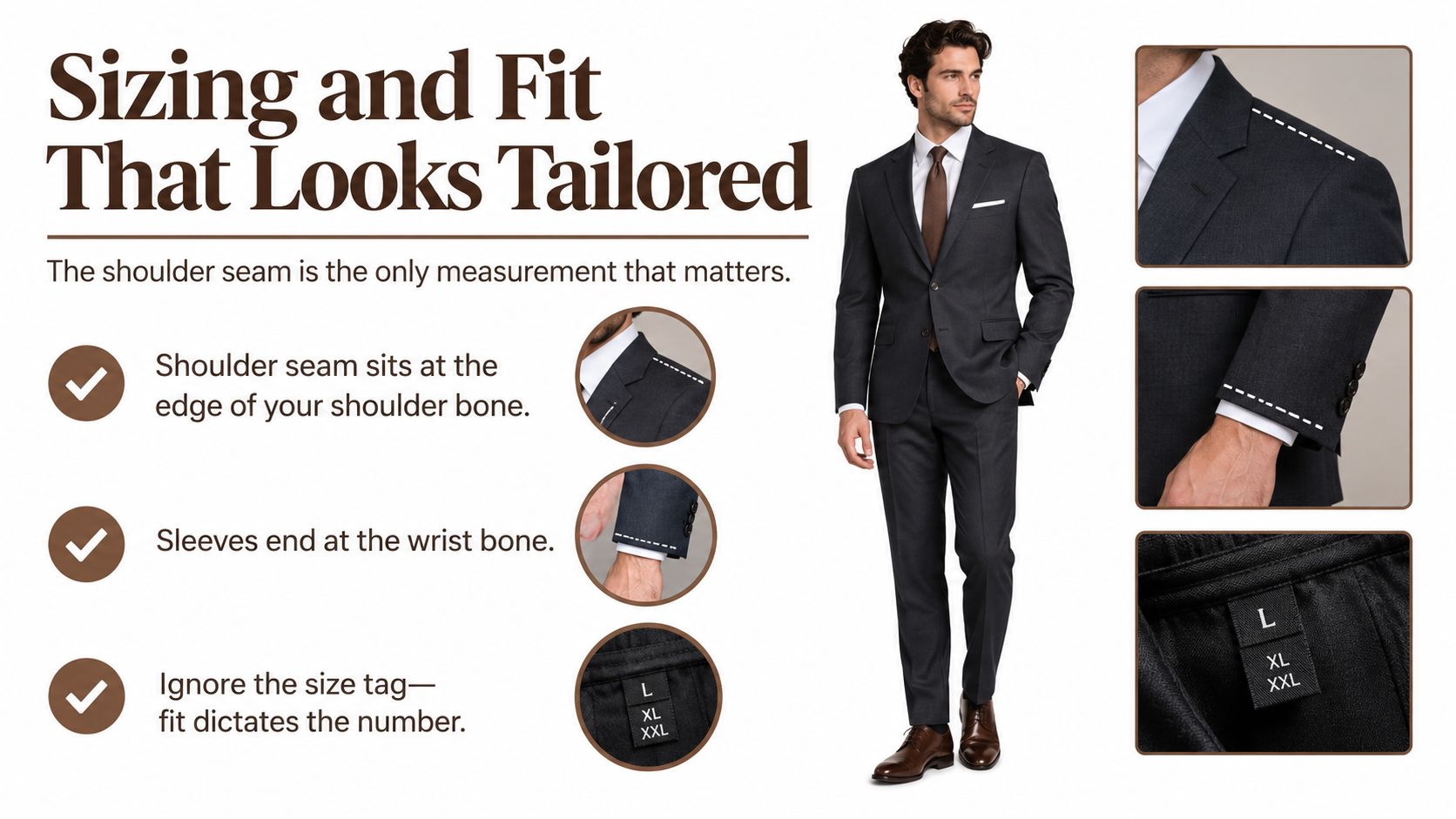
Ignore the size tag until you've checked the shoulders. A sweater can be labeled small, medium, or large and still fit beautifully or badly depending on the brand's block. The shoulder seam is the clearest starting point because it controls how the sleeve falls and how the whole garment hangs from the body.
Use this fitting order
- Check the shoulder seam. It should sit at, or very close to, the edge of your shoulder bone. If it falls far down your arm on a style meant to be fitted, the sweater is too broad unless the design specifically uses a dropped shoulder.
- Check the bust and clavicle. Pulling across the clavicle, diagonal strain lines from the bust, or a hem that rides up all indicate insufficient room. Cashmere should skim the body rather than cling to every contour.
- Check the waist and hip. The hem should lie flat without ballooning or gripping. If you want a tucked look, choose a shorter body and a lighter knit. A long, dense sweater can create too much bulk inside trousers.
- Check the sleeves. For a classic fit, the cuff should finish around the wrist bone. Excess fabric pooling at the wrist makes the sweater look oversized even when the torso fits.
A sweater should feel comfortable when you move your arms forward, sit down, and reach overhead. Don't buy a tight shoulder in the hope that the garment will “give.” Natural fibers can relax with wear, but an overly tight shoulder creates persistent strain and an unrefined line.
Use the retailer's garment measurements rather than relying only on body-size labels. If you're between two sizes, choose the smaller one for a close, polished cut only when the shoulders and bust still clear the fit checks above. Choose the larger one for a relaxed style, a fuller bust, or layering over a shirt. Before ordering, this guide on how to take body measurements can help you compare your proportions with the brand chart.
Petite shoppers should look for shorter shoulder-to-hem measurements and sleeves that don't overwhelm the hand. Tall shoppers should prioritize sleeve and body length over the nominal size. If your shoulders, bust, and sleeve length consistently fall into different size categories, a made-to-measure option may justify its cost more readily than repeated alterations.
Caring for Your Sweater So It Lasts
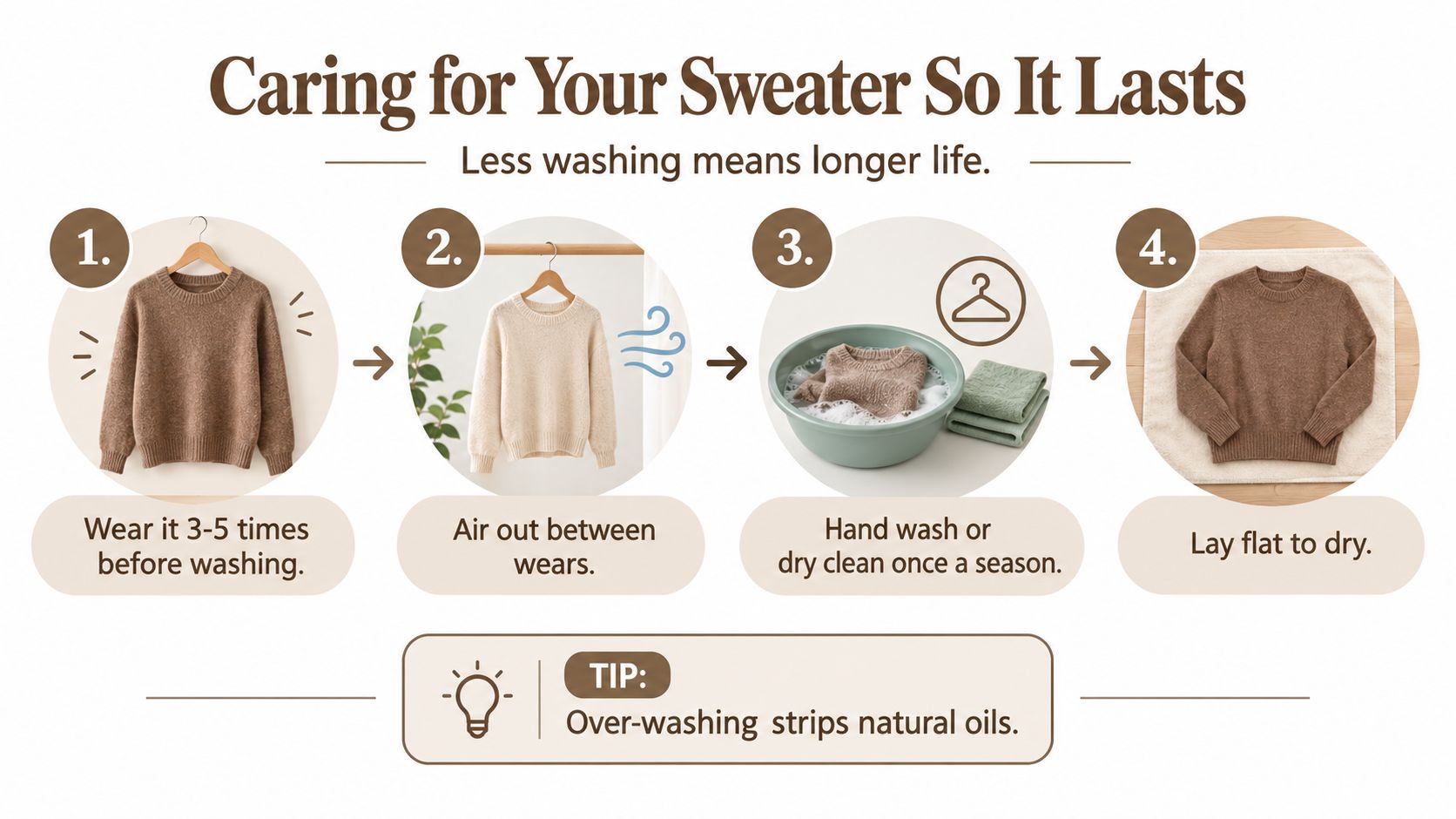
Cashmere doesn't need the washing schedule of a cotton T-shirt. Spot-clean small marks, air the sweater between wears, and wash only when it needs freshening. Over-washing, heat, friction, and agitation can cause felting, shrinkage, stiffness, pilling, and loss of shape because the fiber scales can interlock under mechanical stress, as outlined in this cashmere washing guide.
Wash gently and dry flat
Hand-washing is the safest routine. Fill a basin with cool water, add a mild enzyme-free detergent designed for delicate fibers, and let the sweater soak without aggressive rubbing. Press water through the knit, drain the basin, and press the garment between clean towels rather than twisting it.
Machine washing can work if the care label allows it. Use a mesh bag, cool water, and the gentlest cycle available. Skip fabric softener, high spin speeds, and tumble drying. Lay the sweater flat on a dry towel, reshape the shoulders and hem, and let it dry away from direct heat.
Practical rule: Never hang a wet cashmere sweater. The weight of the water can pull the shoulders, lengthen the sleeves, and change the drape.
Pilling is normal, especially in areas that rub against coats, bags, desks, and seat belts. Remove pills with a cashmere comb using light strokes in one direction. A fabric shaver can work on a smooth knit, but use it cautiously and keep it away from loose or chunky stitches. Don't pull pills off by hand because you may draw out healthy fibers.
Airing the sweater after each wear helps reduce unnecessary washing. Fold it for storage in a breathable cotton bag with cedar or lavender nearby to discourage moths. Store it clean, because body oils and food residue attract pests. If the sweater catches on jewelry, don't cut the loop immediately. Gently pull the snag back to the inside with a blunt needle, then secure it carefully.
For detailed laundering instructions, use these cashmere care instructions.
If the sweater accidentally goes through a hot dryer, don't stretch it aggressively while it's dry. Re-wet it in cool water, press out the excess, and reshape it flat. You may not restore every change, but forceful pulling usually creates more distortion.
Why a Brown Cashmere Sweater Earns Its Place
A brown cashmere sweater earns its place by connecting outfits that otherwise need separate tops. It works with black without the harsh contrast of stark white, with cream without disappearing into it, with denim without looking predictable, and with earth tones without becoming costume-like. That makes it a wardrobe architecture decision, not merely a purchase based on softness.
The strongest argument is cost per wear, but only if you use realistic assumptions from your own life. If you rarely wear brown, even an excellent sweater is poor value. If brown already works with your trousers, skirts, coats, and accessories, repeated wear can make a premium garment more sensible than a stream of inexpensive tops that each solve only one outfit problem.
The objections are legitimate
“What about pilling?” Cashmere can pill, including high-grade cashmere. Finer, longer fibers and a stable knit can reduce visible surface wear, but they won't eliminate it. A cashmere comb is a small, practical tool, and regular gentle grooming is better than waiting until the sweater looks neglected.
“Won't it snag?” Any knit can snag, especially against rough jewelry, textured bags, and sharp hardware. Smooth, compact constructions are easier to live with than open, highly textured knits. Remove rings before dressing, check bag straps, and don't wear a delicate sweater under a rough wool coat.
“Is the care too demanding?” It's more demanding than throwing a sweatshirt in a hot wash, but the routine is manageable. Spot-cleaning, airing, cool washing, careful pressing, and flat drying protect the shape far more effectively than expensive rescue treatments after damage occurs.
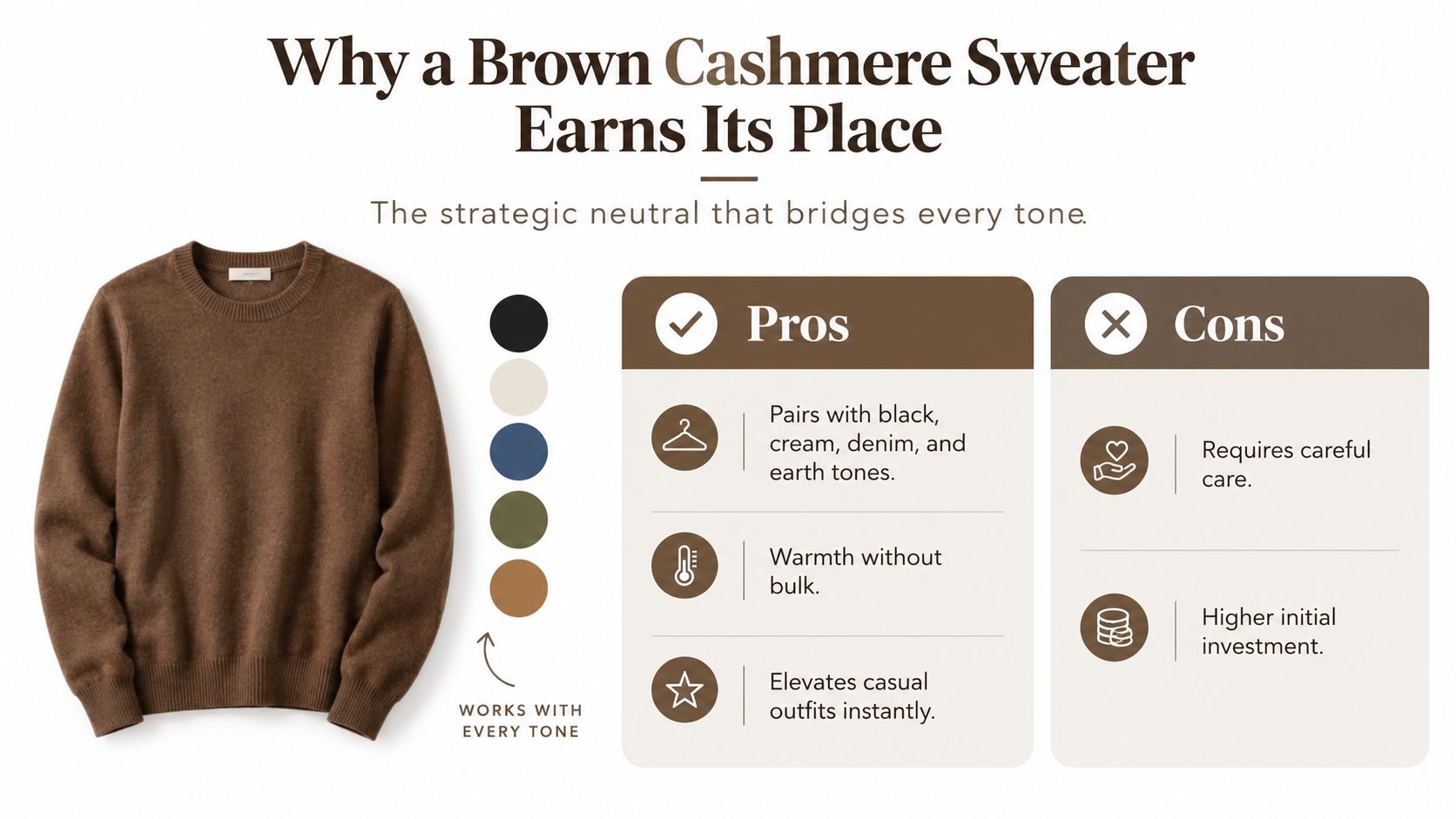
Brown is also well positioned for the current style conversation. Recent fashion coverage describes chocolate brown as a featured fall 2026 color story and presents it alongside brighter accent colors, while broader sweater coverage frames cashmere as a more strategic, wear-led purchase rather than only a status symbol in this fall 2026 sweater coverage. That supports my recommendation, but the actual test remains personal: can you wear the shade repeatedly across work, weekends, travel, and evenings?
Buy the sweater if the answer is yes. Choose a smooth chocolate or taupe crewneck, confirm the shoulder measurement, inspect the fiber specifications, and plan the care routine before it arrives. Cashmere Boutique offers women's crewneck, V-neck, cardigan, and twin-set cashmere options alongside size charts, color information, product FAQs, and care guidance. Visit Cashmere Boutique to compare brown sweater silhouettes and choose the one that will earn regular wear in your wardrobe.