
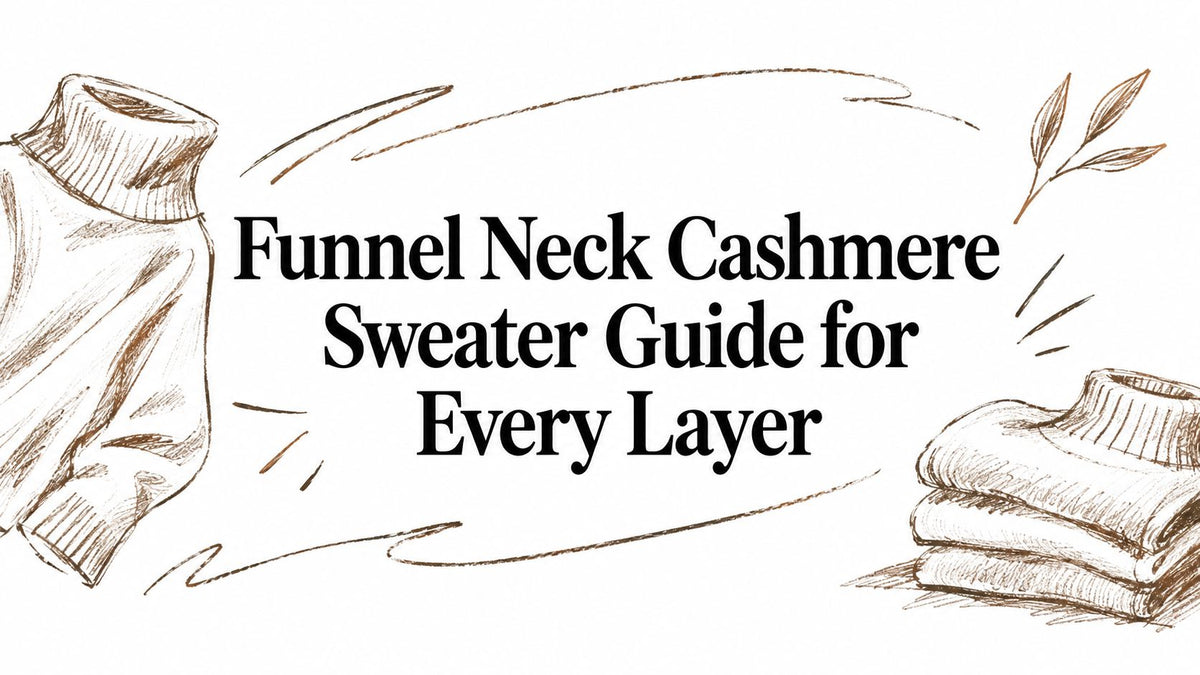
Funnel Neck Cashmere Sweater Guide for Every Layer
You're heading out on a cold morning with coffee in one hand, keys in the other, and a scarf that keeps slipping out from under your coat. You want warmth around your neck, but you don't want a folded turtleneck pressing against your jaw or another loose accessory to manage.
A funnel neck cashmere sweater solves that small but persistent wardrobe problem with its built-in collar. The raised knit protects the neck, stays neater than a scarf, and can work beneath a blazer, coat, or jacket when the construction is chosen carefully. The important question isn't only whether the style looks polished. It's whether the neck height, ply, gauge, and fit suit the way you'll really wear it.
Table of Contents
- Why the Funnel Neck Matters in a Real Wardrobe
- What a Funnel Neck Actually Is
- Fiber, Ply, and Gauge Explained
- Matching Neck Height to Body and Climate
- Layering a Funnel Neck Sweater Step by Step
- Styling the Sweater in Real Outfits
- Choosing the Right Funnel Neck for You
Why the Funnel Neck Matters in a Real Wardrobe
A commuter steps outside with a coat, work bag, and no patience for a scarf that shifts every few minutes. The funnel neck addresses that practical problem by building neck coverage into the sweater. Its collar rises from the neckline and opens slightly toward the top, forming a soft barrier against cold air without a fold, knot, or loose end to manage.
Cashmere suits this construction because fine fibers can provide warmth without the rigid weight of a bulky knit. They also need careful handling, since heat, moisture, and friction can change the fabric's dimensions, as explained in this cashmere fiber and shrinkage guide. A lighter sweater can therefore feel protective at the neck while remaining comfortable indoors.
Practical rule: Treat the funnel neck as thermal design, not simply as a decorative neckline.
The useful choice depends on the wearer's routine. Someone commuting beneath a wool coat may want a collar that stands neatly without competing with the lapel. A parent moving between a car, a school entrance, and errands may prefer a soft, mid-height funnel that does not need repeated adjustment. A traveler may choose a fine-gauge sweater that folds easily and handles changing indoor and outdoor temperatures.
Height, weight, and fit work together. A taller collar gives more coverage, but it can feel crowded beneath a close coat. A heavier ply adds substance and warmth, while a finer gauge usually creates a lighter layer that sits more easily under outerwear. The shoulder and chest fit matter just as much. Extra fabric around the body can turn a practical neck into a bulky ring once a jacket is added.
The silhouette can also reduce the number of pieces needed in an outfit. A separate scarf adds color and texture, yet it may crowd the collar or catch on a bag strap. A well-proportioned funnel neck provides some of that coverage inside the sweater, leaving room for a coat or jacket to close comfortably. For more on combining warmth and style in cashmere layers, see this guide to style and warmth combined with women's cashmere apparel.
Cashmere sweaters remain a major commercial form of cashmere apparel. Market estimates vary because their denominators differ. One report counts cashmere apparel and places sweaters at 42.5% market share in 2025, worth about $1.79 billion. A broader estimate places sweaters at 32.5% of the total cashmere market in 2025, worth about $1.4 billion. Both figures appear in this history and market overview of cashmere wool, so they should be read as different market scopes rather than directly competing measurements.
The right funnel neck depends on what happens after you leave home. Neck height sets coverage, ply and gauge influence warmth and bulk, and fit determines whether the sweater works beneath your outer layers.
What a Funnel Neck Actually Is
A funnel neck is a stand-up collar that widens slightly toward the top. It usually rises higher than a mock neck but doesn't fold over like a traditional turtleneck. The collar may sit close to the neck or fall away gently, depending on its tension, rib structure, and height.
The easiest way to identify one is to look at how the collar is worn. A mock neck is generally short and sits just above the base of the neck. A funnel neck rises farther and keeps its shape without turning back on itself. A turtleneck usually extends toward the jaw and folds over, creating two layers of fabric around the neck.
The visual differences
| Neck style | Collar height | Typical coverage |
|---|---|---|
| Mock neck | Short | Covers the base of the neck |
| Low funnel | Low | Rises slightly and leaves the jaw open |
| Mid funnel | Moderate | Frames most of the neck without reaching the jaw |
| High funnel | Tall | Covers the lower neck and may approach the jaw |
| Turtleneck | Full height | Extends toward the jaw and folds over |
These descriptions are more useful than relying on product names alone. Retailers don't always use “funnel neck,” “mock neck,” and “high neck” consistently. A sweater called a high neck may behave like a low funnel if the collar is loose and short. Another style may be described as a funnel neck even though its firm ribbing makes it feel closer to a mock turtleneck.
Look at the collar in product photographs from the side as well as the front. A funnel neck should show some vertical rise from the neckline, then a gentle outward movement near the top. If the opening is narrow and the fabric turns back, you're probably looking at a turtleneck. If the collar barely extends above the shoulder line, it will function more like a mock neck.
How the collar is constructed
Most funnel necks are worn as a single layer rather than folded over. That means the visible height is close to the height you'll experience when wearing the sweater. The fabric can still soften or slouch with use, but it won't behave like a doubled turtleneck.
The collar's structure matters as much as its measurement. A ribbed edge with firm recovery will stand more reliably. A soft, loose knit may drape toward the neck, which can feel comfortable indoors but provide less protection outdoors. Product construction references describe the funnel neck as a high, gently tapered neckline that improves coverage without the full constriction of a turtleneck, as shown in this high-neck cashmere sweater example.
Before buying, ask whether you want the collar to stand, soften, or fold. Those are different experiences, even when the product page uses similar language.
Fiber, Ply, and Gauge Explained
A soft hand feel tells you only part of the story. A funnel neck cashmere sweater also needs enough structure to keep its collar upright, enough density to hold warmth, and enough recovery to resist stretching at the neck, cuffs, and hem.
Three specifications help you assess that balance: fiber micron count, ply, and gauge.
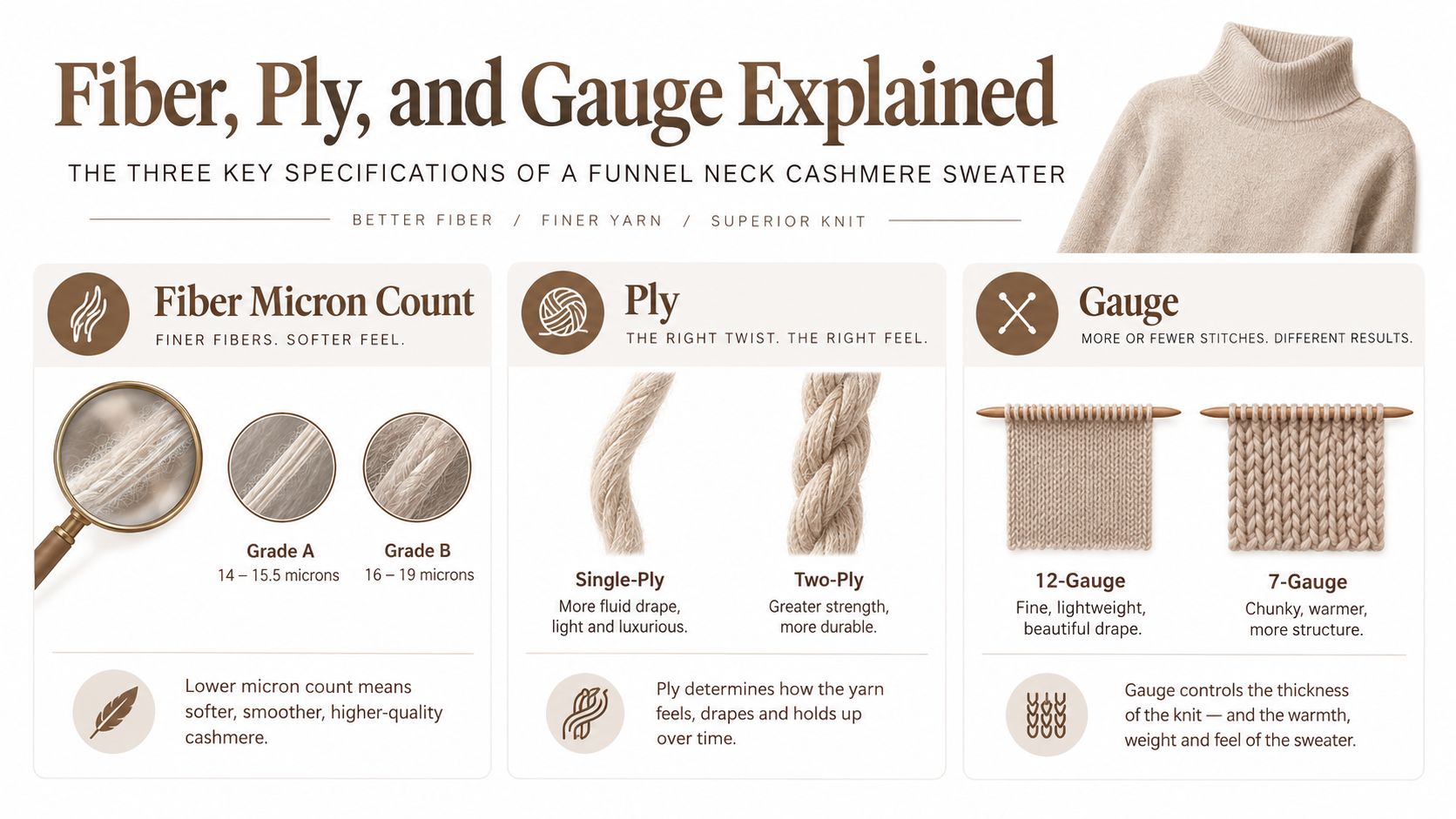
Fiber micron count
Micron count describes the diameter of an individual fiber. A lower number generally indicates a finer fiber, which tends to feel smoother against the skin. Industry guides often place premium cashmere around 14 to 16.5 microns, while some luxury sourcing guidance places the finest range around 14 to 15.5 microns, according to the cashmere fiber specification reference.
That softness can be valuable in a funnel neck because the collar rests close to the face and jaw. However, fineness shouldn't be treated as the only quality measure. Fiber length, yarn density, finishing, and knitting tension also affect how a sweater wears. A very soft sweater can still disappoint if its collar loses shape or its surface pills quickly under friction.
For sensitive skin, a finer fiber may feel more comfortable next to the neck. For a buyer focused on everyday wear, inspect the full construction rather than choosing solely by the lowest micron claim.
Ply and yarn density
Ply refers to the number of yarn strands twisted together. A single-ply knit can feel light and flexible, while a two-ply construction generally creates a denser, more stable fabric. The latter is often a sensible choice for a funnel neck because the collar has to recover after being pulled over the head and remain composed beneath outerwear.
Cashmere's warmth comes from fibers that trap still air. A compact knit can improve insulation, while an overly loose structure may feel airy but provide less protection in exposed conditions. Product guidance for a relaxed funnel neck sweater similarly emphasizes the relationship between yarn density, ply, fiber length, and resistance to pilling, as shown in this cashmere construction reference from That Blanket Co.
If you're comparing two sweaters with similar fiber content, examine the collar first. Does it spring back after you gently open it? Does the ribbing look firm? Does the body feel balanced rather than unusually thin? Those details can tell you more about practical performance than a soft touch in a fitting room.
Gauge and the feel of the knit
Gauge describes the fineness of the knitted structure. A finer gauge usually produces a smoother, lighter fabric with cleaner drape under a jacket. A more substantial structure creates greater visual weight and can provide more insulation, but it also takes up more room at the collar and armhole.
A 12-gauge knit is a useful reference point for a fine to midweight sweater that can layer beneath structured clothing. The best choice still depends on yarn thickness and tension, because gauge alone doesn't tell you the complete weight of the finished garment.
For a broader overview of how fleece handles warmth and texture differently from knitwear, this fleece guide from That Blanket Co offers useful fabric context, even though fleece and cashmere perform differently.
Use the guide to choosing a high-quality cashmere sweater as a checklist, but keep your own use case in view. A fine, dense funnel neck for office layering needs a different balance from a relaxed sweater intended to stand alone over casual trousers.
Matching Neck Height to Body and Climate
Neck height changes both warmth and proportion. The most flattering collar is usually the one that gives enough coverage for your climate without making your shoulders, jaw, or face feel visually crowded.
A low funnel often works well for shorter necks or for people who dislike fabric near the jaw. It also suits indoor-heavy routines, mild weather, and wardrobes that already include scarves or jackets with substantial collars. Because it leaves more of the neck visible, it can create a lighter line beneath a coat.
Low, mid, and high options
A mid funnel is the easiest all-purpose choice for many wardrobes. It offers recognizable neck protection without dominating the face, and it tends to sit comfortably beneath a blazer, chore coat, or topcoat. If you move between heated offices and cool streets, this height gives you coverage while remaining adaptable.
A high funnel provides the strongest collar coverage. It can be especially effective for longer necks, broader shoulders, or people who want the sweater to replace a scarf. The tradeoff is proportion. If the collar is firm and tall, it can feel crowded on a shorter neck or beneath an already-high jacket collar.
| Height | Collar measurement | Best body type | Climate range | Layering role |
|---|---|---|---|---|
| Low | Short vertical rise | Shorter necks, narrow frames | Mild or mostly indoor conditions | Works beneath scarves and lower jacket collars |
| Mid | Moderate vertical rise | Broadly adaptable proportions | Changeable shoulder-season weather | Fits beneath blazers and everyday coats |
| High | Tall vertical rise | Longer necks, broader shoulders | Cold, windy, or exposed conditions | Functions as a built-in neck layer |
These categories are starting points, not rules. Neck circumference matters as much as neck length. A high collar with a small opening may feel restrictive even if the height looks attractive on the product model. A looser opening may feel more comfortable but collapse instead of standing upright.
Try the sweater with your usual outerwear. Raise your arms, turn your head, and close the coat. If the collar pushes into your chin or the coat lapel forces it down, the issue may be the relationship between the two garments rather than the sweater itself.
Use proportion to guide the choice
A high funnel can balance a longer torso or substantial shoulder line because it gives the upper body a stronger vertical element. A low funnel can keep the neckline quiet when you're wearing wide-leg trousers, a statement coat, or a layered scarf.
People with sensitive skin should also consider softness at the upper edge. A stiff ribbed collar may hold its shape beautifully but feel noticeable throughout the day. A softer edge may be preferable if you're wearing the sweater directly against the skin, even if it offers slightly less structure.
The best collar is the one you stop thinking about after you put it on.
Layering a Funnel Neck Sweater Step by Step
Layering succeeds when each piece has a clear job. The base layer controls skin contact, the sweater supplies warmth and texture, and the outer layer protects against wind or rain. Problems usually appear when two collars compete for the same space.
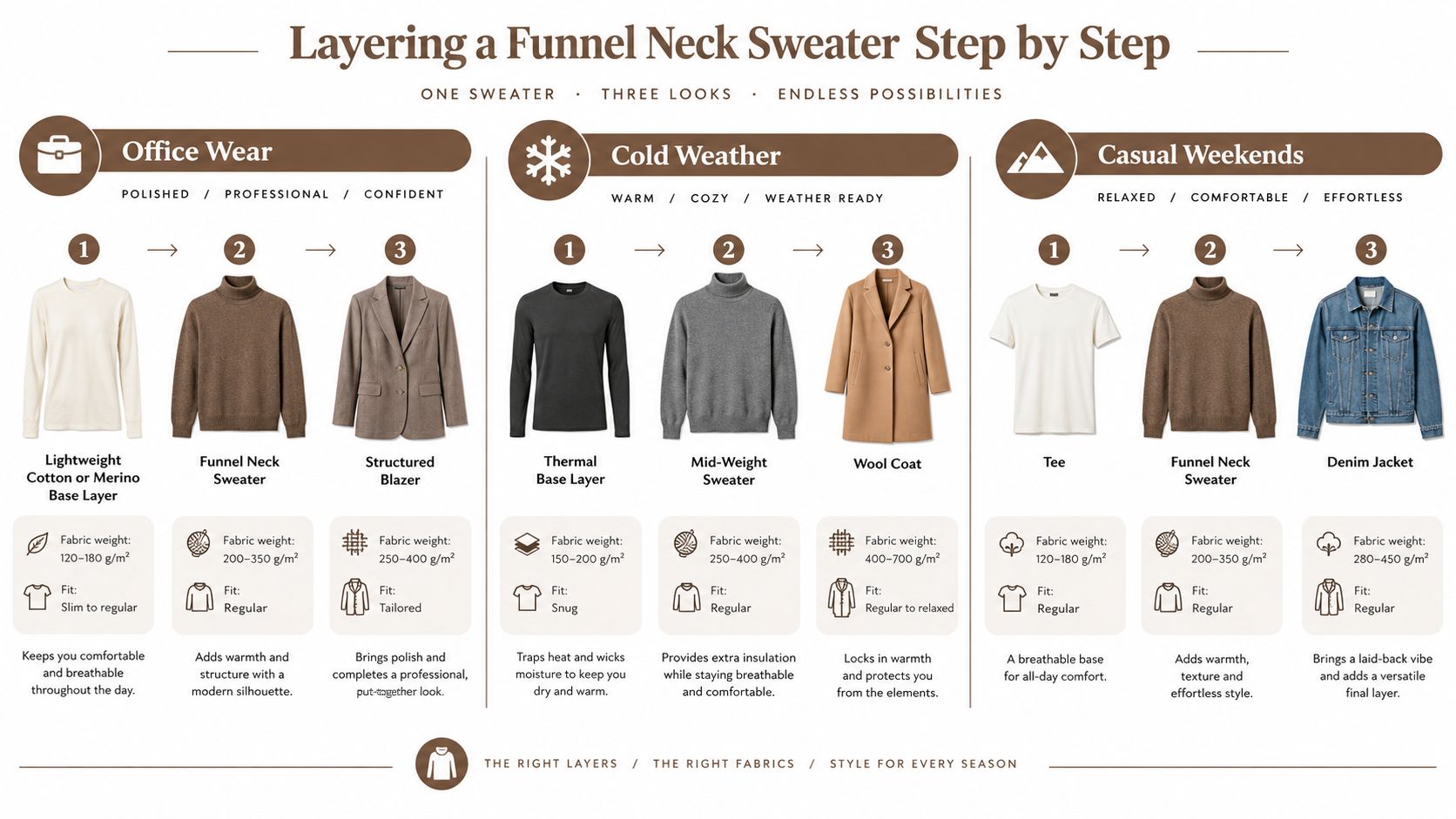
For office wear
Start with a lightweight cotton or merino base layer if you don't want cashmere directly against your skin. Choose a two-ply, fine-gauge mid funnel over it. The sweater should skim the body rather than cling, leaving enough room for the base without creating folds at the collar.
Add an unstructured blazer with a relatively open neckline. A soft blazer generally works better than one with a high, rigid collar because it lets the funnel remain visible and avoids pressing the sweater into your throat. Finish with a wool topcoat that closes comfortably without crushing the collar.
Skip a button-down shirt if the funnel neck already has a substantial ribbed edge. The shirt collar can create unnecessary layers and interfere with the sweater's clean line.
For casual weekends
Wear a relaxed funnel neck directly against the skin if you tolerate cashmere comfortably. A two-ply knit can provide enough presence on its own, while a thin tee is useful beneath a lighter single-ply style or whenever you prefer more separation from the fiber.
Pair it with denim or a chore jacket. These jackets usually have enough structure to frame the sweater without requiring a formal collar. Leave the jacket open indoors, then close it outdoors and check that the funnel isn't folding awkwardly under the neckline.
The simplest outfit often looks the most deliberate when the proportions are right. Keep the sweater slightly relaxed, but avoid excessive fabric at the waist if the jacket is cropped or fitted.
For cold-weather outerwear
Use a merino base layer when you need dependable insulation and moisture management. Add a dense, substantial funnel neck, then a down vest and parka. The vest supplies core warmth without adding another full sleeve, while the parka protects the sweater from wind and precipitation.
A high funnel can replace a scarf beneath a hood because it closes the exposed space around the neck. That's useful when you're wearing a helmet, carrying equipment, or moving through conditions where a loose scarf would be inconvenient.
Place the most structured collar closest to the body. If the parka has a tall insulated neckline, choose a softer funnel so the two collars can overlap rather than fight for height. If the sweater already has a firm, upright collar, look for a coat with a more open front.
Skin sensitivity should determine whether you add a base layer, not habit. A thin layer can make a luxurious sweater more wearable, but too many pieces at the neck create heat and bulk. If the collar feels crowded before you put on your coat, remove the least useful layer rather than forcing the outfit to work.
Styling the Sweater in Real Outfits
A funnel neck looks most convincing when the rest of the outfit respects its vertical shape. The collar already draws attention upward, so the surrounding pieces should support that line rather than compete with it.
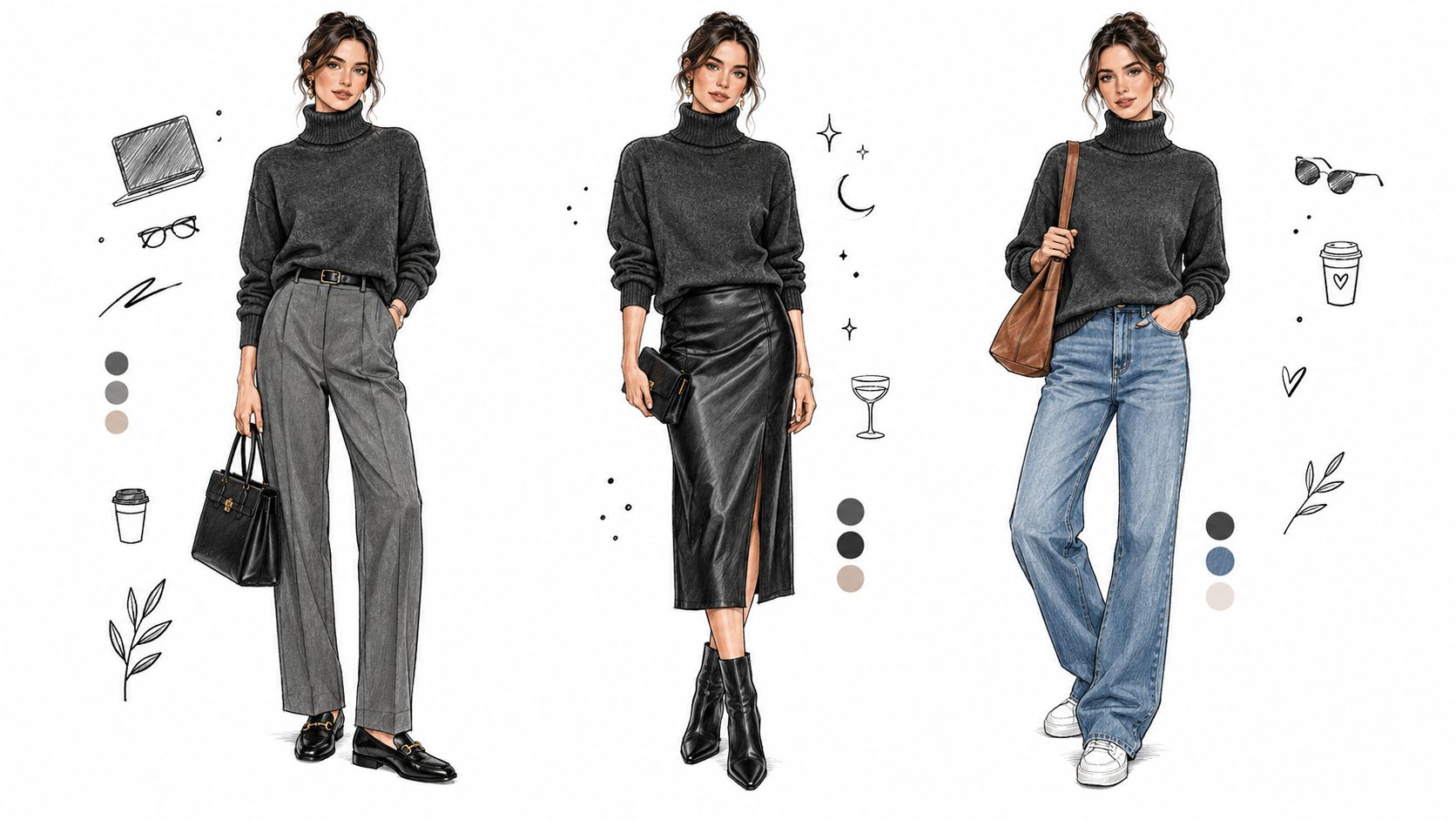
A polished women's outfit
Take a charcoal mid-funnel sweater in a balanced, dense knit and tuck it lightly into high-waisted wool trousers. Add a long camel coat and leather loafers. The neutral palette lets the collar provide the visual interest, while the trousers keep the outfit appropriate for work and the coat carries it into dinner.
The fit should be close enough to sit beneath the coat without bunching, but not so slim that the collar pulls when you move. Keep jewelry restrained around the neck. Small earrings or a watch will usually look cleaner than a necklace competing with the funnel.
For additional inspiration on building a neutral knitwear wardrobe, see this brown cashmere sweater styling reference. The same principles apply to charcoal, navy, cream, and other quiet shades.
A practical men's outfit
For a cold weekend morning, try a navy low-funnel sweater with raw denim, a quilted liner jacket, and suede boots. The lower collar keeps the outfit relaxed and works with a jacket that already has a visible neckline. A denser two-ply knit gives the sweater enough structure to stand alone without making the outfit look formal.
This combination also shows why funnel necks deserve more attention in men's wardrobes. They offer some of the neck coverage associated with a turtleneck but retain the straightforward ease of a crewneck sweater. The result works for errands, travel, and casual meetings where a scarf would feel excessive.
If you're comparing a knitted collar with a dedicated warming accessory for neck comfort, this heat therapy and neck warmer resource from SunnyBay provides a different perspective. A neck warmer serves a separate purpose, but the comparison clarifies what you want the sweater collar to do.
A thoughtful gift
A cream high-funnel sweater can make a strong standalone gift because it doesn't need elaborate styling to look finished. Pair it with dark trousers and simple sneakers for a recipient whose wardrobe preferences you don't know well. Neutral shades travel across casual and polished settings, while the tall collar supplies enough character to keep the garment from feeling generic.
For gifting, prioritize a forgiving body fit and a collar that isn't overly tight. The recipient may prefer to wear the sweater over a thin base layer, especially if they're sensitive to fiber texture. A slightly relaxed silhouette is often safer than a sharply fitted one, provided the shoulders still sit in the right place.
Color matters less than versatility when you're buying for someone else. Cream, charcoal, navy, and soft brown can work with more existing wardrobes than a highly saturated statement shade.
Choosing the Right Funnel Neck for You
Start with the collar, then assess the fabric. A low funnel is a sensible direction for mild conditions, indoor-heavy routines, or jackets with strong collars. A mid funnel is the adaptable choice for office wear, commuting, and transitional weather. A high funnel makes more sense when wind exposure and neck coverage matter more than minimum bulk.
Next, choose the knit according to the garment's job. A two-ply, fine-gauge sweater is a strong office-layering option because it balances drape, warmth, and collar stability. A denser knit is better for weekend wear when the sweater will stand alone. For severe cold, prioritize density and outerwear compatibility rather than relying on a very fine, delicate fabric to do all the work.
A practical buying framework
| Use case | Climate | Neck height | Ply and gauge | Micron |
|---|---|---|---|---|
| Office layering | Cool indoor and commuting conditions | Mid funnel | Two-ply, fine gauge | Fine premium range |
| Weekend wear | Chilly outdoor and casual use | Low or mid funnel | Dense knit with relaxed fit | Durable premium range |
| Cold-weather layering | Freezing, windy, or exposed conditions | High funnel | Two-ply or denser construction | Choose softness and resilience together |
| Sensitive-skin wear | Any setting where the collar touches the skin | Low or soft mid funnel | Smooth, stable knit | Finer fiber can feel more comfortable |
Treat micron information as one part of the decision. A premium range around 14 to 16.5 microns can help explain a soft hand feel, but fiber length and construction still influence durability and pilling. A sweater with a carefully structured collar and dense recovery may serve you better than an exceptionally soft but loose knit.
Finish with a fit check:
- Shoulders: The seam should sit near the natural shoulder point unless the design deliberately uses a dropped shoulder.
- Collar: The opening should feel secure without pressing into the throat or jaw.
- Sleeves: Cuffs should reach the wrist when your arms are relaxed and remain there as you move.
- Torso: Leave enough room for your intended base layer, but avoid excess fabric that will bunch beneath a coat.
- Hem: Check that it sits smoothly over trousers or tucks without stretching the knit.
A funnel neck cashmere sweater is a functional purchase when its collar, construction, and fit match your daily conditions. Choose the height for coverage, the knit for the space available in your wardrobe, and the fiber for the level of softness you'll actually enjoy wearing.
Cashmere Boutique offers cashmere sweaters and layering pieces for women and men, with product details, sizing guidance, and styles suited to everyday wear and gifting. Visit Cashmere Boutique to compare funnel neck options with other cashmere layers and choose the combination that fits your climate and wardrobe.