
Article: Cashmere Brown Cardigan Guide: Color, Fit & Care
Cashmere Brown Cardigan Guide: Color, Fit & Care
You buy a neutral cardigan expecting it to solve half your wardrobe problems. Then you try it beside your cream blouse and it looks dull, under office lighting it turns strangely orange, and beneath your coat the sleeves bunch at the wrists. The problem often isn't cashmere itself. It's the combination of brown undertone, knit weight, and fit.
A well-chosen cashmere brown cardigan can work as a polished office layer, a soft substitute for a jacket, or the piece that makes jeans and a T-shirt look intentional. A poorly chosen one can become an expensive seasonal item. The difference comes down to details that deserve more attention than a simple color label or a flattering product photograph.
Table of Contents
- The Case for a Brown Cashmere Cardigan
- Choosing the Right Brown Shade
- Understanding Fit and Construction
- Styling Your Cardigan for Every Occasion
- Essential Care for Longevity
- Why This Investment Pays Off
The Case for a Brown Cashmere Cardigan
A cardigan proves its value on an ordinary morning: it must sit neatly under a coat, work with denim after hours, and still look considered over a shirt at the office. Brown is well suited to that role because it offers more depth than beige and less severity than black. In cashmere, the softly reflective surface gives the color dimension, helping it anchor an outfit without dominating it. It pairs naturally with ivory, navy, olive, charcoal, black, and denim.
The silhouette has earned that kind of wardrobe trust. Its modern identity is associated with James Brudenell, the 7th Earl of Cardigan, and the Crimean War, which began on October 16, 1853 and ended on March 30, 1856, according to the historical overview of the cardigan silhouette). The sleeved knitted waistcoat associated with him helped establish the cardigan as a distinct outer layer before the style entered civilian wardrobes. Coco Chanel later helped popularize cardigans for women in the 1920s, reinforcing their place as recurring wardrobe basics.
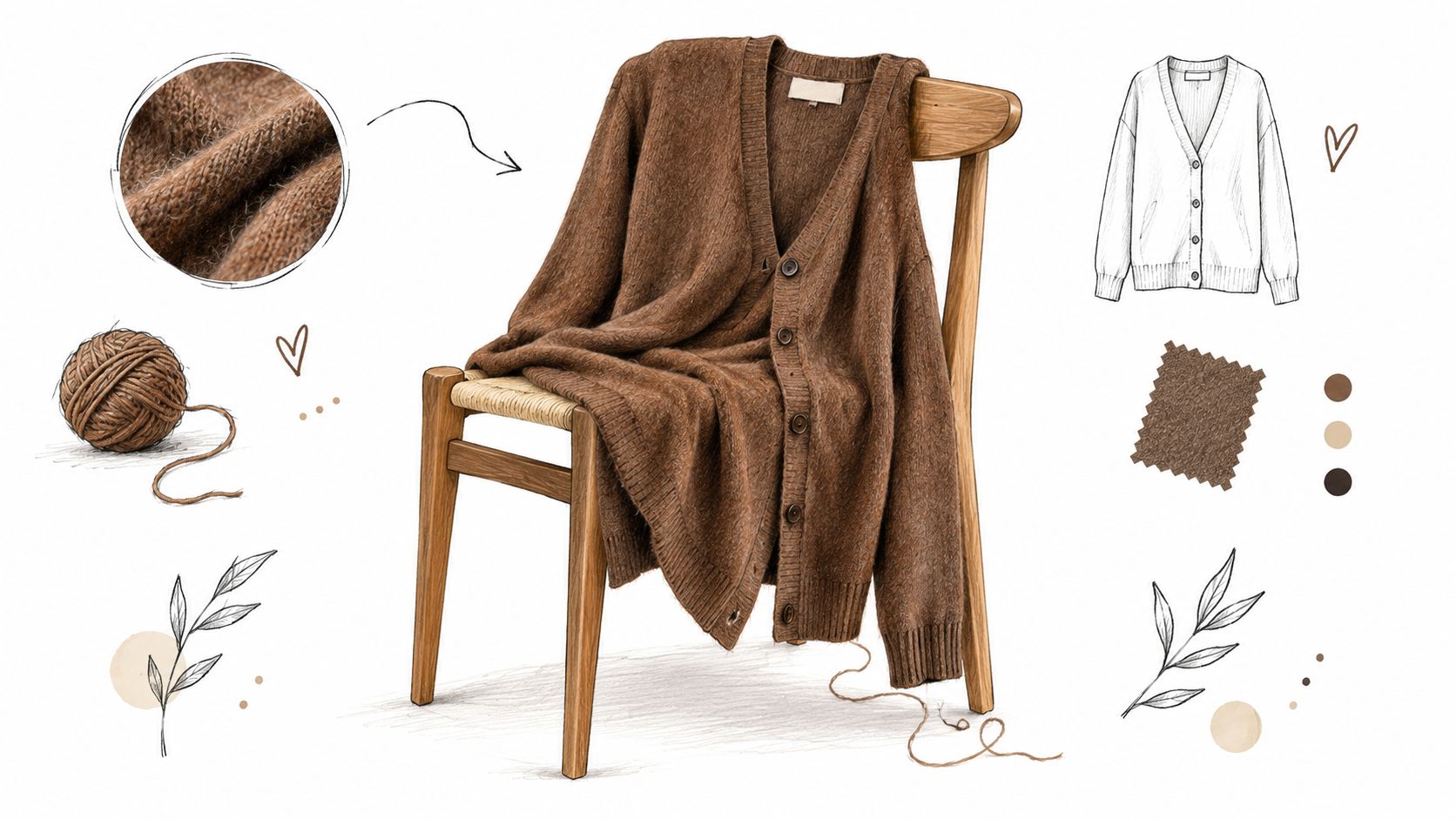
Cashmere makes the familiar shape more useful, provided the knit is chosen for the way you dress. A fine, lightweight gauge slips under tailoring and suits travel, while a denser medium gauge has enough body to replace a light jacket. A loose, heavy knit may feel luxurious but can become a single-season piece, especially under outerwear. Fiber fineness remains part of the quality conversation, as reflected in this cashmere market report, but softness alone cannot determine versatility.
The brown undertone matters just as much. A balanced shade can connect pale neutrals and dark tailoring, while a strongly warm or red-brown version may work best with a narrower palette. Judge the cardigan in daylight and beside the clothes you already wear.
Practical rule: Treat brown as a design decision, not a default neutral. The right shade and knit weight should make your existing wardrobe look more coherent.
A useful cashmere brown cardigan should earn repeated wear across work, travel, weekends, and transitional weather. The guide to the elegance and comfort of cashmere clothes offers useful background, but the garment itself must pass the practical test of color, construction, and care.
Choosing the Right Brown Shade
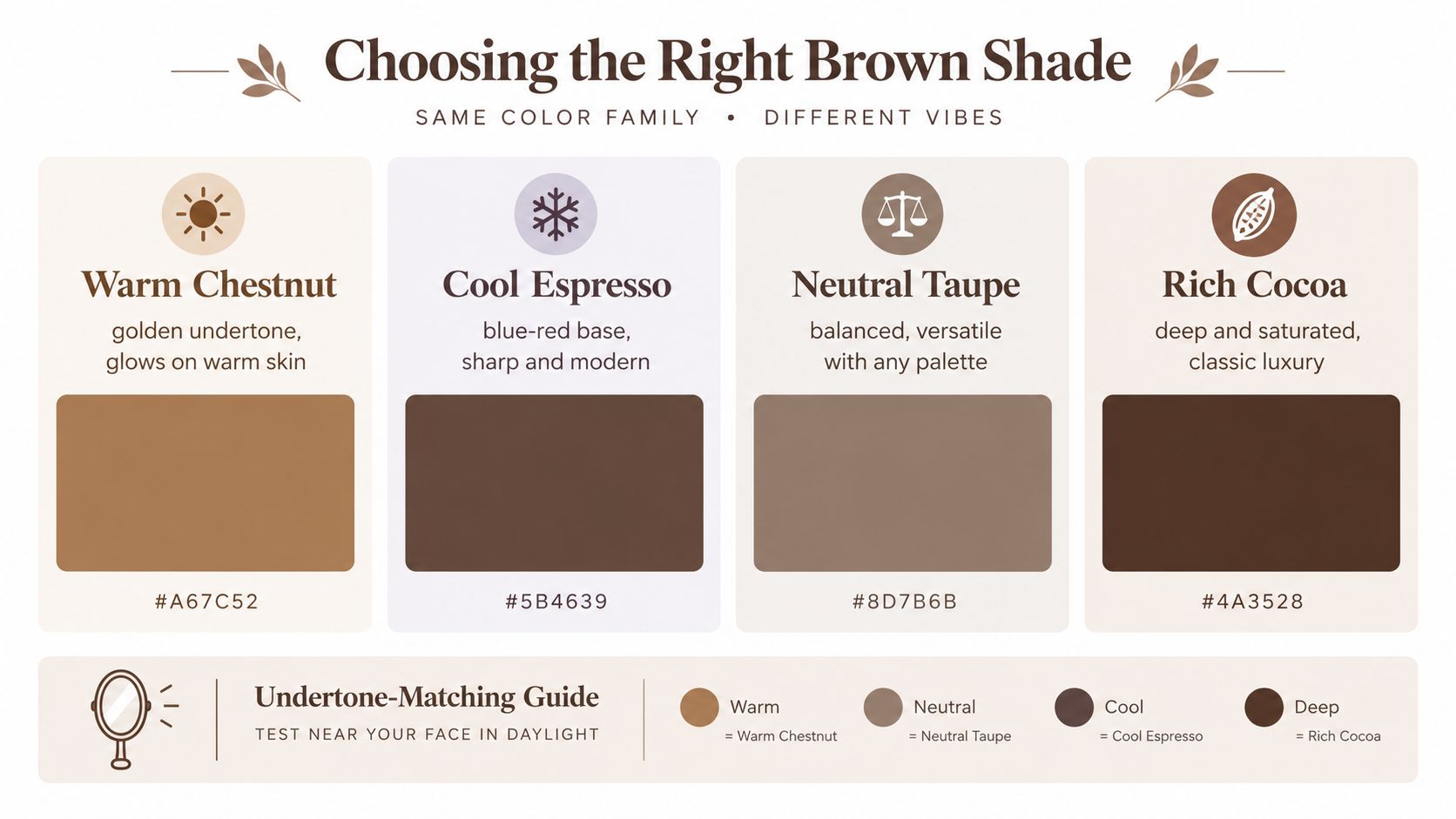
Brown has a wide range of undertones, and the distinction becomes more noticeable in cashmere because the surface reflects light softly rather than appearing completely flat. Start by deciding whether your wardrobe and complexion respond better to yellow-red warmth, blue-red coolness, or a balanced neutral.
Warm chestnut and caramel contain golden or russet notes. They work especially well with cream, oatmeal, camel, rust, warm denim, and olive. If your skin has golden, peach, or warm undertones, these shades can create a healthy continuity between your face and the garment. They can also make a relaxed cardigan feel more approachable. The trade-off is formality. A pale caramel may read casual beside a sharp black suit or a cool gray office wardrobe.
Rich cocoa sits deeper and more saturated. It has the authority of a dark neutral but feels less stark than black. Cocoa is particularly useful with white shirts, charcoal trousers, navy tailoring, and dark denim. It can flatter both warm and neutral complexions, especially when the shade has enough depth to create contrast rather than blending into the skin.
Cool espresso usually carries blue-red or gray influence. It creates a cleaner, more modern effect with optic white, icy blue, silver-gray, black, and cool denim. This is often the safest brown for a formal work wardrobe because it behaves more like a dark, structured neutral. On warmer complexions, the contrast can be striking, but place the cardigan near your face in daylight before deciding. A cool brown that looks elegant on a hanger may make warm skin appear tired under indoor lighting.
Neutral taupe and mocha occupy the middle ground. They're useful when your wardrobe contains both warm and cool colors, or when you want one cardigan to move between seasons. Taupe can look refined with ivory, mushroom gray, dusty blue, and black. Mocha tends to feel softer and more relaxed, especially in a lightweight knit.
A simple daylight test
Hold the cardigan beneath your chin near a window, without makeup or a competing scarf. Look for whether your skin appears clearer and more even, not whether the color looks attractive by itself. If you see shadows, sallowness, or redness that wasn't apparent before, try a neighboring undertone.
Then test the shade against your actual clothes:
- For warm wardrobes, compare chestnut or cocoa with cream, tan, olive, and rust.
- For cool wardrobes, place espresso or gray mocha beside navy, charcoal, white, and blue denim.
- For mixed wardrobes, choose neutral taupe or a balanced medium brown.
- For maximum authority, choose the darkest brown that still creates visible separation from your hair and skin.
Color also changes with knit texture. A fuzzy, brushed surface will appear lighter and more casual because it scatters light. A compact, smooth knit makes the same brown look denser and more formal. The shade and construction must be judged together, not separately.
Understanding Fit and Construction
A luxurious cardigan shouldn't cling everywhere. It should follow the body, skim rather than strain, and leave enough room for the layer you plan to wear underneath. Start with the shoulder seam. It should sit close to the natural shoulder unless the design is intentionally dropped. A seam that falls too far down the arm can make fine cashmere look careless, while a seam pulled toward the neck usually signals that the garment is too small.
Read the knit before reading the label
Gauge describes the density of the knit. In practical terms, a lightweight or featherweight construction slips easily beneath a blazer and works well over a camisole or fine shirt. A mid-weight cardigan has more presence, warmth, and visual structure, making it better for repeated casual wear or as a light jacket substitute. A loose, low-gauge knit creates a softer, bulkier appearance, but it can be less convenient beneath fitted outerwear.
Independent knitwear guidance places 12-gauge to 16-gauge cardigans at a useful balance between drape, layering comfort, and durability, while looser low-gauge knits may pill more quickly and appear bulkier, according to this cashmere cardigan construction guide. The best choice depends on your wardrobe. If you spend the day moving between heated interiors and cool streets, a smooth mid-weight style often earns more wear than a very thick cardigan.
Fit tests that reveal quality
Button the cardigan and sit down. The front should lie smoothly without diagonal pulling from the bust or stomach. Raise your arms, then lower them. The hem should recover rather than remain twisted, and the cuffs shouldn't feel stretched.
Check the inside as carefully as the front:
- Seams should lie flat without loose loops or abrupt changes in tension.
- Button bands should remain straight when the cardigan is worn open and closed.
- Ribbed cuffs and hems should recover after gentle stretching.
- The fabric should drape evenly rather than collapsing in one area and standing away in another.
Fiber quality matters alongside construction. Grade-A cashmere in the finer 14 to 15.5 micron range is associated with a soft handfeel and a strong warmth-to-weight balance, but softness alone won't guarantee longevity. A tightly controlled knit, stable finishing, and sensible fit will usually serve you better than an exceptionally soft garment that loses shape under normal friction.
For a closer look at the material checks involved, use this guide to choosing a high-quality cashmere sweater. Choose the size that gives the intended silhouette. Don't size down to make cashmere look sleek if doing so creates tension at the buttons or armholes.
Styling Your Cardigan for Every Occasion
The most useful cashmere brown cardigan changes character through its supporting pieces. The same garment can look sharp, relaxed, or luxuriously understated depending on the contrast around it. Brown works best when the rest of the outfit gives it a clear role.
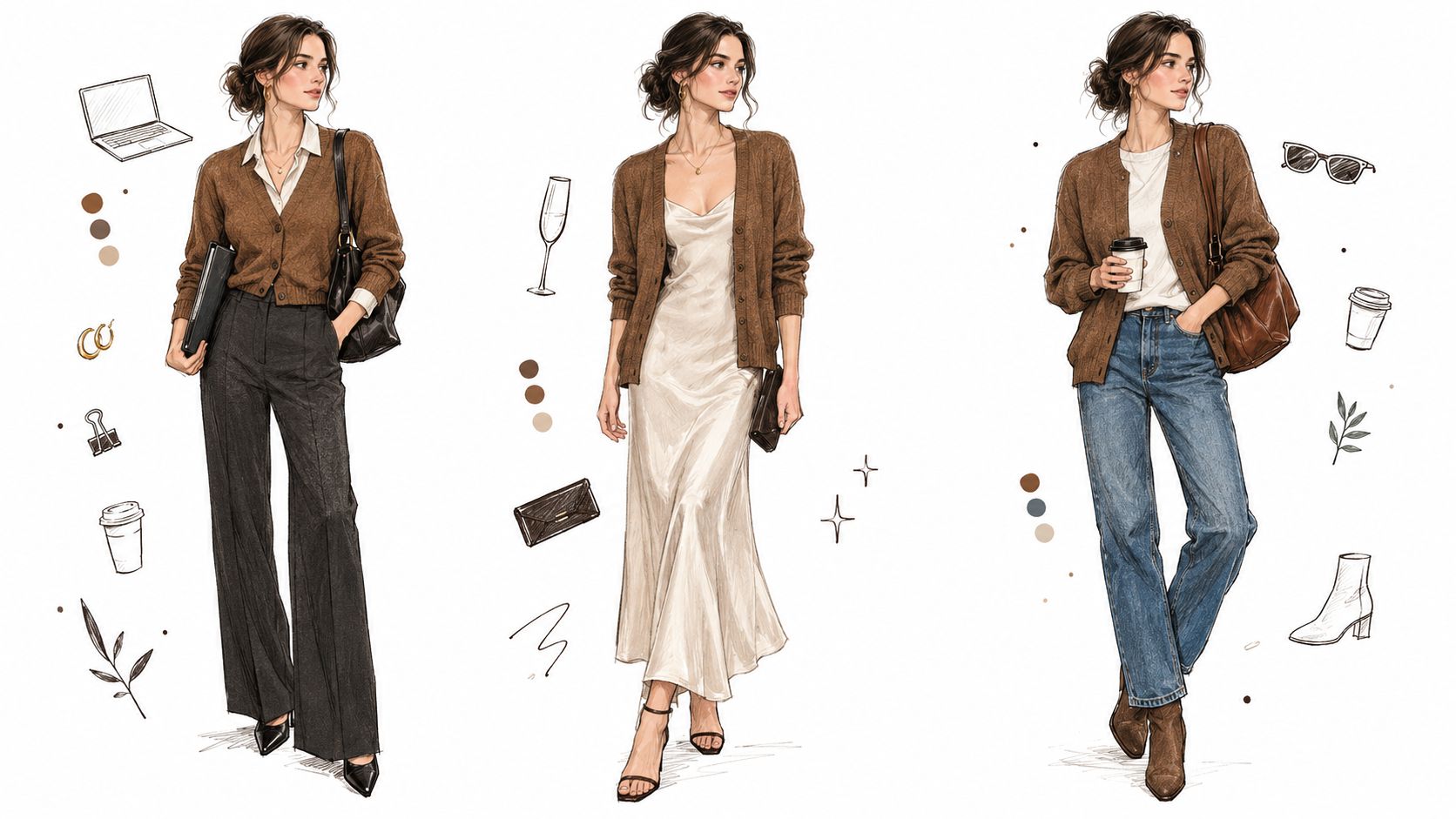
For a polished work wardrobe
Button a smooth espresso or cocoa cardigan over a crisp white shirt, then add charcoal trousers and leather loafers. Leave the lowest button open if you want the shirt hem to create movement, or wear the cardigan closed beneath a blazer for a cleaner column.
A warmer chestnut shade works with an ivory blouse and navy trousers. The color combination feels softer than black and white while retaining enough contrast for a professional setting. Keep the accessories structured, such as a leather tote, a narrow belt, or simple metal jewelry, so the warmth of the knit doesn't make the outfit look overly casual.
If your cardigan is cropped, wear it with high-rise trousers or a skirt so the proportions look deliberate. If it falls below the hip, let it skim over a tucked shirt rather than adding another long layer beneath it. The goal is to prevent several competing horizontal lines.
For weekends and travel
Use a mid-weight brown cardigan as the refined layer over a white or gray T-shirt, straight-leg denim, and simple sneakers. Chestnut and mocha make this formula feel relaxed, while espresso gives it a sharper finish. Add a scarf in cream, muted blue, or olive if the outfit needs more color.
For travel, avoid pairing a loose cardigan with a loose top and wide trousers unless you want a deliberately oversized silhouette. A better balance is a fuller cardigan over a close-fitting base, or a slim cardigan over a relaxed trouser. The cashmere provides softness, while the proportions preserve definition.
For colder layering
A lightweight cardigan can sit beneath a wool coat, but test the sleeve volume before buying. Bulky cuffs and dropped shoulders tend to bunch beneath fitted outerwear. A smooth, close-fitting construction is more practical under a coat.
For a dinner look, button the cardigan as a top with a midi skirt or wide-leg trousers. Add pointed shoes and a compact bag rather than piling on accessories. Brown has enough richness to carry the outfit, especially when the knit has a clean surface and the buttons are understated.
Styling insight: If the cardigan works with your most-worn denim, your best work trousers, and at least one coat, it has passed a more useful test than a single styled photograph.
Essential Care for Longevity
Cashmere is resilient when treated as a fine animal fiber, not as ordinary jersey. Friction, heat, twisting, and aggressive detergents can roughen the surface and distort the shape. Pilling is normal in areas that rub, including underarms, cuffs, side seams, and places touched by bags or coats. The aim isn't to prevent every pill. It's to reduce unnecessary stress and remove surface pills without cutting into the knit.
Industry care guidance recommends airing cashmere after wear, using gentle hand washing or a low-temperature wool cycle, and drying the garment flat. The cashmere care guidance for garments also emphasizes that lower micron fibers provide softness, but quality still depends on care and construction.
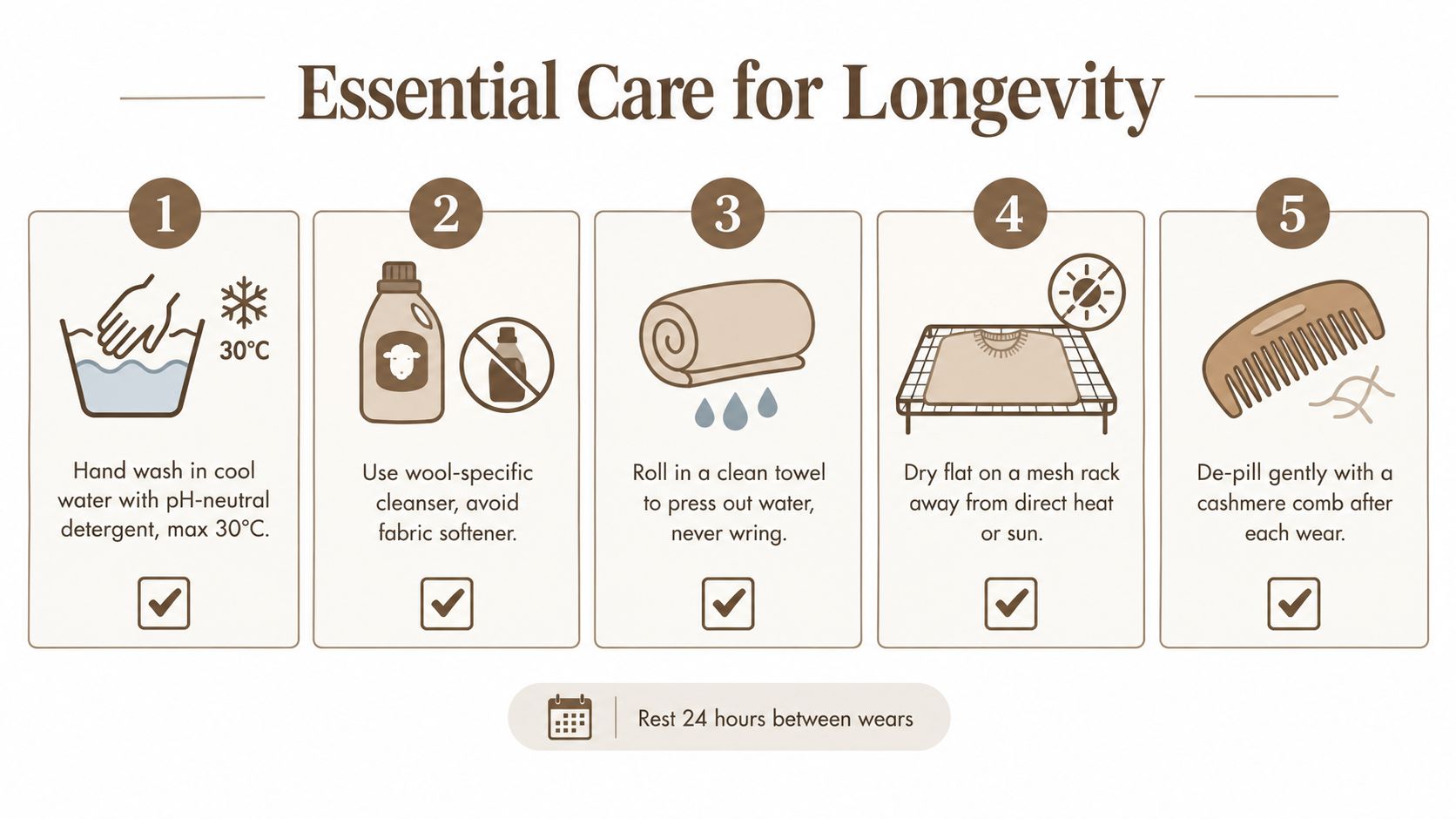
A low-stress maintenance routine
- Air before washing. Hang the cardigan over a chair for a short period, then fold it. Fresh air often handles light wear better than repeated washing.
- Wash gently. Use cool water and a wool-specific, pH-neutral cleanser. Avoid fabric softener, bleach, and hot water. Agitation causes more trouble than the water itself.
- Press out moisture. Lay the cardigan on a clean towel, roll it carefully, and press. Never wring or twist it, because wet cashmere can stretch under force.
- Dry flat. Return the garment to its original proportions on a mesh rack or dry towel, away from radiators, direct heat, and strong sun. Don't move it to a hanger while damp.
- Remove pills carefully. Once dry, use a cashmere comb with light strokes. A razor can catch the yarn and create a hole, so it requires more control than many people expect.
- Store folded. Hanging places weight on the shoulders and can lengthen the body. Fold the cardigan clean and store it in a breathable container protected from moths.
Inspect the garment before storing it for a season. A small loose thread should be secured according to the maker's instructions rather than pulled. Keep perfume, oils, and rough bag straps from making direct contact whenever possible.
Cashmere also benefits from a pause between wears. Resting the cardigan lets the fibers recover from friction and helps you notice whether it needs airing, spot cleaning, or gentle de-pilling before the next outing.
Why This Investment Pays Off
A cashmere brown cardigan earns its place through frequency, adaptability, and repairability, not softness alone. The right brown undertone can bridge navy, cream, denim, charcoal, and black, while cashmere adds warmth without the bulk of a heavier jacket. That combination works across offices, travel, and ordinary weekends when the gauge and fit match your routine.
The material belongs to an established luxury clothing market. One report places the global cashmere market at $4.8 billion in 2025, with projected growth to $8.11 billion by 2034. A separate outlook estimates the global cashmere clothing market at $3.63 billion in 2025 and $5.28 billion by 2034, as reported in this cashmere market research and cashmere industry outlook. These figures do not make every cardigan good value. They indicate sustained demand for premium layers used in daily dressing and gifting.
Buy for the life you lead
Choose a lightweight, close-fitting cardigan if you usually wear blazers, fitted coats, or slim office layers. A mid-weight knit makes more sense when the cardigan needs to replace a light jacket on casual days. A compact, smooth construction handles crossbody bags and regular friction better than a loose, brushed, or heavily textured knit.
Brown undertone matters just as much. Camel and honey browns bring warmth to cream, olive, and denim, while chocolate and espresso shades sit more naturally with black, charcoal, and deep navy. A greyed taupe brown can be versatile, but it may look flat beside warm colors. Check the shade against your existing trousers, outerwear, and shoes in daylight before buying.
Material disclosure should inform the decision too. Market coverage describes growing interest in traceability, certification, recycled cashmere, and modular designs that support layering and repeated use. Product details should explain fiber grade, construction, origin, and care. Vague information leaves softness and styling photographs as incomplete evidence.
The best cardigan is not automatically the thickest, darkest, or most expensive. It is the one whose undertone works with your wardrobe, whose gauge suits your climate, whose proportions fit your body, and whose care requirements you will follow. That is how a seasonal purchase becomes a dependable layer.
Cashmere Boutique offers women's cashmere cardigans, including round-neck styles, twin sets, and shrug-style options in multiple colors, with size charts and care guidance. Visit Cashmere Boutique to compare brown shades, cardigan silhouettes, and complementary cashmere layers before choosing a suitable piece.