
Article: Cashmere Argyle Sweater Style and Buying Guide
Cashmere Argyle Sweater Style and Buying Guide
You're standing in front of a sale rack with one hand on a cashmere argyle sweater. The diamonds look refined on the hanger, but you're wondering whether the price reflects genuine fiber quality or merely a familiar luxury label. You're also asking a more practical question: will this become a reliable wardrobe piece, or will it look overly preppy and start pilling before the season is over?
A good cashmere argyle sweater represents two purchases at once. You're buying a heritage pattern with a strong visual identity, and you're buying a scarce animal fiber whose quality depends on measurable specifications. The right choice balances diamond scale, color contrast, fit, yarn construction, fiber fineness, and realistic care requirements. The wrong one is either a costume-like statement or an expensive soft sweater with weak structure.
Table of Contents
- Why the Cashmere Argyle Sweater Deserves a Closer Look
- The Pattern's Journey from Scottish Tartan to Modern Knitwear
- What Makes Cashmere a Scarce and Special Fiber
- How an Argyle Sweater Is Knitted
- Reading Fiber Specs Without Getting Misled
- Styling Argyle Beyond the Preppy Look
- Care, Pilling, and Realistic Wear-Life Expectations
- Buying and Gifting Checklist for the Right Sweater
Why the Cashmere Argyle Sweater Deserves a Closer Look
Argyle works because it has structure. The repeated diamonds create an immediate focal point, while the fine diagonal overcheck gives the surface a layered appearance. Cashmere changes the effect again. Its softness and drape can make the pattern feel quieter than the same design in a stiff or heavily brushed yarn, but only if the sweater has been knitted and finished well.
The first decision is visual. A high-contrast combination, such as deep blue with burgundy, announces the pattern. Muted combinations, such as charcoal with warm neutrals, let the geometry recede and make the garment easier to wear with sharp trousers, denim, or a skirt. Diamond scale matters too. Large diamonds create a bolder silhouette, while smaller diamonds usually feel more restrained and are easier to style in a professional wardrobe.
The second decision is material. Cashmere is not just soft wool with a more luxurious name. Global cashmere production reached 25,611 tonnes of greasy fiber in 2023, but cashmere still represented only about 0.02% of global fiber production that year, according to the cashmere social assessment and life-cycle research. That limited supply helps explain why fiber details deserve more attention than a vague “cashmere” label.
The two mistakes worth avoiding
- Buying for softness alone: A sweater can feel wonderfully soft in a shop and still use short or uneven fibers that pill quickly.
- Buying for heritage alone: A traditional-looking argyle can overwhelm the wearer if the contrast, cut, and styling all lean into the same preppy references.
A considered purchase starts with the pattern's history, then moves through fiber specifications, construction, fit, styling, care, and gifting. That order matters. You're not looking for a novelty motif with a luxury fiber added to it. You're looking for a coherent garment whose heritage and material quality support each other.
The Pattern's Journey from Scottish Tartan to Modern Knitwear
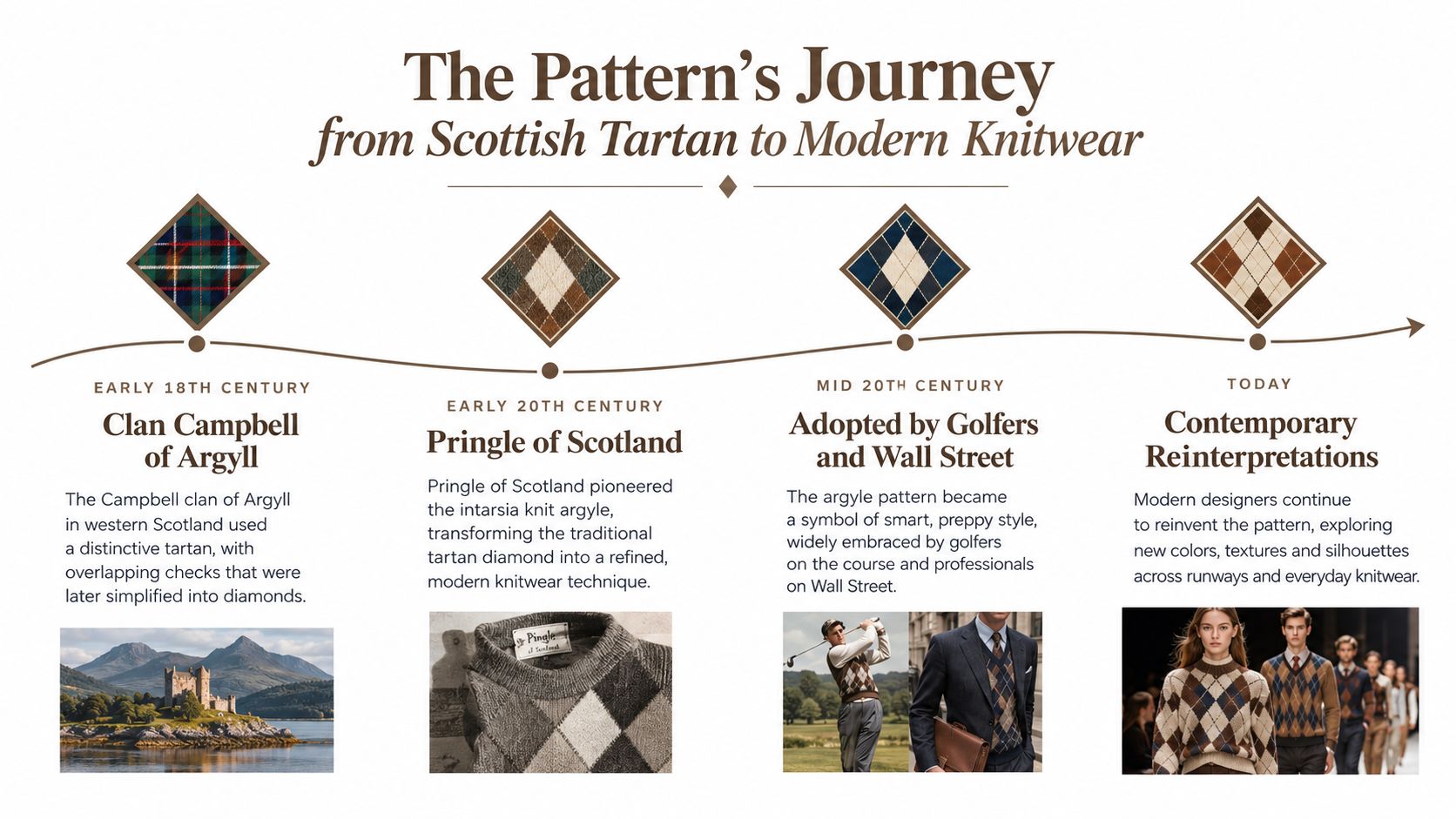
Argyle belongs to the broader history of Scottish textile design. Historical accounts trace the motif to Scottish tartan traditions dating to at least the 1600s, while its defining visual language is the repeated diamond arranged in contrasting colors and crossed by thin diagonal lines. The design became far more recognizable as knitwear during the twentieth century, when Pringle of Scotland developed and popularized argyle for sweaters and related garments, as described in this history of sweater types and argyle knitwear.
Read the pattern in three layers
First, identify the diamond field. The diamonds are the main color blocks, not a graphic printed over a plain sweater. In a properly constructed garment, the color changes belong to the knitted fabric itself.
Next, look at the diagonal overcheck. These narrow lines cross the diamonds and give argyle its recognizable finish. They add visual precision, but they also create a surface detail that can catch on bags, seatbelts, and rough coats.
Finally, consider the setting. Argyle became associated with socks, vests, pullovers, golf clothing, and leisure dressing. That history gives it a country-club and collegiate shorthand, but it doesn't dictate how you must wear it today.
Style principle: Let argyle supply the visual interest. Keep the rest of the outfit calm.
The pattern's appeal comes from restraint as much as recognition. Traditional color relationships can suggest club colors or country clothing, but modern versions don't need to reproduce a literal uniform. A soft neutral ground with a restrained contrast can look architectural. A saturated combination can look expressive when paired with simple trousers and minimal footwear.
The point of understanding argyle's history isn't to dress like a historical character. It's to recognize which details create sophistication and which push the sweater toward costume. Choose one heritage cue, then modernize the proportions, fabric pairings, and accessories around it.
What Makes Cashmere a Scarce and Special Fiber
Cashmere comes from the fine underdown of goats. Workers collect it by combing the animal, then separate the usable fibers from coarser guard hair. That process yields far less material than ordinary wool production, and the amount varies with the goat, climate, nutrition, and combing conditions. A lightweight sweater and a dense, fully fashioned argyle therefore require different amounts of raw fiber. Scarcity affects both price and construction: a maker may use less yarn, shorten the body, or blend fibers to control cost.
Production is concentrated in a small group of regions, particularly China and Mongolia. Country of origin gives useful context, but it cannot verify softness, strength, or responsible handling by itself. Origin also helps explain why specifications vary. Goat genetics, seasonal temperatures, available forage, and local combing practices influence both fiber diameter and staple length. Colder conditions can support a denser undercoat, while breed and processing determine how much of that undercoat reaches the spinner in usable form.
Microns are the starting point, not the whole verdict
Fiber diameter is measured in micrometres, commonly shortened to microns. Finer fibers bend more readily against the skin, which reduces the prickly sensation associated with coarser animal fibers. The Textile Exchange assessment of cashmere production places Chinese and Mongolian examples at about 14.5 to 16.5 micrometres, while typical Iranian cashmere measures about 17.5 to 19.5 micrometres.
| Grade | Micron range | Feel and durability | Typical use |
|---|---|---|---|
| Fine | About 14.5 to 16.5 micrometres in Chinese and Mongolian examples | Very soft, with a delicate surface that needs careful handling | Close-to-skin knitwear |
| Medium | About 17.5 to 19.5 micrometres in typical Iranian examples | Soft, with a potentially firmer hand | Everyday sweaters and blends |
| Unspecified | Not disclosed | Impossible to assess from the label alone | Ask for testing and composition details |
Micron size predicts initial hand feel, while diameter variation affects consistency. A yarn with a broad spread of fiber diameters can feel less even and may include more fibers that resist bending against the skin. Staple length matters for a different reason. Longer fibers generally give the spinner more cohesion, which can support smoother yarn and better resistance to surface fuzz, provided the yarn and knit are well made.
Ask whether the advertised measurement is a mean diameter, a maximum, or a selected-fiber result. Check staple length, diameter variation, yarn count, and blend composition. “Grade A” without measurement context is a marketing label, not a full specification. Use this cashmere FAQ guide to check composition, grading, and care questions before buying.
How an Argyle Sweater Is Knitted
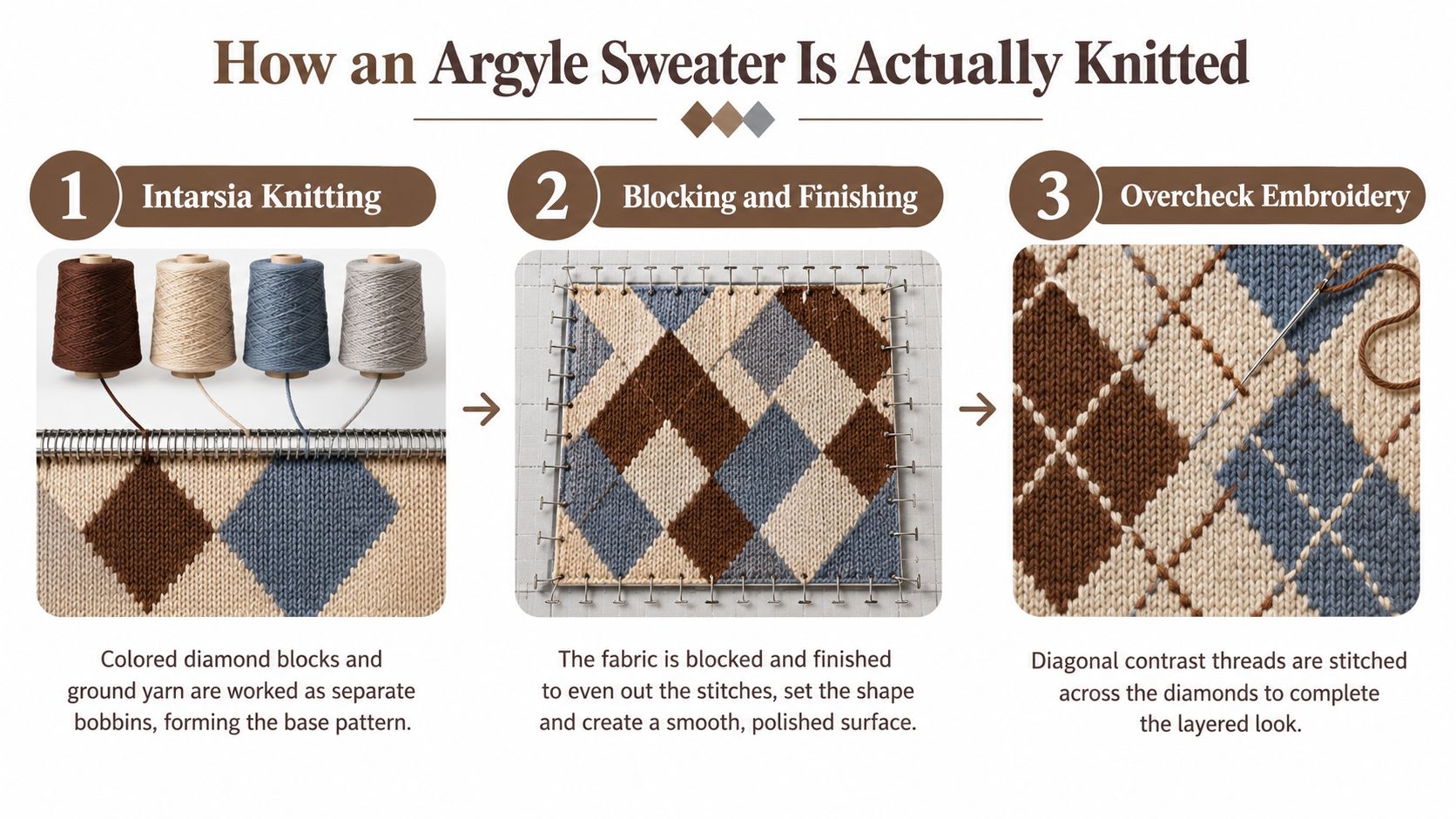
A convincing argyle sweater is engineered as colorwork, usually through intarsia knitting, never printed on top of the fabric. Separate yarn supplies form each color field, with joins managed where the diamonds meet. Controlled color changes on every row create the sharp geometry that makes the pattern look intentional rather than costume-like. This construction also lets the maker keep the fabric relatively light, which matters in cashmere, where excess bulk can overwhelm the fiber's softness.
Inspect the construction from the outside
Start with the geometry. The diamonds should have consistent edges and similar proportions across the front. Wavy, pinched, or uneven shapes indicate poor tension control. On a cashmere sweater, those flaws are difficult to disguise because the soft surface makes every distortion visible.
Next, inspect each color boundary. Look for secure joins, with no visible gaps, thin spots, or color bleeding. These transitions receive repeated handling during knitting and finishing, so weak joins can become more obvious after washing or regular wear.
Then examine the overcheck. Makers commonly add the diagonal lines with duplicate-stitch embroidery, placing another layer of yarn across the knitted surface. That layer supplies the raised definition that separates a finished argyle from a basic diamond motif. Choose restrained contrast if you want the sweater to look refined. Extremely sharp contrast can make a cashmere argyle read as costume clothing.
Turn the sweater inside out
The reverse reveals the quality of the finishing. It does not need to look decorative, but yarn ends should be secured rather than left loose. Check the hem and cuffs for stable ribbing, then inspect the shoulder seams and underarms for uneven tension. These areas affect comfort, shape retention, and how the sweater sits over a shirt.
For a basic explanation of separate color areas, consult this intarsia construction reference). Intarsia avoids carrying long floats across the reverse, but it demands careful management of many yarn changes.
A premium argyle should look deliberate on the front and disciplined on the reverse.
Blocking evens the fabric after knitting, but it cannot repair poor joins or distorted diamonds. Reject puckering, loose overcheck stitches, and a hem that twists when the sweater lies flat. Those defects are especially frustrating in cashmere because repairs can remain visible against contrasting diamonds.
Reading Fiber Specs Without Getting Misled
A sweater can feel exceptionally soft in the fitting room and still wear poorly after repeated friction. Check the specification before judging the hand feel. Fiber diameter, length, variation, yarn cohesion, and construction determine whether that softness lasts.
Published cashmere research identifies approximately 14 to 15 microns as top-quality cashmere commonly used in knitted garments. It also describes fibers below 18 microns and longer than 40 millimetres as commercially suitable for knitting, as documented in this peer-reviewed cashmere fiber study. Fineness supports comfort, while longer, more consistent fibers help the yarn stay cohesive. Very fine fibers can feel luxurious yet create a delicate surface when spinning or finishing is weak.
What to ask a seller
- Mean fiber diameter: Ask whether the micron figure covers the whole fiber population or highlights only the finest fibers.
- Staple length: Longer fibers generally hold the yarn together better; ask the seller for the staple length figure.
- Yarn construction: Confirm whether the sweater uses a single strand or a more stable multi-strand construction.
- Composition: Check whether it is pure cashmere or contains wool, silk, recycled fiber, or synthetic material.
- Country of origin: Use origin as context, not as proof of quality. The cashmere assessment linked earlier also supports examining origin and fiber range rather than relying on the word “cashmere” alone.
| Grade | Micron range | Fiber length | Feel and durability | Typical price signal |
|---|---|---|---|---|
| Fine cashmere | Approximately 14 to 15 microns, based on the cited research | Ask for the actual staple measurement | Exceptionally soft, but still vulnerable to abrasion | Premium positioning |
| Commercially suitable cashmere | Below 18 microns, with fibers longer than 40 millimetres, based on the cited research | Longer fibers support yarn cohesion | Good balance when spinning and finishing are sound | Broad quality range |
| Unverified “Grade A” | Not meaningful without a measurement method | Not disclosed | Feel may be good, but durability is uncertain | Marketing-led pricing |
Treat “Grade A” as a label, not a verdict. A credible specification states what was measured and how. If the seller cannot provide a method, diameter range, or staple-length figure, the grade offers little help in comparing sweaters.
Inspect the garment as closely as the label. The fabric should recover after gentle handling instead of sagging immediately. A loose, fluffy surface may look appealing, but brushed or weakly bound fibers expose more fiber ends to friction. Choose a smooth, compact finish for a cashmere argyle sweater intended to serve as a regular layer. That construction keeps the heritage pattern polished rather than letting a fragile surface make the purchase look worn after one season.
Styling Argyle Beyond the Preppy Look
Argyle only looks costume-like when every element repeats the same reference. A diamond sweater with a collared shirt, polished country shoes, narrow chinos, and a traditional palette can read as a uniform. Keep the argyle, remove the excess signals, and the garment becomes much more current.
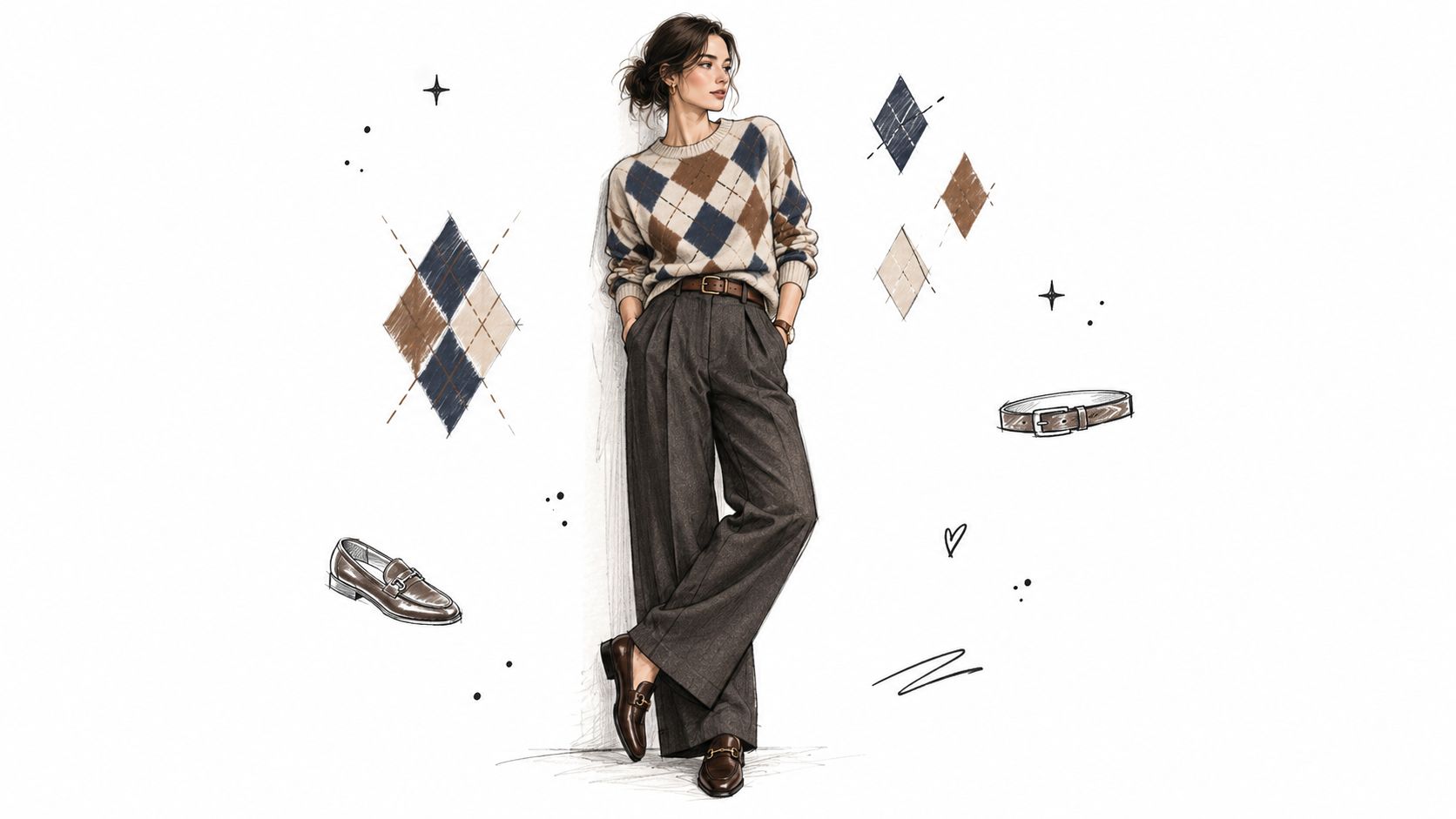
Start with one patterned piece. Pair a muted cashmere argyle sweater with wide-leg wool trousers, dark denim, or a simple column skirt. The larger silhouette prevents the diamonds from feeling overly formal, while plain bottoms give the eye somewhere to rest.
Three reliable outfit formulas
For the office: Choose a low-contrast crewneck over a tonal shirt, then add fitted trousers and clean derbies. Keep jewelry simple and let the neckline remain visible without introducing another strong pattern.
For weekends: Wear a high-contrast sweater with straight or relaxed denim and white sneakers. The casual footwear breaks the country-club association without making the cashmere look precious.
For evening: Try a deep, restrained palette with a sleek skirt or wide-leg black trousers. Loafers work for a polished daytime finish, while minimal leather shoes make the sweater feel more intentional after dark.
Color is the easiest modernizing tool. Navy and burgundy or forest and burgundy create a confident statement. Oatmeal, sand, charcoal, and camel produce a quieter effect that works particularly well under a fitted jacket. Don't match every shade in the diamonds to the rest of the outfit. Pick one supporting color and leave the remaining tones alone.
This logic works across genders and wardrobes. A shorter cardigan can act as a top, while a vest gives you the pattern without the full visual weight of sleeves. Interest in cardigan and vest formats rose toward autumn 2025, with reported peaks in October, while spring and early-summer interest was minimal, according to commercial argyle trend analysis. That source reflects normalized search interest rather than sales volume, but it supports a practical conclusion: layering formats are easier to adapt across indoor and outdoor temperatures than a heavy pullover.
For a different neckline and proportion, compare the styling logic of a funnel-neck cashmere sweater. The lesson is simple. Let the silhouette do some of the modern work, rather than relying only on color.
The video below offers another visual reference for wearing cashmere with a contemporary wardrobe.
Care, Pilling, and Realistic Wear-Life Expectations
Premium cashmere isn't maintenance-free. The surface can pill where it meets a coat, bag strap, desk, or seatbelt, and an argyle makes the damage more noticeable because loose fibers sit against contrasting colors. Early surface pilling is normal. It doesn't automatically mean the sweater is defective.
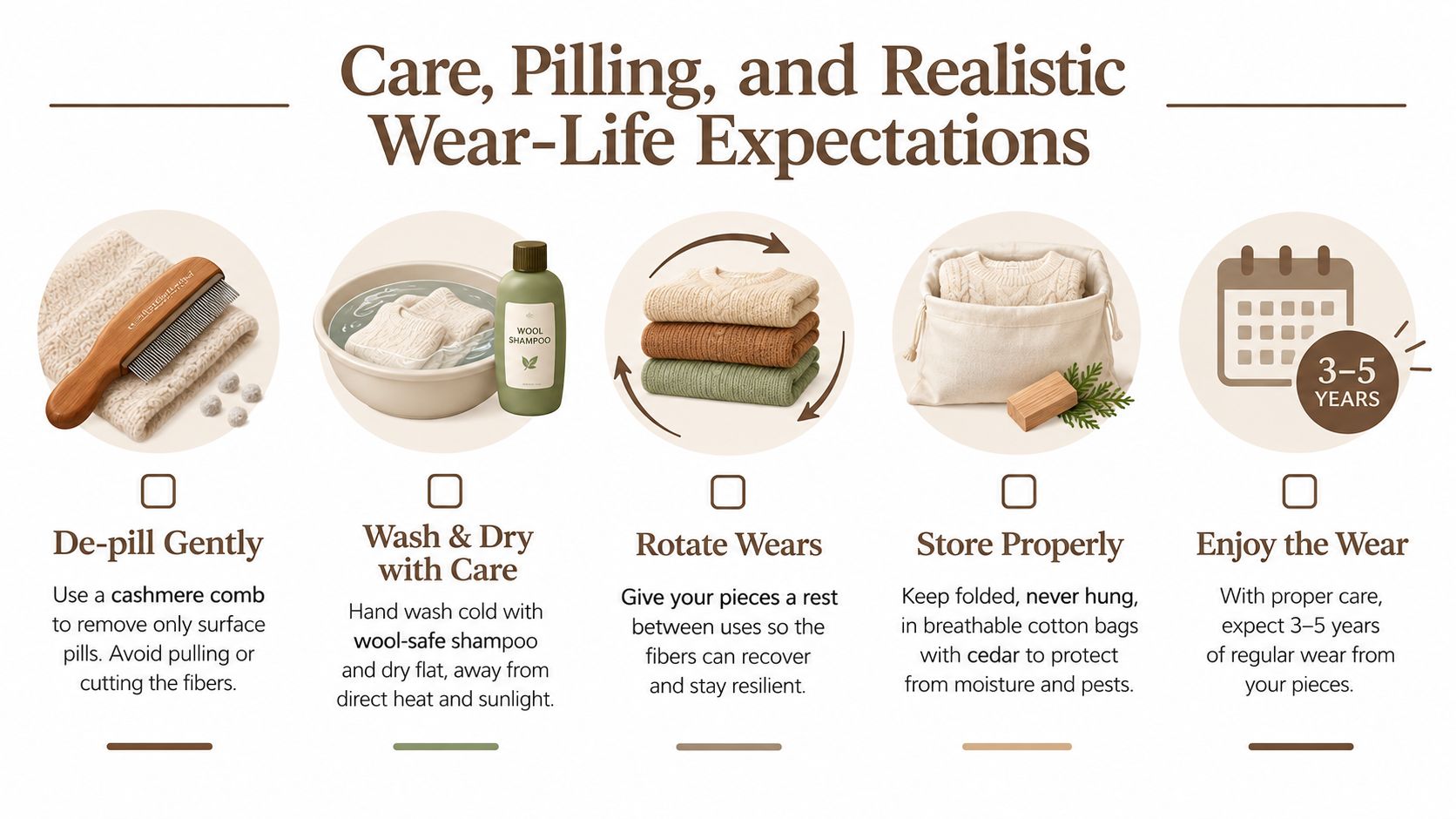
Use a cashmere comb slowly and lightly, working only on the raised pills. Don't drag the tool aggressively across the overcheck embroidery or the corners of the diamonds. A sweater stone can also help, but it requires restraint. If the fabric itself becomes thin, loses cohesion, or develops holes, that indicates deeper wear rather than ordinary surface fuzz.
Wash less and handle gently
Spot-clean minor marks when possible. When washing is necessary, use cool water and a manufacturer-approved wool or cashmere process. Avoid rubbing, twisting, and wringing. Press out excess water, reshape the sweater, and dry it flat away from direct heat and strong sunlight.
Repeated machine washing can cause substantially greater dimensional change than hand-washing and flat-drying, although the available care analysis isn't an independently verified universal laboratory guarantee. The safe recommendation is still clear: follow the garment's care label, and don't experiment with a treasured intarsia sweater.
Wear rule: Friction is the enemy. Rotate the sweater, keep rough outerwear away from the surface, and protect the overcheck from straps.
Store the sweater folded, never on a hanger. Hanging can stretch the shoulders and distort the body length, while folding preserves the shape of the knitted fabric. Use a breathable storage bag with cedar, and put the sweater away clean because food, skin oils, and stains attract moths.
Professional cleaning makes sense for an oil-based stain, a difficult mark, or a garment whose care label specifically requires it. Tell the cleaner that the sweater contains intarsia colorwork and surface embroidery. The objective isn't merely cleanliness. It's preserving diamond alignment, color boundaries, and the overcheck definition.
Buying and Gifting Checklist for the Right Sweater
A good purchase should survive inspection before you try it on. Start with the label, then study the fabric, then assess the pattern and fit. Don't let a sale price turn a vague product description into a quality claim.
Use this store or product-page checklist
- Confirm the composition. Look for a clear percentage breakdown. “Cashmere” alone doesn't tell you whether the garment is pure cashmere or a blend.
- Find the micron information. If a figure is listed, ask whether it represents a mean diameter, a maximum, or selected fibers.
- Check the fiber context. Country of origin, staple length, and diameter variation are more useful than an unexplained grade label.
- Verify the pattern construction. True argyle should be knitted colorwork, not a printed design.
- Inspect the joins. Reject holes, puckering, weak corners, and uneven tension between color blocks.
- Study the overcheck. The diagonal stitches should be consistent and secure, without loose loops.
- Turn it inside out. Yarn ends should be controlled, and the reverse shouldn't feel carelessly unfinished.
- Assess the fit. The shoulder seam should sit cleanly, the cuffs should remain stable, and the body should cover the waistband without bunching.
- Match contrast to your wardrobe. If you mostly wear dark trousers, a muted neutral argyle is versatile. If your wardrobe is plain, a stronger contrast can earn its place.
- Read the care and returns policy. A delicate garment deserves clear care instructions and a return option that gives you time to assess fit and construction.
For a broader quality framework, use this guide on how to choose a high-quality cashmere sweater. Apply the same scrutiny to an argyle design, then add the extra checks for colorwork and overcheck embroidery.
Choose a gift with restraint
Navy and burgundy or charcoal and burgundy are dependable gift palettes because they offer contrast without demanding a highly specific wardrobe. More unusual combinations suit someone who already dresses boldly or enjoys statement knitwear. If you don't know the recipient's preferred silhouette, a cardigan or vest can offer more flexibility than a fitted pullover.
Sizing requires care because men's and women's cuts can differ in shoulder width, body length, and sleeve proportions. Check the actual garment measurements rather than relying only on the size letter. A cashmere comb and a concise care card make the gift more useful, especially for someone who hasn't owned fine knitwear before.
The best cashmere argyle sweater isn't the loudest or softest option on the rack. It's the one with transparent fiber information, precise intarsia, secure finishing, a wearable contrast level, and a shape that fits the recipient's real wardrobe.
Cashmere Boutique offers cashmere sweaters, cardigans, accessories, and curated gifts with stated fiber specifications, multiple color options, and sizing and care guidance. Visit Cashmere Boutique to compare cashmere styles and find an argyle-inspired layer or considered gift that matches your standards.