
Long Sleep T Shirt
You're in a bedroom that's a little too cool, the blanket has slipped off one side, and the thermostat never seems to stay where you left it. That's the moment a long sleep T-shirt makes sense. It sits between a regular tee and a traditional nightshirt, giving you coverage without forcing you into heavy, fussy sleepwear.
What makes it worth buying is not the name, it's the way the garment behaves in a real room. The best version feels soft, moves with you, and matches the temperature you sleep in. If you understand fabric, fit, and care, you can pick one shirt that works for sleeping, lounging, and those half-awake trips to the kitchen.
Table of Contents
- Why a Long Sleep T-Shirt Earns a Place in Your Nightstand Drawer
- Where the Long Sleep T-Shirt Actually Comes From
- How Fabric, Weight, and Fit Change How You Sleep
- Choosing a Size That Covers Without Dragging
- Cotton, Modal, Wool, and Cashmere Compared
- Layering a Long Sleep T-Shirt with Robes, Blankets, and Throws
- Caring for Your Sleep T-Shirt So It Stays Soft
- Your Long Sleep T-Shirt Decision Checklist
Why a Long Sleep T-Shirt Earns a Place in Your Nightstand Drawer
A lot of people reach for whatever clean T-shirt is closest to the bed, then wonder why it twists, rides up, or feels clammy by 3 a.m. A purpose-made long sleep T-shirt solves a different problem. It gives you the easy shape of a tee, plus the extra length and coverage of a sleep garment that stays comfortable when you turn over, stretch, or pull one knee up under the blanket.
The bedtime problem it solves
The best sleep clothes disappear once you're in bed. That means no tight waistbands, no scratchy seams, and no hem that climbs up your back when the room cools down. A longer cut also helps on nights when the blanket shifts, because the shirt continues to cover your torso without needing constant adjustment.
That's why this garment feels familiar fast. It borrows the simple comfort people already expect from a T-shirt, but it behaves more like a nightshirt when you're asleep.
Practical rule: if you're thinking about the shirt more than your sleep, the fit or fabric is off.
The useful way to shop for one is simple. First, match the fabric to the room. Second, check that the fit covers without restricting. Third, think about care, because the softest sleep top is only useful if it keeps its shape after washing. Those three choices do most of the work.
Where the Long Sleep T-Shirt Actually Comes From
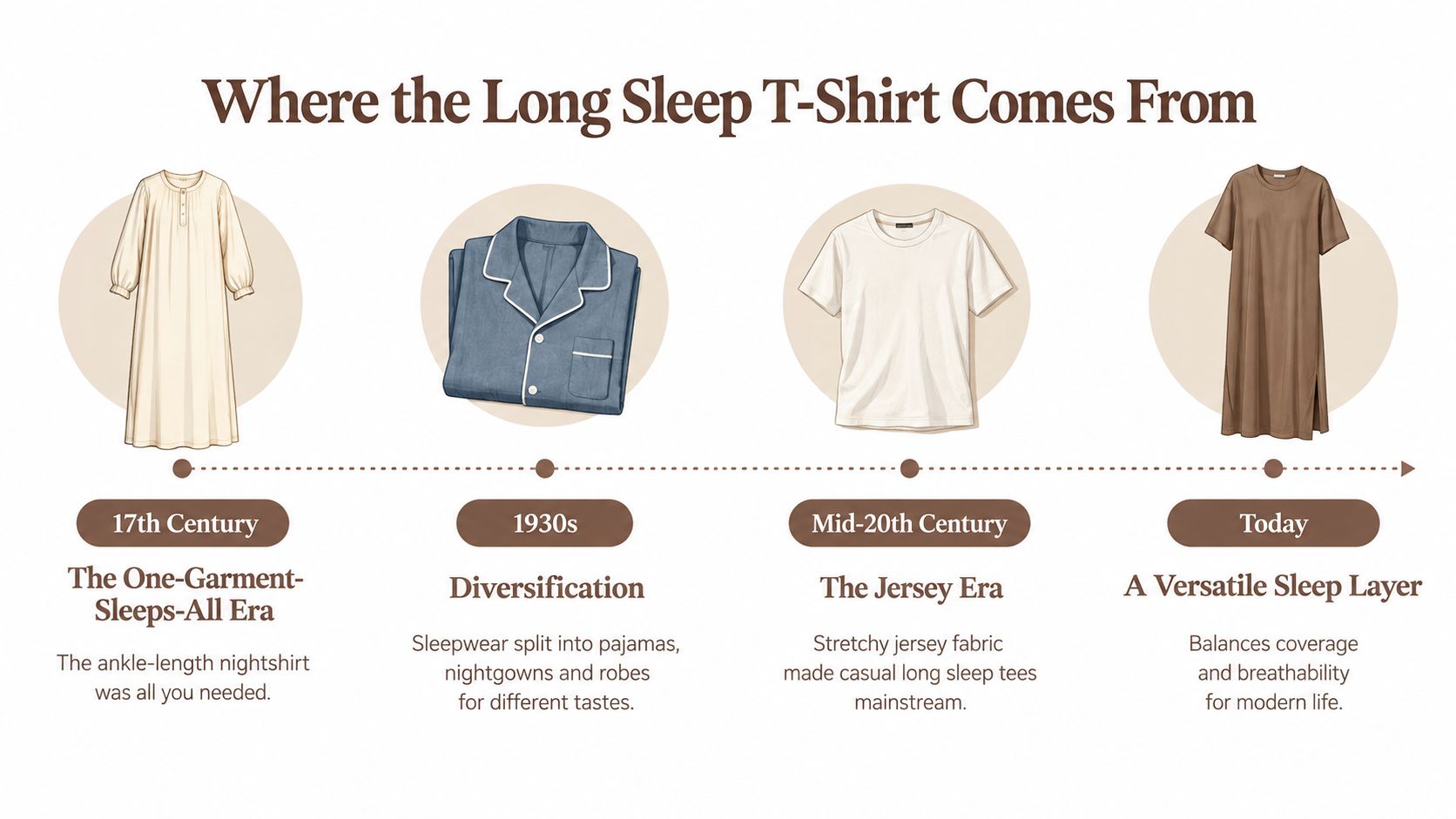
The modern long sleep T-shirt makes more sense when you trace it back to the older nightshirt. A fashion-history review from 2022 describes how, in the 17th century, men and women often wore a simple white, long shirt-dress hemmed at the ankles because sleepwear hadn't yet split into strongly gendered styles. That loose, one-piece form is the ancestor of today's longer sleep tops.
From one garment to many
By the 1930s, sleepwear had diversified into familiar categories like pajamas, nightgowns, and robes. That change reflected shifting ideas about comfort, clothing manufacture, and what people wore inside the home. Later, mid-20th-century knit and stretch fabrics helped casual sleepwear feel more natural in everyday life, which is why a soft long sleep tee still feels so intuitive now. The historical review also notes that sleepwear later became more casual as formal clothing conventions weakened. Sleepwear history review
The point isn't that the garment is old-fashioned. It's that it's built on a silhouette people have trusted for centuries, then updated with jersey or knit fabrics and a more relaxed shape. That's why it feels both familiar and current the first time you put one on.
The same lineage also explains why the style can work for sleeping, lounging, and travel. It keeps the old logic of full coverage and easy construction, while fitting modern expectations for softness and movement.
How Fabric, Weight, and Fit Change How You Sleep
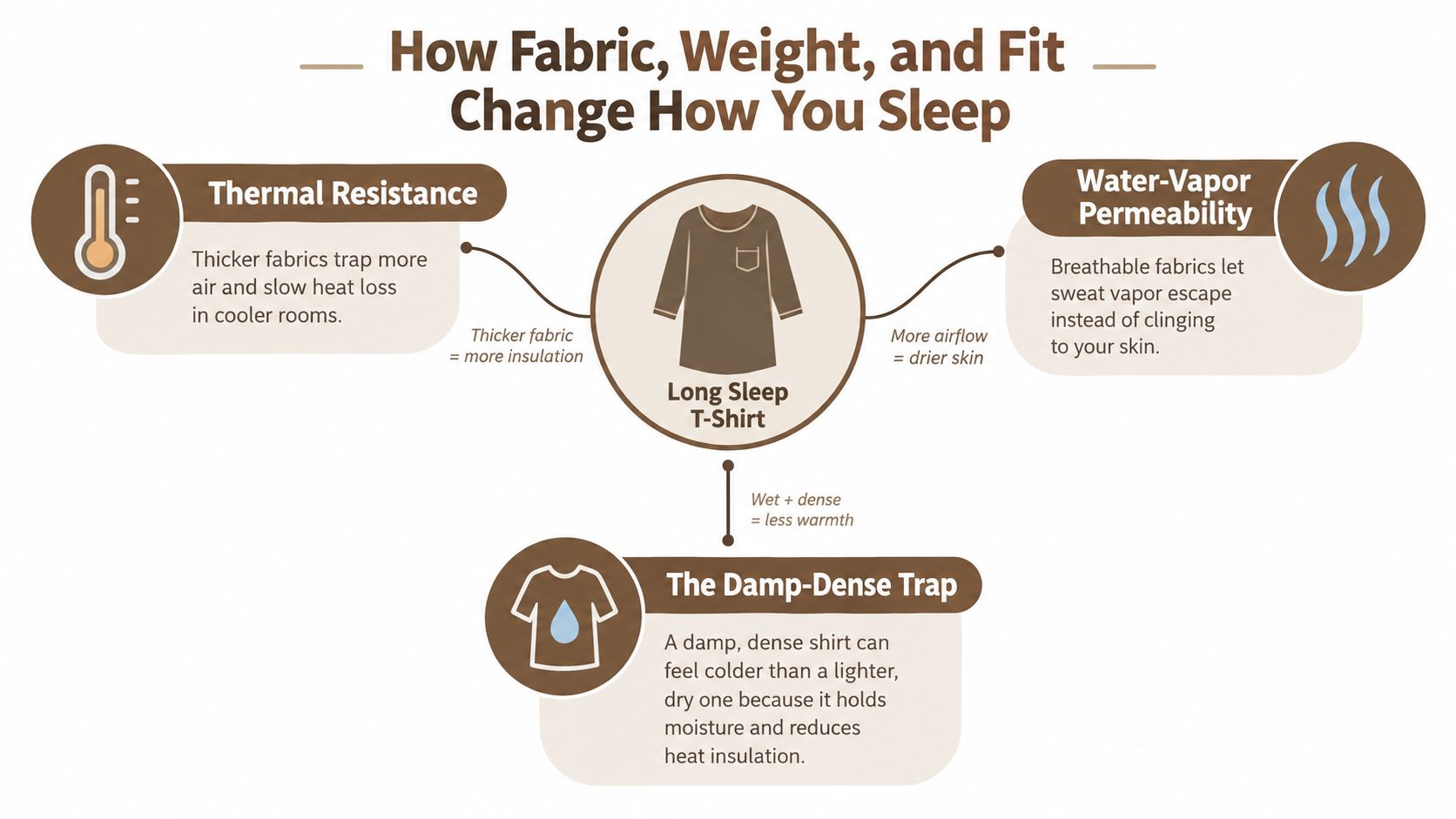
A sleep shirt isn't just “warm” or “cool.” Its comfort depends on how the fabric holds air, how easily moisture escapes, and how the material behaves once your body starts warming it up. In technical terms, thermal resistance and water-vapor permeability matter together, not separately. A shirt can feel cozy at bedtime and miserable by dawn if it traps heat and sweat.
What the fabric is actually doing
A long-sleeve sleep T-shirt works as a thermal-resistance layer. Its fiber type, thickness, yarn structure, air permeability, and water-vapor permeability all influence whether heat and perspiration stay near the skin or move away from it. A lightweight, breathable knit usually gives you enough sleeve coverage without turning into a heat trap, especially in warm or humid bedrooms. Technical research on sleepwear shows that the balance between resistance and vapor flow is what matters most for overnight comfort. Thermal and vapor behavior in sleepwear
That's also why a damp, dense shirt can feel colder than a dry, lighter one. Once moisture is absorbed, conductivity rises and the garment can transfer heat away from the body more quickly. Wool is reported to move water vapor more effectively than cotton and polyester in the cited research, which is one reason some sleepers feel drier in it.
How to read a product listing
If a product page says “soft” but says nothing about knit weight, sleeve shape, or construction, you're still guessing. Look for clues like:
- Lightweight knit, better for warmer rooms or sleepers who overheat.
- Roomy sleeves, so the fabric doesn't compress the air spaces that help with insulation.
- Longer torso cut, useful when you move a lot in bed.
- Breathable construction, especially if you wake sweaty or sleep in a heated room.
Practical rule: more coverage doesn't automatically mean better sleep. Too much insulation can increase sweating, and sweating usually makes sleep worse, not better.
For a broader look at relaxed sizing in sleepwear, an oversized sleep tee guide from Get Spliced is useful because it shows how a looser shape changes drape and movement. The same logic applies here, but sleep comfort still depends on fabric and room temperature first.
Choosing a Size That Covers Without Dragging
Sizing a sleep shirt is easier when you stop thinking in fashion terms and start thinking in movement terms. You want enough length to stay covered when you roll over, enough room across the shoulders to avoid pull, and a neckline that releases heat instead of catching it. If you already have one T-shirt you love, use it as your reference point before you shop.
The three measurements that matter
Measure the chest, the shoulder width, and the torso length from shoulder to hem. Then compare those numbers to the shirt you own, not just the size label. A good sleep fit usually keeps the sleeves near the wrist without bunching, lets the hem sit mid-thigh to just above the knee, and leaves enough room for easy arm movement.
| Measurement | Target on the Body | What to Check on the Shirt |
|---|---|---|
| Chest | Relaxed, not tight | Doesn't pull across the ribcage when you sit or reach |
| Shoulder | Natural shoulder line | Seam sits close to the edge without sliding off |
| Torso length | Covers through movement | Hem stays put when you bend, turn, or sleep on your side |
If you want a more detailed way to compare measurements, the size guide is a good model for how a proper fit chart should be organized, even if you're buying from a different brand.
What usually goes wrong
A shirt that rides up at night is often too short through the torso, not just too small overall. Sleeves that feel fine standing up can still bind when you curl your arms under a pillow. A neckline that looks neat in daylight can trap warmth once you're under blankets, so don't ignore that opening.
If you're unsure, try this at home. Put on your favorite relaxed T-shirt, lie down, and reach both arms overhead. If the hem lifts uncomfortably or the shoulder seams shift hard, you need more room or more length.
Cotton, Modal, Wool, and Cashmere Compared
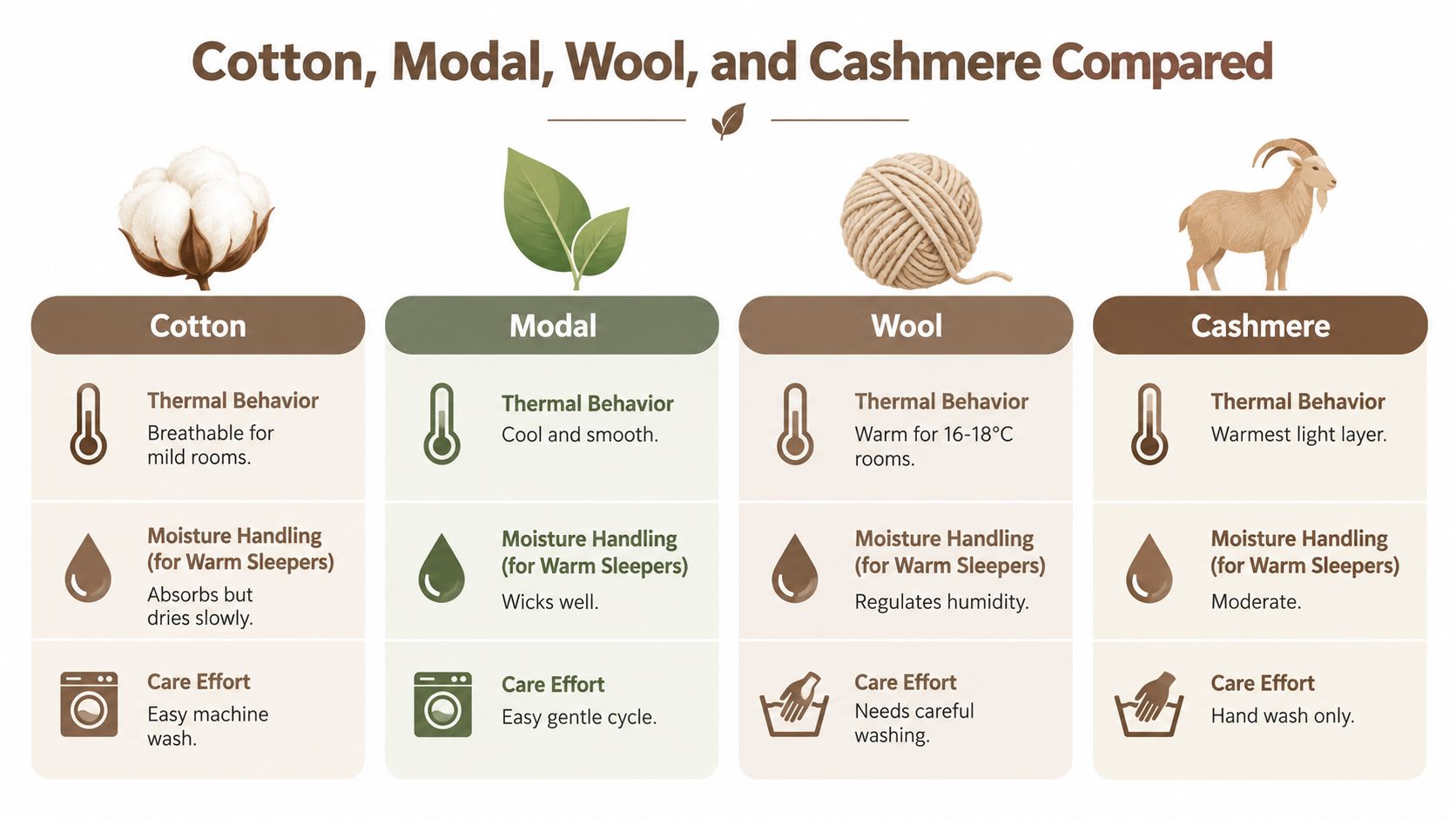
The right fiber depends on the room you sleep in and how your body handles heat. A cool bedroom and a warm bedroom don't ask the same thing from a sleep shirt, and people who wake sweaty need to care more about vapor transfer than about plushness alone. That's where the differences between cotton, modal, wool, and cashmere become useful.
The four fabrics in plain language
Cotton is familiar and breathable in mild rooms, but it can absorb moisture and dry slowly. That makes it easy to live with, less ideal if you sweat a lot. Modal tends to feel smooth and cool, so it suits people who want softness without much loft. Wool has strong temperature-regulating properties and is reported to help manage humidity well, which makes it useful when the room feels cool and your body runs cold at night. Sleepwear fabric comparison and care qualities
Cashmere sits at the refined end of the range. In a lightweight layer, it feels warm without needing bulk, which makes it useful for cool, dry rooms and for layering over sleepwear. It is not the first choice for hot sleepers, and it isn't the easiest fiber to maintain.
A separate market view also points to growing interest in multifunctional sleepwear and temperature regulation, which fits what shoppers are already asking for: one garment that works for bed and relaxed time at home. That doesn't mean one fiber solves every climate. It means the smartest choice depends on how your bedroom feels, not just how the fabric sounds in a listing. Sleepwear market overview
A simple shortlist by bedroom type
- Warm sleepers in mild rooms: cotton or modal.
- Cold bedrooms, light layering needs: wool or lightweight cashmere.
- People who wake sweaty: prioritize breathable, moisture-managing fabrics over plush loft.
- Buyers who want easier care: cotton first, modal next.
If you're choosing between a sleep tee and a warmer knit layer, treat cashmere as a soft insulating tool, not a universal answer. It shines when the room is cool and dry, or when it's worn under something else.
Layering a Long Sleep T-Shirt with Robes, Blankets, and Throws
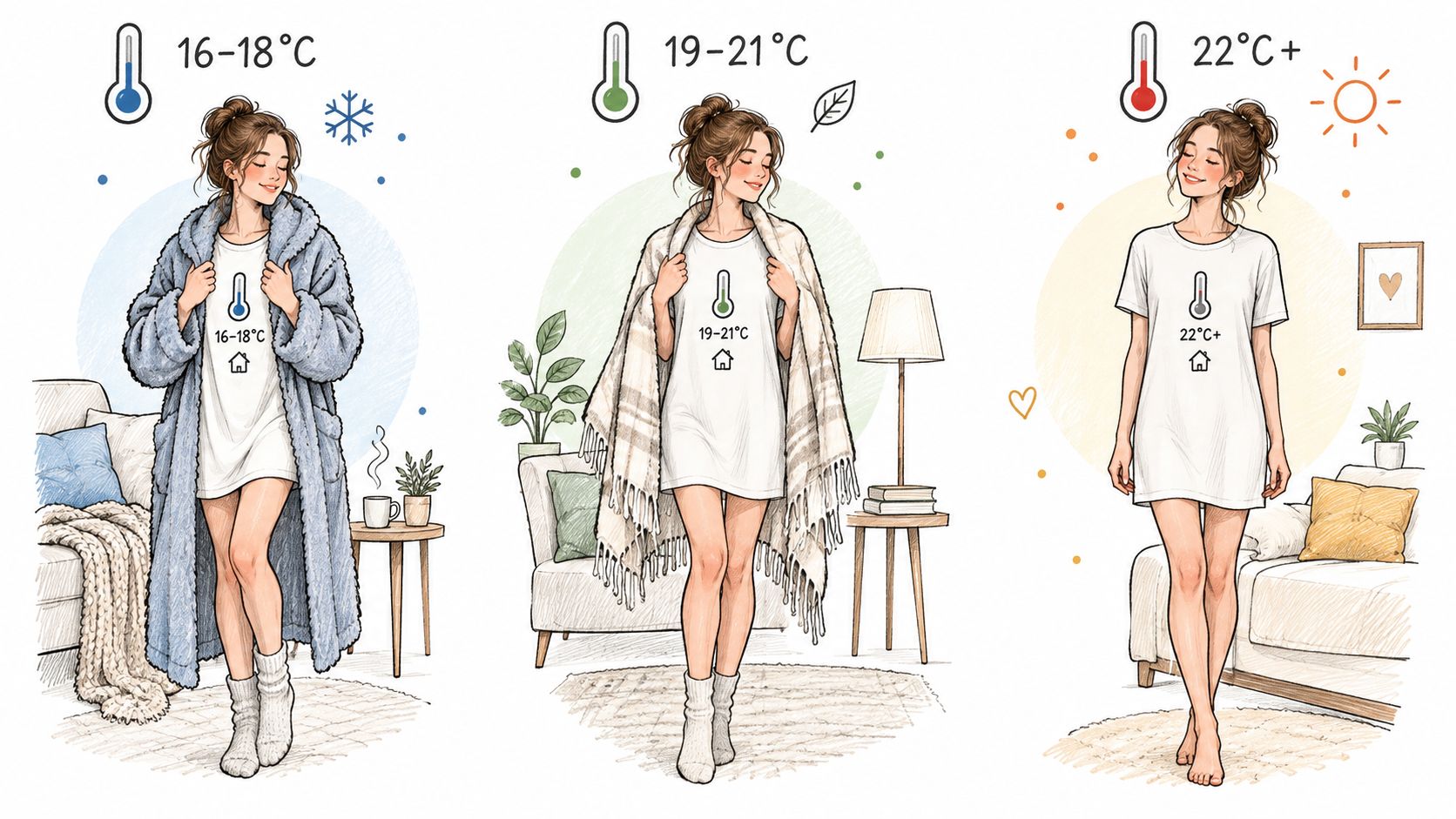
Layering works best when you treat it like a thermostat. Start with the shirt, then add only what the room requires. A heavy blanket over a warm sleep top can trap too much heat, while a light layer over a breathable shirt can make a cool room comfortable without turning you sweaty.
Match the layer to the room
In a cool room, around 16 to 18°C, a long sleep T-shirt can pair well with a robe or a soft throw for the first part of the evening. In a milder room, around 19 to 21°C, the shirt may be enough on its own or with a lighter blanket. In warmer conditions, 22°C and above, you usually want the shirt to stay breathable and keep other layers minimal.
The right setup also changes overnight. If you start cold and wake hot, remove the robe first before you strip back the bedding. That keeps the core garment useful while preventing the whole sleep system from overheating. A thoughtful layering plan is more flexible than dressing too heavily at the start.
For a home-focused look at warmth and texture, the luxury cashmere throws page is a helpful reference point for how a throw can support a cooler room without feeling bulky. The same principle applies in hotels and Airbnbs, where you often don't control the thermostat and need one garment that can adapt to different bedding.
Useful shortcut: if you're adding a second heavy layer to fix discomfort, the base layer is probably wrong.
A long sleep T-shirt should do the first job well. Layers above it should only adjust the temperature a little, not rescue a shirt that's already too hot or too stiff.
Caring for Your Sleep T-Shirt So It Stays Soft
The easiest way to ruin a good sleep shirt is to wash it like an old gym tee. Soft fibers last longer when you use gentle cleaning, lower heat, and careful storage. That matters even more with natural fibers, because shape and hand feel can change quickly if they're overheated or stretched while wet.
Wash, dry, and store with less friction
Use a mild detergent and wash according to the fiber content on the label. For cotton and modal, gentle washing is usually enough to protect the knit and keep the surface smooth. For wool and cashmere, less agitation is better, and care becomes more specific. The care guidance at cashmere care instructions is a useful model for how much attention a delicate fiber can need.
Drying matters just as much as washing. Flat drying beats tumble drying for shape retention, especially on longer shirts that can stretch under their own weight while wet. If you want the hem to stay neat, fold the shirt with the body laid flat and avoid stuffing it into a drawer while damp.
Common mistakes that shorten the life of the shirt
Fabric softener can make some natural fibers feel coated instead of soft. It can also reduce the breathability that helps sleepwear feel comfortable. Pulling the shirt on by the collar stretches the neckline over time, so use the shoulder area or the hem instead.
If pilling shows up, that usually means the fabric is rubbing too hard against bedding or outer layers. Snags are often a storage problem, not just a washing problem, which is why a smooth shelf or drawer beats hanging delicate knits on sharp hooks. Cashmere deserves the most careful treatment, but all sleep tops last longer when they're handled with less force.
A shirt that stays soft for years is usually the one that's washed gently, dried flat, and folded with the knit in mind.
Your Long Sleep T-Shirt Decision Checklist
The quickest way to choose well is to run the same five checks every time you look at a product page. Start with the room, then work outward. The shirt should suit your temperature, your movement, and your willingness to care for the fabric.
The five checks
- Room temperature: choose breathable construction for warm rooms and more insulating fibers for cool rooms.
- Fiber choice: cotton for easy wear, modal for smooth softness, wool for stronger temperature balance, cashmere for a refined light layer in cooler spaces.
- Fit: make sure the hem covers when you lie down, the shoulders don't pull, and the neckline won't trap heat.
- Layering plan: decide whether you'll wear it alone, under a robe, or with a blanket or throw.
- Care commitment: pick a fabric you'll wash and dry properly, because comfort falls apart when maintenance is too much work.
A good long sleep T-shirt isn't the warmest shirt in the drawer, and it isn't the softest one on a hanger. It's the one that fits your room and your sleep habits without making you think about it at 2 a.m.
If you want sleep layers, robes, and home textiles that are built around softness, comfort, and practical use, visit Cashmere Boutique. Their selection is a useful fit for shoppers comparing sleepwear with refined layering pieces, throws, and everyday cashmere essentials.