
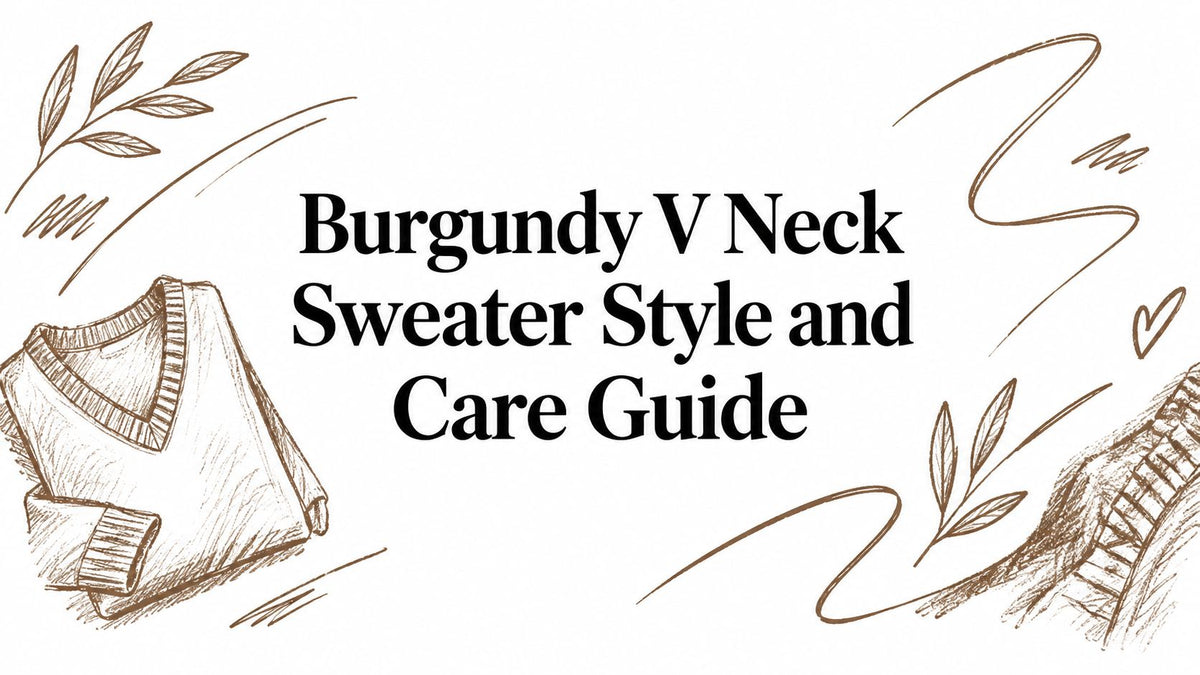
Burgundy V Neck Sweater Style and Care Guide
You're standing in front of your wardrobe, holding a crisp shirt in one hand and wondering why the outfit still feels unfinished. A navy crew neck would be safe, black would be predictable, and a patterned layer would demand too much attention. The right burgundy V-neck sweater solves the problem with more authority. It adds color without shouting, gives a shirt collar somewhere to sit, and can move from a polished workday to an understated evening with very little adjustment.
A premium cashmere version deserves more scrutiny than a quick color decision, though. Fiber diameter, yarn construction, neckline finishing, friction, and fit determine whether the sweater becomes a dependable investment or an expensive source of fuzz and distortion. Buy the shade you'll wear, but judge the garment by the structure you can't see at first glance.
Table of Contents
- The Enduring Appeal of the Burgundy V Neck
- Decoding Cashmere Fiber and Fabric Quality
- Evaluating Fit and Neckline Architecture
- Selecting the Perfect Burgundy Undertone
- Managing Friction and Pilling Expectations
- Styling the V Neck for Every Occasion
- Building a Sustainable Cashmere Wardrobe
The Enduring Appeal of the Burgundy V Neck
The V-neck wasn't invented as a decorative flourish. Historical clothing research places its visible adoption in Britain around the 1920s, when schoolboys increasingly wore neckties with soft-collared shirts. The V-shaped opening displayed the tie more effectively than a high or crew neckline, which made the sweater a practical part of schoolwear rather than a purely casual item. Grey dominated because it aligned with common school uniforms, as described in this history of the V-neck sweater.
That origin still dictates how the garment behaves today. A V-neck naturally frames a collar, tie, scarf, or fine camisole. It creates a clean opening at the face and gives layered clothing a visible role instead of burying it beneath knitwear. By the middle of the 20th century, the silhouette had moved beyond school settings into mainstream menswear, and women's fashion later adopted it for cardigans, fine-gauge pullovers, and softer knitwear.
Burgundy brings a different history to the combination. The color name comes from the wine associated with Burgundy, a region of central France, and entered English usage during the 1800s, when French wine gained influence in England. Its early fashion and interior applications connected the deep red-brown shade with richness and ceremony. Later, burgundy appeared in hair dye and lipstick during the 1920s, then found new expression in gothic fashion and the popularity of burgundy lipstick during the 1990s, according to Adobe Express's history of burgundy.
The buying insight: the neckline supplies structure, while the color supplies mood.
That pairing explains why burgundy works harder than a novelty shade. The V recalls uniform tradition, tailoring, and disciplined layering. Burgundy softens that institutional association, bringing wine, maturity, and seasonal depth into the outfit. Against grey trousers, it looks composed. With dark denim, it looks relaxed but intentional. Over a white shirt, it becomes almost architectural.
Choose this garment when you want a sweater with an established shape and a color that carries more character than black, navy, or grey. The result isn't a passing trend. It's a foundational silhouette with enough color presence to make simple clothes look considered.
Decoding Cashmere Fiber and Fabric Quality
Cashmere quality starts with the fiber, not the label stitched into the collar. Technical studies report mean cashmere diameters of approximately 14 to 16 microns, compared with about 16.5 microns for typical merino fibers, making cashmere especially suitable for close contact with the skin. Finer fibers are less likely to bend against the body in a way that creates irritation, which matters at the V-neck edge and cuffs where pressure and movement are concentrated. See the supporting technical study on cashmere fiber and fabric performance.
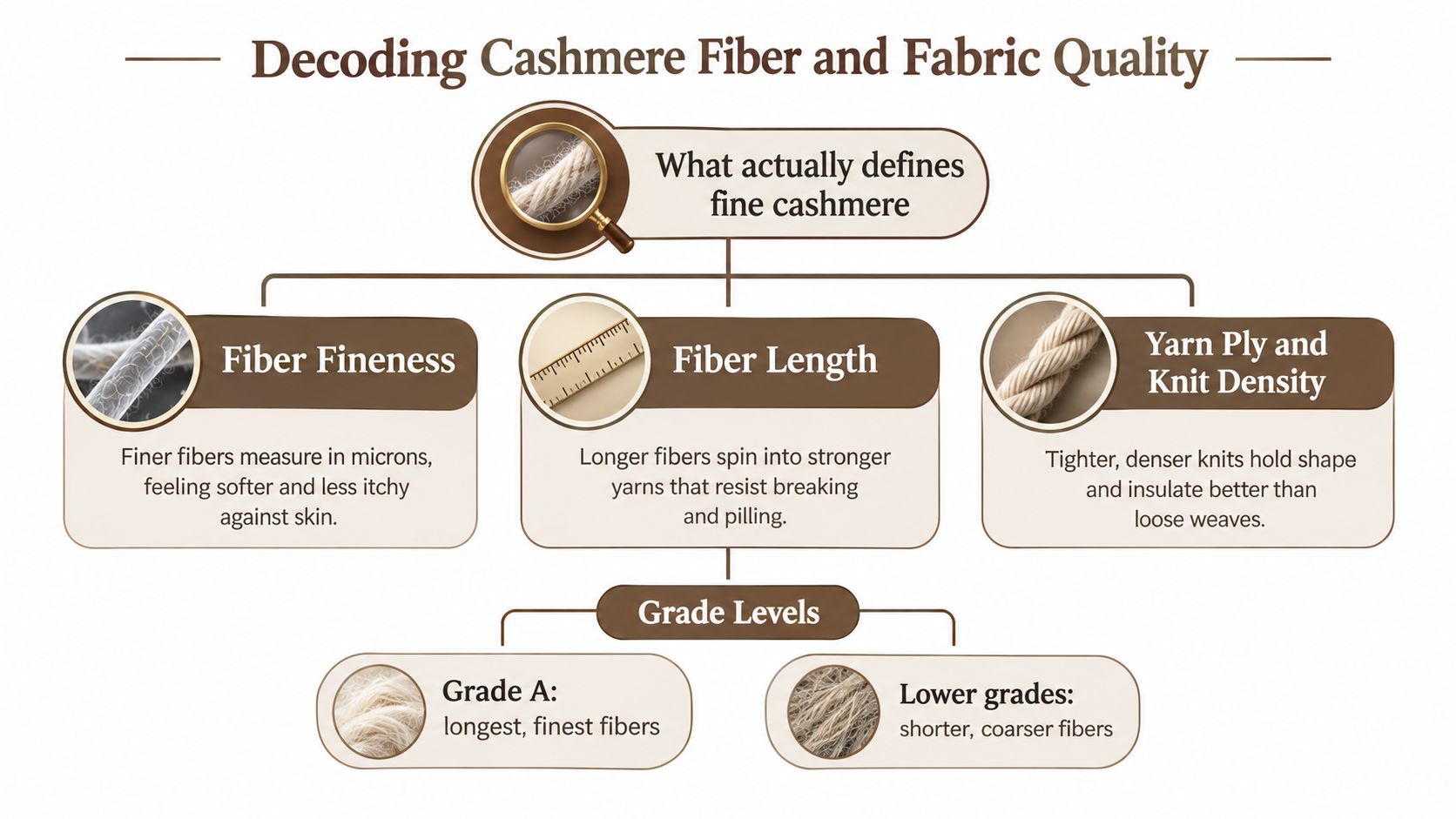
For a burgundy V-neck, I'd request a stated fiber diameter around 14 to 15.5 microns, alongside information about fiber length and yarn construction. A retailer's “Grade A” description may sound precise, but grade language isn't sufficiently standardized to replace measurable specifications. Ask what the fiber diameter means, how the yarn is twisted, and whether the knit is fine-gauge and compact through the neckline, shoulders, and underarms.
The specifications that matter
Fiber length deserves equal attention. Fibers shorter than approximately 7.5 mm are particularly associated with pilling and surface fuzz, according to the same technical research. Short fibers can migrate from the yarn during wear, then catch and entangle on the surface. Softness alone won't tell you whether the sweater will hold its appearance.
Look for these signals in the product description or from customer service:
- Measured fineness: A stated micron range is more useful than “ultra-soft” or “luxurious.”
- Fiber transparency: Ask whether the brand discloses fiber length rather than relying only on a grade label.
- Yarn construction: Adequate twist helps stabilize the yarn and reduces loose-fiber movement.
- Knit density: A compact fine-gauge knit should feel even, not thin in a weak or translucent way.
- Neckline finishing: The V point and rib binding should look clean, balanced, and resistant to stretching.
A soft hand is important, but it's only the beginning. Run your palm over the surface and inspect the knit under clear light. Uneven fuzz at the outset may signal loose fibers, while a firm but supple structure often indicates better control. You'll find a broader consumer checklist in this guide to choosing a high-quality cashmere sweater.
Evaluating Fit and Neckline Architecture
A V-neck sweater should fit like a designed garment, not like a tube of knit fabric pulled over the body. The most important test is simple. Put it on over the layer you expect to wear most often, then inspect the shoulder line, V point, chest, and hem while standing naturally.
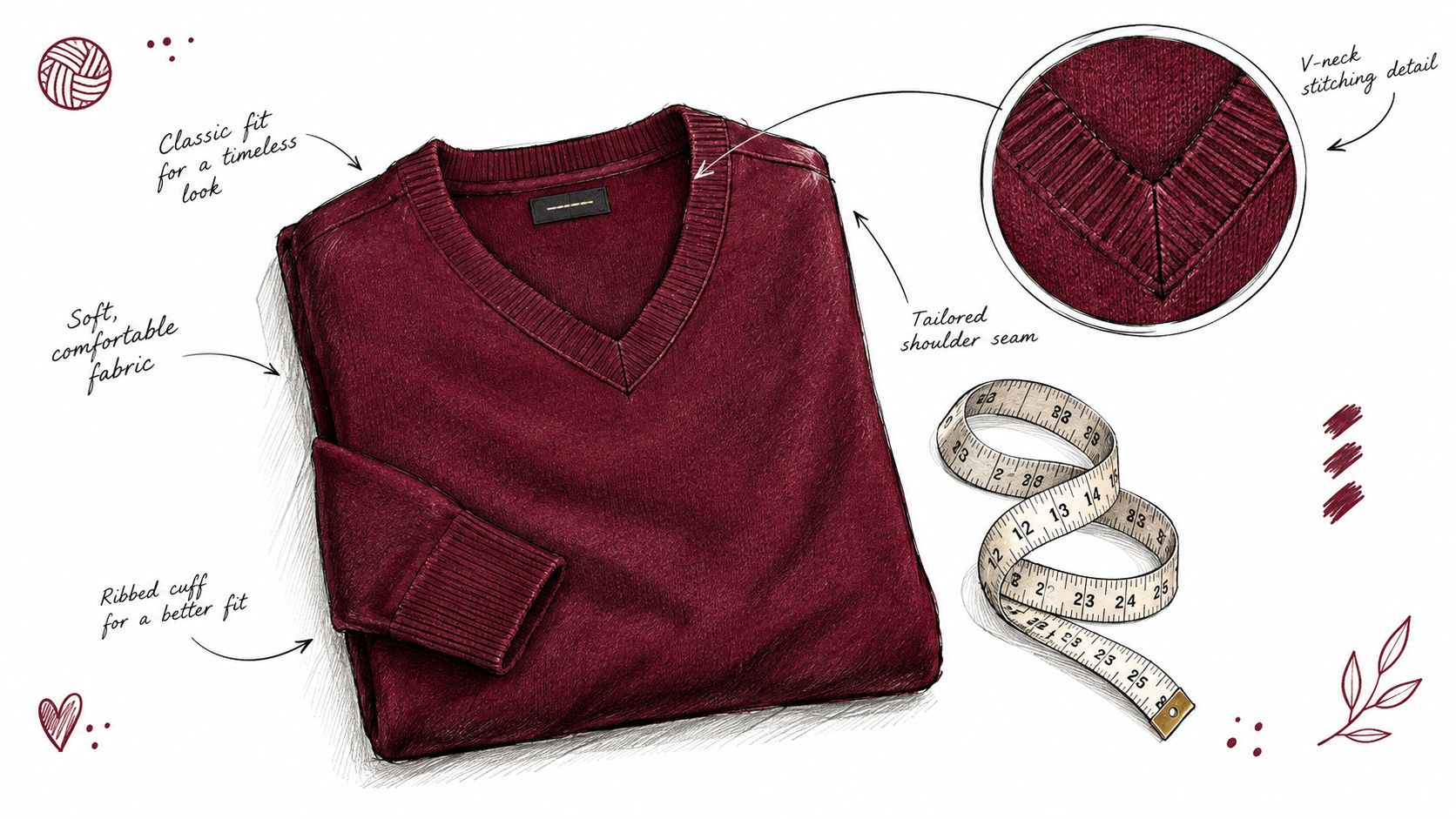
Start at the shoulders
The shoulder seam should meet your shoulder point rather than fall noticeably down the arm. If it sits too far outward, the sweater can look oversized even when the torso fits. If it sits too far inward, the upper body pulls the fabric toward the neck and creates tension across the V.
Raise your arms, reach forward, and sit down. Watch the neckline as you move. A well-built sweater should recover its shape instead of opening dramatically or twisting toward one shoulder. Inspect the V point from the front. It should lie flat, with no puckering, rippling, or visible strain where the two edges meet.
Match the depth to the layer
A shallower V is the most versatile choice for a professional wardrobe. It gives a collared shirt enough visibility without exposing too much of the chest, and it works under a blazer without competing with the lapels. A deeper opening can look elegant over a silk camisole or bare skin, but it requires more control over the garment's drape and the styling underneath.
The torso needs enough ease for movement and layering. If the cashmere pulls horizontally across the bust or stomach, the knit is working too hard. A shirt underneath should sit smoothly rather than create ridges that press into the sweater.
Fit test: if you have to keep tugging the V back into place, the problem is usually the garment's proportions, not your styling.
Check the cuffs and hem as well. Ribbing should recover after you stretch it gently, and the hem shouldn't flare away from the body. For comparison, a funnel-neck design creates a very different visual balance, so review the construction principles in this guide to a funnel-neck cashmere sweater before choosing between silhouettes.
Selecting the Perfect Burgundy Undertone
Burgundy covers a wide family of colors. One version leans purple and berry-like, another looks close to oxblood, and a warmer wine shade can carry subtle brick or brown notes. Online product names aren't reliable enough on their own, so assess the photographed fabric, the brand's color chart, and the surrounding styling images before ordering.
Current runway analysis identifies burgundy as a prominent non-neutral shade, but the shade nearest your face matters more than a trend label. Darker red-purple versions create stronger contrast, while warmer brick and wine variants can sit more comfortably against golden or olive complexions, as discussed in this burgundy runway color analysis.
Use the color as a deliberate decision
| Burgundy shade | Best skin undertone | Ideal context |
|---|---|---|
| Berry burgundy | Cool or neutral undertones | Evening, tailored black, charcoal, and cool grey |
| Purple-red burgundy | Cool undertones and high-contrast coloring | Formal office dressing, white shirts, and sharp suiting |
| Wine burgundy | Neutral, warm, or olive undertones | Everyday layering, camel coats, denim, and brown leather |
| Brick burgundy | Warm or olive undertones | Daylight dressing, cream knitwear, tan trousers, and relaxed tailoring |
| Oxblood burgundy | Neutral or deep complexions | Minimal wardrobes, black trousers, dark denim, and evening wear |
Lighting changes the impression. Harsh office lighting can make a purple-heavy burgundy look cooler and more severe. Evening light often deepens the wine effect, while natural daylight reveals whether the shade contains brown, blue, or violet.
If you're shopping online, compare the sweater image with colors you already own. A cream shirt, camel coat, or charcoal trouser can reveal whether the burgundy harmonizes with your wardrobe or creates an isolated accent. For more guidance on coordinating shades across textiles, matching fabrics with confidence is a useful reference, especially when you're comparing knitwear with tailoring, silk, or leather.
My recommendation is straightforward: choose wine burgundy for maximum versatility, berry burgundy for sharper contrast, and brick burgundy when your wardrobe is built around warm neutrals. Don't buy a color merely because the name sounds luxurious. Buy the undertone that works beside your face and your existing clothes.
Managing Friction and Pilling Expectations
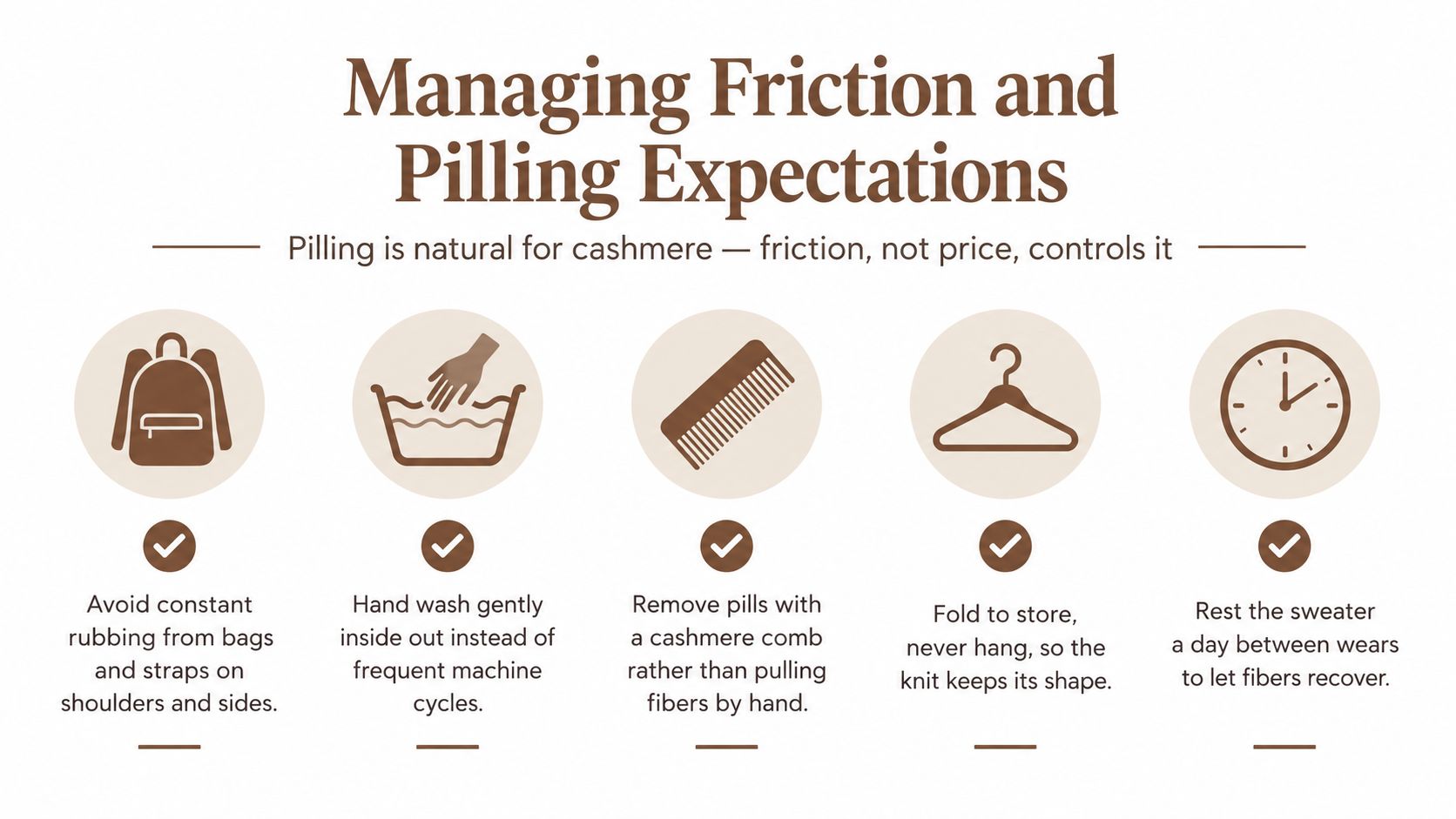
Pilling isn't proof that cashmere is poor quality, and a high price doesn't eliminate it. Friction, loose fiber release, yarn structure, and finishing control the result. Controlled cashmere research recorded an untreated fabric pilling rating around 3.0 after abrasion testing, while a specialized surface treatment produced results around 4.0 to 4.3 on a five-point visual scale, showing that surface treatment can improve appearance retention. The cashmere pilling research also indicates that yarn-spinning methods affect performance.
Inspect the friction map
The V-neck silhouette creates several predictable stress points:
- V point: Repeated dressing and pulling can distort the meeting point of the neckline.
- Underarms: Arm movement creates constant abrasion and moisture exposure.
- Cuffs: Hands brush against desks, coats, bags, and other rough surfaces.
- Side seams: Movement and contact with outer layers loosen surface fibers.
- Shoulders: Bag straps and seat belts repeatedly compress and rub the knit.
Saturated burgundy can make fuzz more noticeable because loose fibers stand out against a deep, even surface. That doesn't mean the shade pills more than another color. It means maintenance becomes more visually important.
Rotate the sweater rather than wearing it on consecutive days. Keep rough canvas bags, textured coats, sharp jewelry, and abrasive seat-belt edges away from the knit whenever possible. If pills appear, lay the sweater flat and use a cashmere comb with light, controlled strokes. Never pull pills by hand, because you can remove sound fibers along with the loose ones.
For specialist cleaning, choose a provider familiar with delicate knitwear, such as a garment care service, and follow the manufacturer's instructions rather than defaulting to routine dry cleaning. Cashmere Boutique's care instructions provide a useful reference for washing, drying, and storage decisions.
Maintenance rule: remove surface pills early, then change the source of friction that created them.
Styling the V Neck for Every Occasion
The burgundy V-neck succeeds because it already understands layering. Use that opening purposefully instead of treating it as a blank space.
For the office
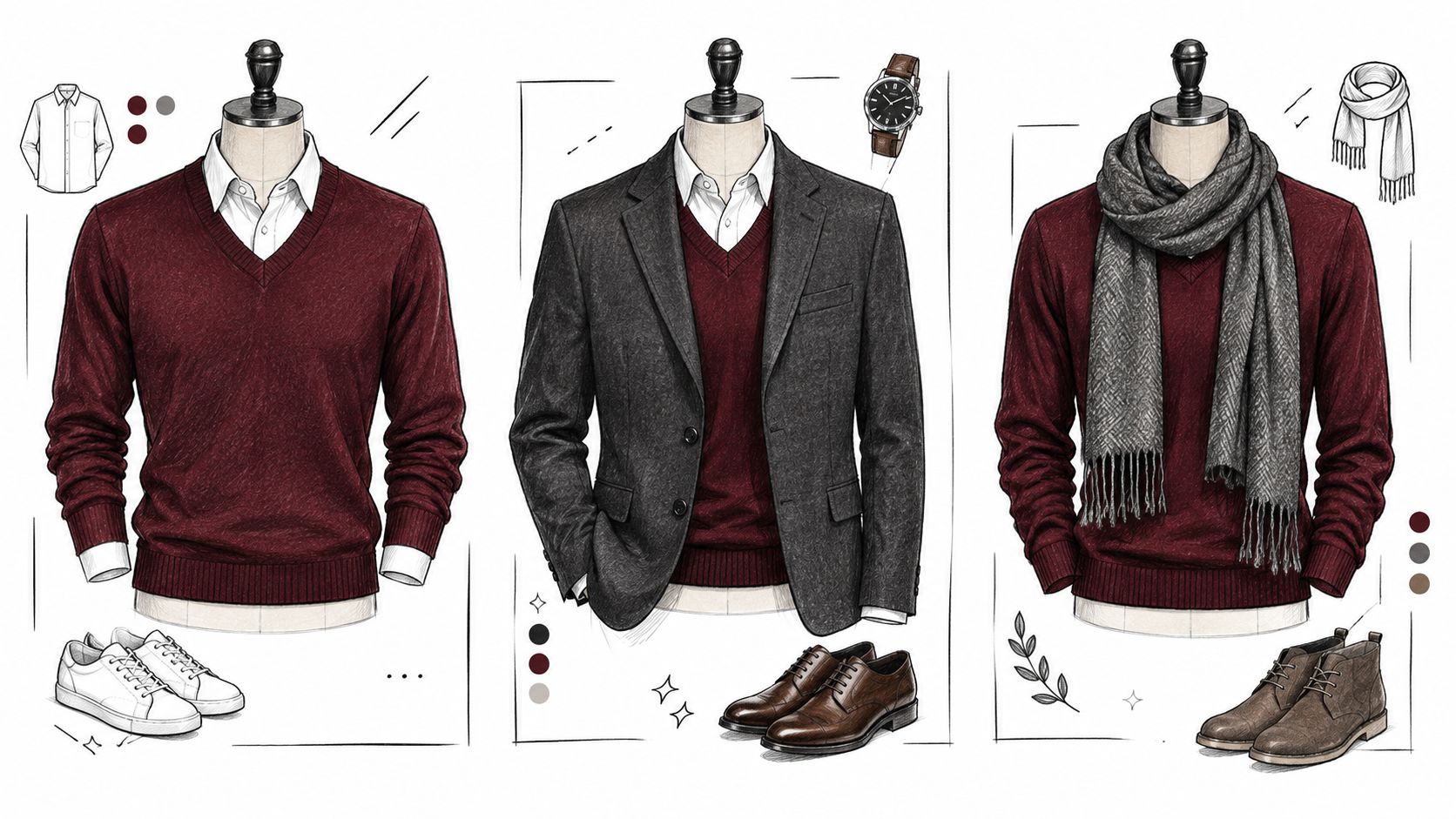
Start with a white or pale blue cotton shirt. The collar should sit neatly inside the V without collapsing into the opening. Add charcoal wool trousers, dark navy tailoring, or a restrained grey suit, then finish with polished leather shoes.
For menswear, a tie can reinforce the sweater's historical logic. Choose a matte silk or wool tie in navy, grey, muted green, or a restrained pattern. Avoid a tie that competes with the burgundy unless you're deliberately creating a high-contrast look.
For womenswear, use a fine cotton shirt or silk blouse beneath the sweater, then pair it with fitted trousers or a straight skirt. Keep jewelry quiet. Small gold earrings, a slim watch, or a discreet pendant will support the neckline without crowding it.
For the weekend
The easiest relaxed formula is burgundy cashmere, a white T-shirt, straight-leg denim, and clean leather sneakers. The T-shirt should be fine enough not to create a bulky ridge under the V. Leave the shirt untucked if the sweater has a neat hem, or use a partial tuck when you need more waist definition.
A fine-gauge turtleneck underneath can work in colder weather, but keep both layers slim. Black, cream, and smoke grey provide controlled contrast. Avoid combining a thick turtleneck with a loose V-neck, since the neckline will lose its clarity and the upper body can look crowded.
For evening
Wear the sweater over a silk camisole with fitted black trousers, a fluid midi skirt, or a sharply cut suit. The contrast between soft cashmere and smooth silk gives the outfit its interest. Keep the camisole's straps and neckline intentional, not accidental.
Burgundy also works with dark brown leather, brushed gold, black suede, and deep navy. A structured bag and pointed flats sharpen the look, while a long pendant can echo the V without duplicating it. The color is already expressive, so let texture and proportion do the remaining work.
Building a Sustainable Cashmere Wardrobe
A responsible luxury wardrobe begins with fewer garments that answer more questions. The burgundy V-neck earns its place when the shade suits your complexion, the cut accommodates your regular layers, and the construction can withstand the friction those layers create.
My essential buying checklist is short:
- Demand a measurable fiber specification. A stated range around 14 to 15.5 microns gives you a clearer basis for evaluating softness than an unexplained grade label.
- Ask about fiber length and yarn structure. Fineness without length and twist leaves durability questions unanswered.
- Examine the V point. Look for stable rib binding or clean fully fashioned shaping rather than a loose, visibly stretched edge.
- Check the shoulder and underarm knitting. These areas should look compact and even because they absorb repeated movement.
- Choose a shade you can combine. Wine burgundy is a strong generalist, while berry and brick versions serve more specific palettes.
- Accept normal maintenance. Fine cashmere needs rotation, careful washing, flat drying, folding, and occasional combing.
A durable wardrobe isn't built by pretending delicate fibers require no attention. It's built by matching each garment to realistic use. Wear the sweater over smooth shirts rather than rough layers, keep bags from rubbing the same shoulder every day, and store it folded so gravity doesn't lengthen the shoulders or neckline.
The luxury standard: transparency matters more than decorative language. A brand that explains micron range, yarn construction, neckline finishing, and care gives you something useful to evaluate.
The burgundy V-neck also deserves a place because its styling range reduces wardrobe duplication. It can replace a neutral layer at work, add depth to denim on weekends, and provide a polished foundation for evening clothes. That versatility makes careful construction more meaningful. You're not protecting a garment that only works for one occasion. You're maintaining a recurring part of your dressing system.
Cashmere Boutique offers women's and men's cashmere sweaters, including burgundy V-neck options, alongside size charts, color information, and care guidance. Visit Cashmere Boutique to compare the available knitwear specifications and choose a burgundy layer that fits your wardrobe, your undertone, and your maintenance habits.