
Black Cashmere Poncho Guide: Style, Weight, and Care
You're standing in front of the closet with a coat in one hand and a sweater in the other, trying to choose a layer that looks polished without feeling stiff. A black cashmere poncho solves that problem when it's chosen well, because it can read as relaxed, elegant, and practical at the same time. The catch is that not every poncho behaves the same way, and the differences show up in the drape, the weight, the climate it suits, and how the fiber holds up after real wear.
Table of Contents
- A Layer That Traveled From the Andes to Your Wardrobe
- What Makes a Cashmere Poncho a Cashmere Poncho
- Drape and Silhouette Choices
- Weight, Climate, and Thermal Comfort
- Why Black Ponchos Pill Differently Than Lighter Shades
- Styling a Black Cashmere Poncho Through the Week
- Caring for Black Cashmere Without Losing Color or Shape
- Choosing Well in One Decision
A Layer That Traveled From the Andes to Your Wardrobe
A poncho is one of those garments that feels immediate the moment you put it on. It has a broad, open shape, so it moves with you instead of fighting your body, and that simplicity is part of why the form has lasted so long. The garment originated in the Americas and was worn by Indigenous peoples across the Andes, Greater Nicoya, Patagonia, and the Valley of Mexico before European colonization, although the exact first origin is still uncertain, with Mexico, Ecuador, and Peru all proposed as possibilities. The Metropolitan Museum of Art also dates a Mexican poncho in its collection to 1864 to 1880, which shows that the shape was already established in the nineteenth century (poncho history and museum reference).
That historical structure still matters today. A poncho's basic construction, a broad piece of fabric with an opening for the head, explains why it works so well as a warm layer that doesn't feel restrictive. When that structure is made in cashmere, the garment shifts from rustic to refined.
Why this matters in a modern closet
A black poncho often ends up being the piece people reach for when they want “one more layer” that still looks intentional. It can sit over a shirt, a knit dress, or a thin turtleneck without needing the precision of a jacket sleeve. Black also makes the garment easier to place in a wardrobe, since it coordinates with both formal and casual pieces and tends to work across seasons.
Practical rule: treat the poncho as a shape first and a fiber second. If the cut doesn't suit your daily life, the cashmere won't save it.
That is why this garment deserves more attention than a quick touch test in a shop. The right version feels like an easy solution, while the wrong one becomes a fussy blanket with a neckline. A good purchase starts with understanding what the fiber can do, then matching the silhouette to how you dress.
What Makes a Cashmere Poncho a Cashmere Poncho
A poncho starts with its construction. It is a single broad piece of fabric with an opening for the head, and that simple shape gives it its loose, draped character. Cashmere adds a separate question, because softness alone does not define it. Fiber-testing guidance sets measurable thresholds for cashmere quality, including a mean maximum diameter of 19 microns, a coefficient of variation no greater than 24%, and no more than 3% by weight of fibers exceeding 30 microns (cashmere fineness thresholds).
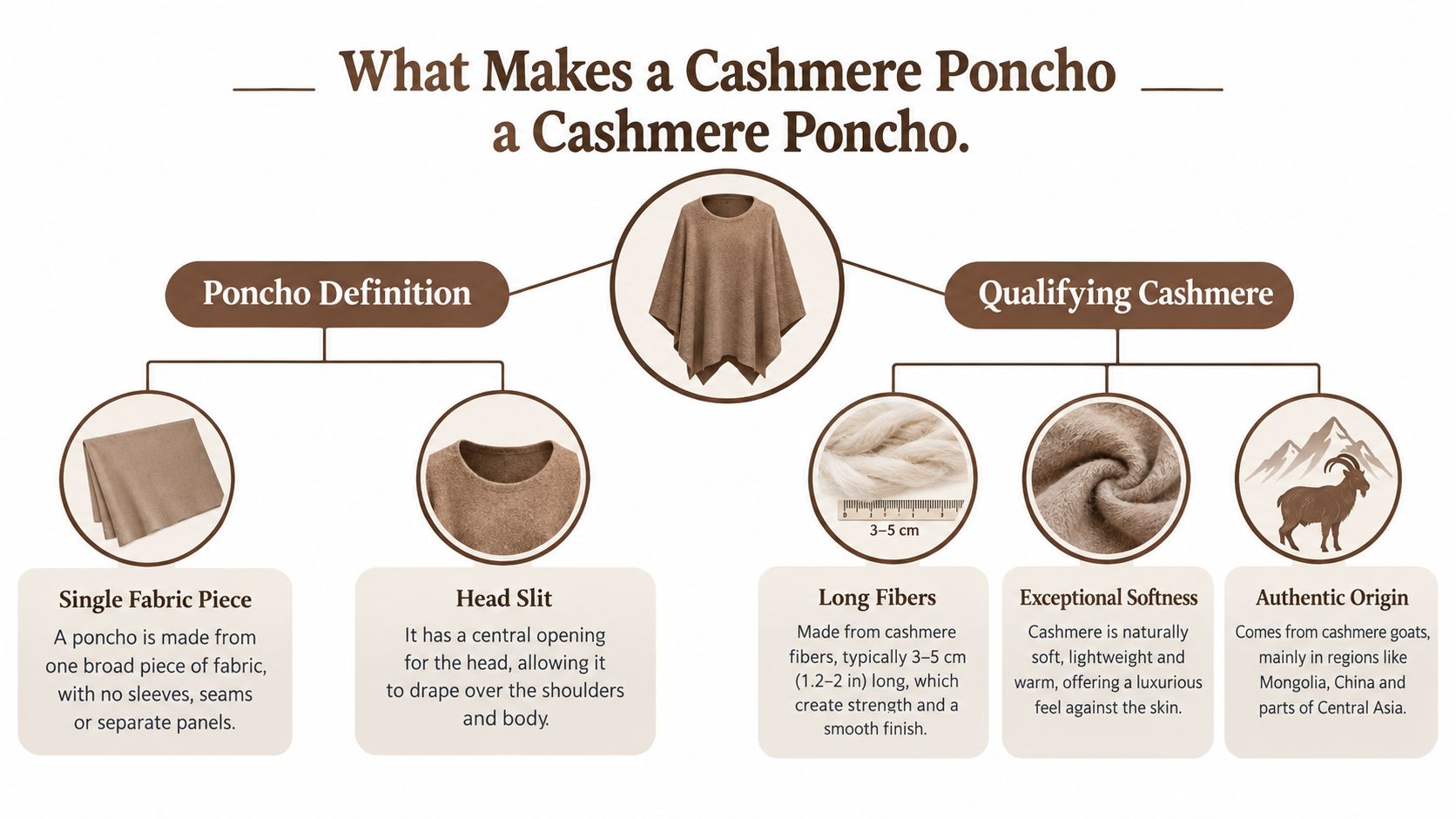
Those figures matter because they explain why cashmere sits in a luxury category. Finer fibers usually feel lighter and more refined against the skin, but the point is verification. A garment can feel soft and still miss the standard that makes it true cashmere.
Why black changes the buying decision
Black matters because it changes what you notice first. The color is easy to coordinate and can work as an outer layer across several seasons. It looks formal with classic clothing and relaxed with denim, so it tends to fit more wardrobes than a brighter shade. Black also exposes quality issues more clearly, since surface unevenness and wear marks stand out on a dark background.
That is why the strongest product description is not just “soft and luxurious.” It is a mix of structure and specification. You are buying a recognizable garment form, but one that depends on a tightly defined fiber standard. A good black cashmere poncho should tell you more than its color. It should tell you about fineness, consistency, and how the fabric was made to fall.
Drape and Silhouette Choices
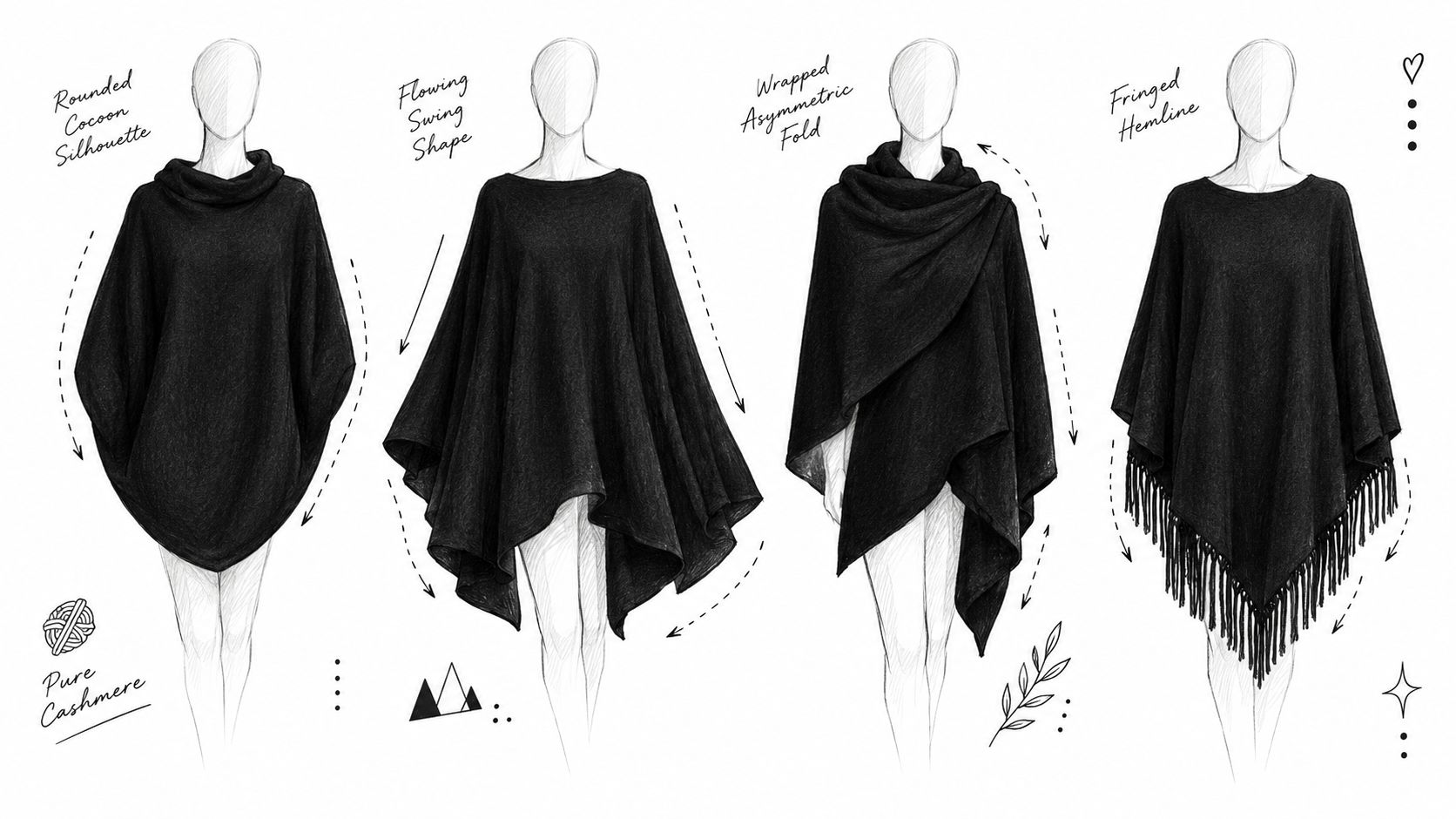
The first thing most shoppers notice is not the fiber, it's the fall. A black cashmere poncho can look sleek or slouchy depending on how the cloth is cut, how much width it has, and where the fabric hangs once it's on the body. That's why two ponchos made from similar cashmere can still feel completely different.
A cocoon shape wraps the body more closely and usually feels calmer in motion. A swing silhouette opens out more at the hem, which gives you more movement and a breezier look. A wrap version can feel more intentional because it often creates a front line or overlap that reads almost like outerwear. A fringed poncho adds a looser, more decorative edge, and that fringe can make the piece feel less formal even when the fabric itself is refined.
Match the cut to the way you move
The main practical question is not whether the silhouette is “pretty.” It's whether it works when you sit, walk, carry a bag, or add a coat. A longer poncho gives more coverage when you're seated, but it can also bunch more easily under outerwear. A shorter, swingier one is easier to manage indoors, though it may leave more of your lower outfit exposed.
If you wear a lot of structured jackets, the poncho needs enough simplicity to slide under or over them without fighting the collar and shoulder line. If you prefer soft knits and relaxed trousers, a looser drape can look more natural. Body type matters less than proportions and routine.
A poncho should feel like it belongs in your day, not just in the fitting room.
The right silhouette also changes the tone of the outfit. Fringe lowers formality, while a cleaner edge keeps the garment closer to modern minimalism. If you want a piece that can cross from errands to dinner without changing the rest of the outfit, the simplest cut usually gives you the most range.
Weight, Climate, and Thermal Comfort
Warmth in a poncho isn't determined by fiber name alone. Research on cashmere knit fabrics points to thermal comfort as a result of knit structure and tightness, which means a heavier cloth doesn't automatically outperform a well-made lighter one (thermal comfort and knit structure). That matters because a poncho is open by design, so wind exposure and layering habits influence how warm it feels in real life.
A lightweight black cashmere poncho is usually the easiest choice for transitional weather, office air-conditioning, and travel. It drapes softly, folds down easily, and layers without bulk. A midweight version is the most versatile middle ground, especially if you want a piece that can move between indoor and outdoor settings. A heavier poncho can feel more substantial in dry cold, but it may be less forgiving if you need to wear it under a coat or across a long seated commute.
Climate matching is more useful than blanket warmth claims
Wind is where ponchos often surprise people. The open silhouette trades some protection for comfort and flexibility, so it won't seal out gusts the way a fitted coat can. Damp cold asks a different question, because a layer can feel cold even when the fiber itself is warm if moisture and air movement are working against it. Dry cold is where a thicker weave tends to feel most satisfying.
For air-conditioned offices, a lighter or midweight piece usually solves the problem without making you overheated at your desk. For flights, trains, or car rides, the right weight depends on whether you want coverage while seated or a layer that slips easily on and off.
Use the climate, not the label, to guide the choice. A poncho that feels perfect on a cool indoor floor can feel clumsy on a windy street, and the reverse is just as true.
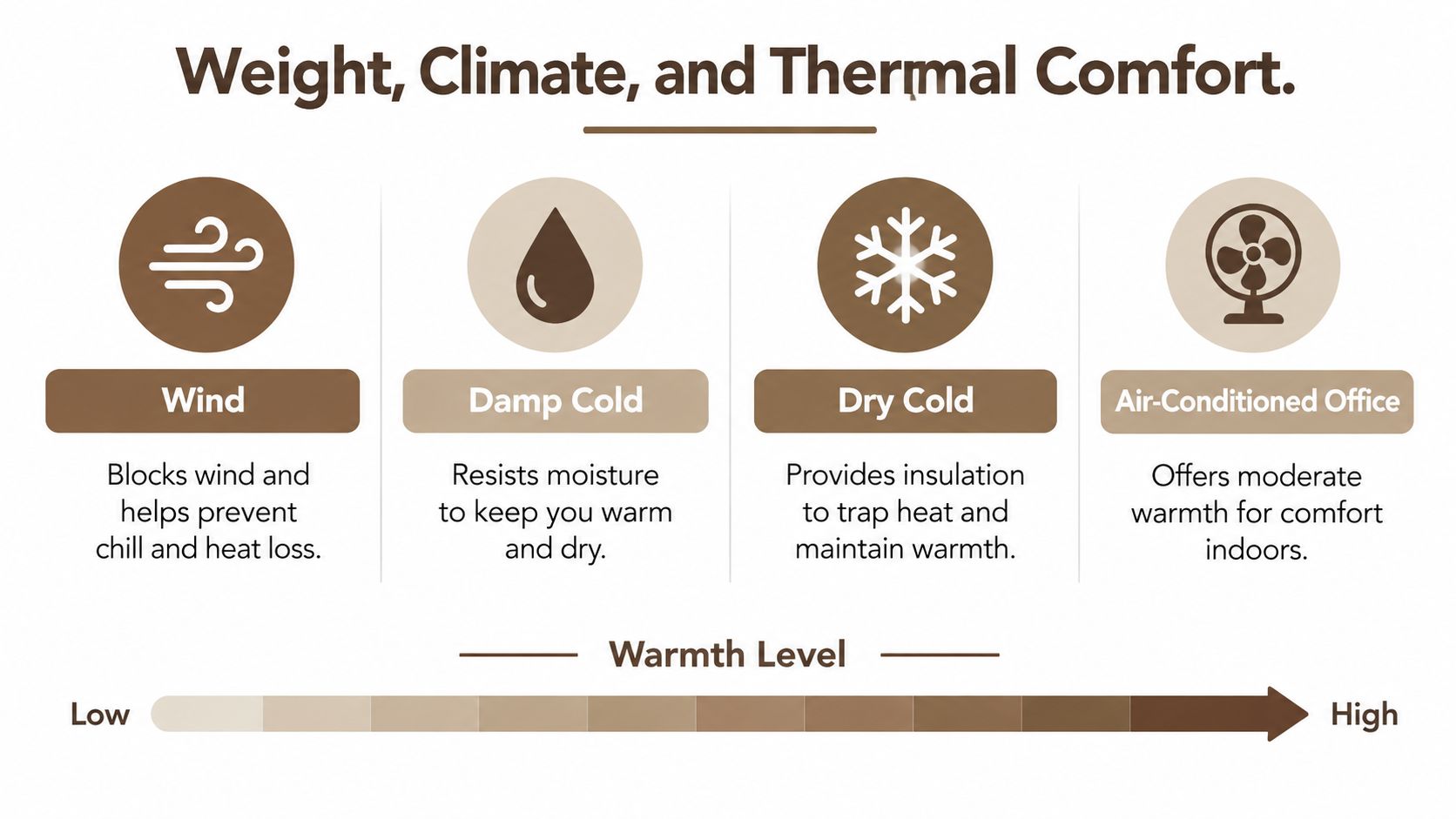
A midweight piece often ends up being the most adaptable because it can bridge more situations without demanding a perfect forecast. If you dress in layers all year, that flexibility matters more than chasing the thickest option.
A short video can also help you visualize how softness, drape, and movement look in a similar cashmere layer.
Why Black Ponchos Pill Differently Than Lighter Shades
Pilling starts with fiber behavior, not just with the color on top. In cashmere knit fabrics, fibers shorter than about 7.5 mm are a major contributor to pilling because short fibers have more loose ends that can migrate, tangle, and form visible pills (pilling and fiber length research). That means two ponchos can share a similar micron count and still wear differently if the staple-length distribution, yarn construction, or surface friction differs.
Where the wear shows up first
A loose, oversized poncho rubs in predictable places. The shoulders, the sides, the points where a handbag sits, and the edges that brush against outerwear all see repeated friction. Those are the zones to inspect after the first few wears, not the whole surface at random.
Black makes all of this more visible. Abrasion whitening, lint, and pet hair stand out more sharply against dark fabric, so a surface that looks perfectly clean on a hanger can reveal early wear once it's in motion. That doesn't mean black is a poor choice. It just means the garment demands better finishing and more attentive care.
What to check before you buy:
- Staple length information: longer fibers generally help yarn hold together more cleanly.
- Yarn construction: a tighter, better-spun yarn usually handles wear more gracefully.
- Likely friction zones: inspect underarm and shoulder areas in the fitting room.
- Early fuzz versus true damage: some surface bloom is normal, persistent pills are not.
For home care, wear the poncho over smooth layers, rotate it between uses, and remove pills with a cashmere comb instead of pulling them by hand. That protects the surface while keeping the drape intact.
Practical rule: if the black surface looks tired after only a small amount of wear, check the yarn and staple profile before blaming the color.
Styling a Black Cashmere Poncho Through the Week
A black poncho earns its keep when it can move through different parts of the week without feeling repetitive. Over a fitted office outfit, it reads as a soft outer layer that doesn't compete with trousers or a skirt. Over denim, it feels relaxed but still deliberate. Over evening clothes, it becomes a clean, dark frame rather than the centerpiece.
A thin turtleneck or close-fitting shirt works best underneath because it keeps bulk away from the neckline. If you add a belt, you can change the shape from loose to defined, though that works better with ponchos that have enough structure to hold the gesture. A brooch near the shoulder or neckline can also shift the mood from casual to dressier.
The outfit logic that usually works
For travel, the best approach is simple. Wear smooth layers underneath, choose a poncho that doesn't tangle around armrests, and think about how it will sit over a seat belt. For restaurants and indoor events, the garment should fold neatly into the chair without pooling awkwardly behind you.
A few pairings are consistently reliable:
- Office: black poncho, slim trousers, low-contrast top, and clean shoes.
- Evening: black poncho over a dress or monochrome base, with minimal accessories.
- Weekend: denim, boots, and an easy knit underneath.
- Formal layering: a cleaner silhouette under a wool coat, where the poncho acts as a warm intermediate layer.
The cut matters in each case. A cocoon shape feels more contained for work, a swing shape brings movement to casual outfits, and a fringe detail makes the whole look less formal. For broader layering advice, the guide on how to add a pashmina shawl to your wardrobe is a useful companion read if you're comparing wrap styles.
Caring for Black Cashmere Without Losing Color or Shape
Black cashmere needs gentler care than many people expect because dark dye makes wear patterns easier to see. Cashmere is an animal-protein fiber, so aggressive alkaline washing, high heat, and prolonged agitation can damage the surface and speed up color change or felting. The safer routine is straightforward: cool water, a pH-neutral detergent, minimal agitation, and flat drying away from direct heat (care and dye behavior guidance).
What to ask for before you trust the label
Colorfastness should be verified with recognized textile methods rather than appearance alone. ISO 105-E01 evaluates colorfastness to water, while AATCC 61 evaluates resistance to accelerated laundering. For a black poncho, buyers and quality teams should also ask about washing, wet and dry rubbing, and perspiration performance, because shoulder friction, scarf or bag contact, and repeated laundering can transfer or dull dye.
A simple at-home check helps too. Test a hidden seam or a spare swatch under a damp white cloth and look for transfer. Also check shade consistency across panels and watch for dimensional change after care.
| Action | Why It Matters for Black Cashmere | Relevant Standard |
|---|---|---|
| Cool water wash | Reduces heat stress on the fiber and helps preserve the dark shade | ISO 105-E01 |
| Mild pH-neutral detergent | Lowers the risk of surface damage from harsh chemistry | AATCC 61 |
| Flat drying | Protects the poncho's shape and limits stretching | None specific, care practice |
| Avoid bleach, softener, tumble drying, wringing, and high heat | These raise the risk of damage, distortion, or loss of softness | None specific, care practice |
For practical help with recurring care issues, including treating wool moth damage, it helps to understand that prevention and storage are part of the care routine, not afterthoughts. A separate care reference from cashmere care instructions can also be useful when you're building a wash routine that won't flatten the fabric or fade the color.
Choosing Well in One Decision
A black cashmere poncho is easiest to judge when you treat it like a real layer, not a soft sample in your hand. Softness matters, but so do fiber length, yarn structure, colorfastness, and how the piece behaves in your climate and daily routine. A tighter, denser knit can feel different from a looser one, much like two blankets that both look warm but wear very differently.
Ask for the details that show how the poncho will hold up beyond the fitting room. Does it have enough body for your weather, or will it collapse after an hour? Where does it face friction, especially at the shoulders, edges, and bag-contact points? If the seller cannot explain rubbing results or dye behavior, you are being asked to trust appearance alone.
A simple buyer checklist
- Choose the silhouette by movement, because a poncho that looks refined but catches on your arms will sit unworn.
- Match the weight to your climate, so the layer feels useful in real weather, not just in a store.
- Ask for the staple length in millimeters, because anything under 30 mm will pill faster at bag-contact points.
- Request colorfastness details, because black needs proof, not just a deep tone.
- Check the yarn structure and staple spread, since uneven distribution can create weak spots where wear shows first.
If you want another way to judge fiber quality, the guide on how to choose high-quality cashmere sweater explains the same cashmere logic in a different garment. For a second perspective on long-term fiber care, the SouthShore Fine Linens cashmere care guide covers how washing habits affect softness over years, not weeks. Buy the poncho that still makes sense after several wears, several washes, and a few days of real life.