

Cashmere Cardigan Green: Choosing Shade, Fit and Quality
You're holding a sage cardigan in one hand and a forest green in the other. Under the shop lights, both seem right. Near the window, the sage looks greyer, the forest looks almost black, and neither looks quite like the photograph you saved.
That's the problem with buying green cashmere. You're choosing a color, a layer and a fabric quality all at once. Separate those decisions, and it becomes much easier to spot the cardigan you'll wear day to day.
Table of Contents
- Why Green Cashmere Cardigans Are Worth Choosing Carefully
- Choosing the Right Green Shade for Your Coloring
- Wardrobe Pairings That Make Each Green Work
- Fit, Cut and Length Decisions
- Reading Fiber Specs and Pilling Signs
- Occasions Where Green Cashmere Works Best
- How to Care for Green Cashmere So the Color Lasts
- Compare Shades on the Color Chart and Pick Your Size
Why Green Cashmere Cardigans Are Worth Choosing Carefully
A mid-tone green usually needs more wardrobe planning than navy or grey. It can look excellent beside the trousers you wore shopping, then awkward beside the coat you wear every morning. Before buying, think about the clothes that will surround it, not just how attractive it looks on the hanger.
Cashmere also deserves closer inspection than an inexpensive seasonal knit. According to Textile Exchange's cashmere assessment, global production reached approximately 25,611 tons of greasy fiber in 2023, yet cashmere represented only about 0.02% of total global fiber production that year. Scarcity helps explain its premium position, but it doesn't make every cashmere cardigan well made.
Pay for the garment, not just the label
Cashmere supply depends on herding conditions, animal health and processing capacity in its main producing regions. The finished garment still needs sound yarn, balanced construction and a shape that works on your body. A soft label claim can't compensate for a twisting front placket or cuffs that already look stretched.
Buying rule: A beautiful green doesn't rescue a poor knit, and excellent cashmere doesn't rescue a shade you won't wear.
Think of the purchase as a set of practical decisions:
- Shade: Does it make your face look clear and rested in daylight?
- Fit: Does it sit properly over the clothes you'll wear underneath?
- Fiber and construction: Can the seller explain what you're buying beyond calling it soft or luxurious?
If you arrived through a search for “cashmere cardigan green,” start with those questions rather than the sale badge. The best value is the cardigan whose color, cut and construction all suit your routine.
Choosing the Right Green Shade for Your Coloring
Undertone matters more than how green a shade looks on the hanger. A yellow-brown olive and a blue-leaning emerald can behave like completely different colors beside your face. Depth and contrast matter too: a shade can suit your undertone but still overpower your features.
Use the table as a starting point, not a dress code. Hair color, makeup, glasses and the neckline underneath can change the result.
Green cashmere cardigan shades by undertone and risk
| Shade | Undertone | Suits | Strongest season | Main risk |
|---|---|---|---|---|
| Emerald | Blue-leaning, saturated | Cool and deep coloring, from fair to deep skin | Autumn, winter, holiday | Can look harsh on warm, low-contrast coloring |
| Forest | Deep, slightly cool | Most skin tones, especially with dark hair | Autumn and winter | Can read nearly black in dim light |
| Olive | Yellow-brown, muted | Warm and neutral skin | Autumn, early spring | Looks drab beside bright cool colors |
| Sage | Grey-green, soft | Cool, fair and light-medium skin | Spring, summer, year-round | Can wash out very pale or grey complexions |
| Pale mint or celadon | Light, slightly blue | Fair and cool coloring | Spring and summer | Surface fuzz and pills can look conspicuous |
| Hunter or moss | Earthy, medium-dark | Warm and medium skin, brown hair | Autumn | Can clash with bright blue-based colors |
Color names aren't standardized. One retailer's forest may be another's hunter, while moss can lean yellow or grey. Trust the actual swatch more than the name.
Green has always required deliberate color work. The Getty's history of green describes how dyers created green through layered blue and yellow dyeing, a useful reminder that the finished hue doesn't tell you how it was produced.
Check the shades most likely to disappoint
Sage deserves caution if your complexion already looks grey or very pale under indoor light. Hold it below your chin and check whether shadows around your mouth become more noticeable. A slightly clearer green may work better than a heavily greyed shade.
Emerald can dominate warm, low-contrast coloring. Olive creates a different problem: it may flatter your face but look muddy beside an icy-blue shirt. For broader outfit references, 2ndShotMVP's guide to men's green golf outfits for 2026 offers another way to assess green beside trousers and base layers, even if you're shopping for everyday knitwear.
Take shortlisted shades into indirect daylight where possible. Compare each beside a white top and then a cream one, keeping both near your face. Check our Cashmere Boutique color chart before ordering, but remember that screen brightness and display settings can shift the apparent shade.
Wardrobe Pairings That Make Each Green Work
Start with the trousers, skirt or dress you already wear most. A cardigan that works with your usual bottoms is more useful than one that requires a new outfit.
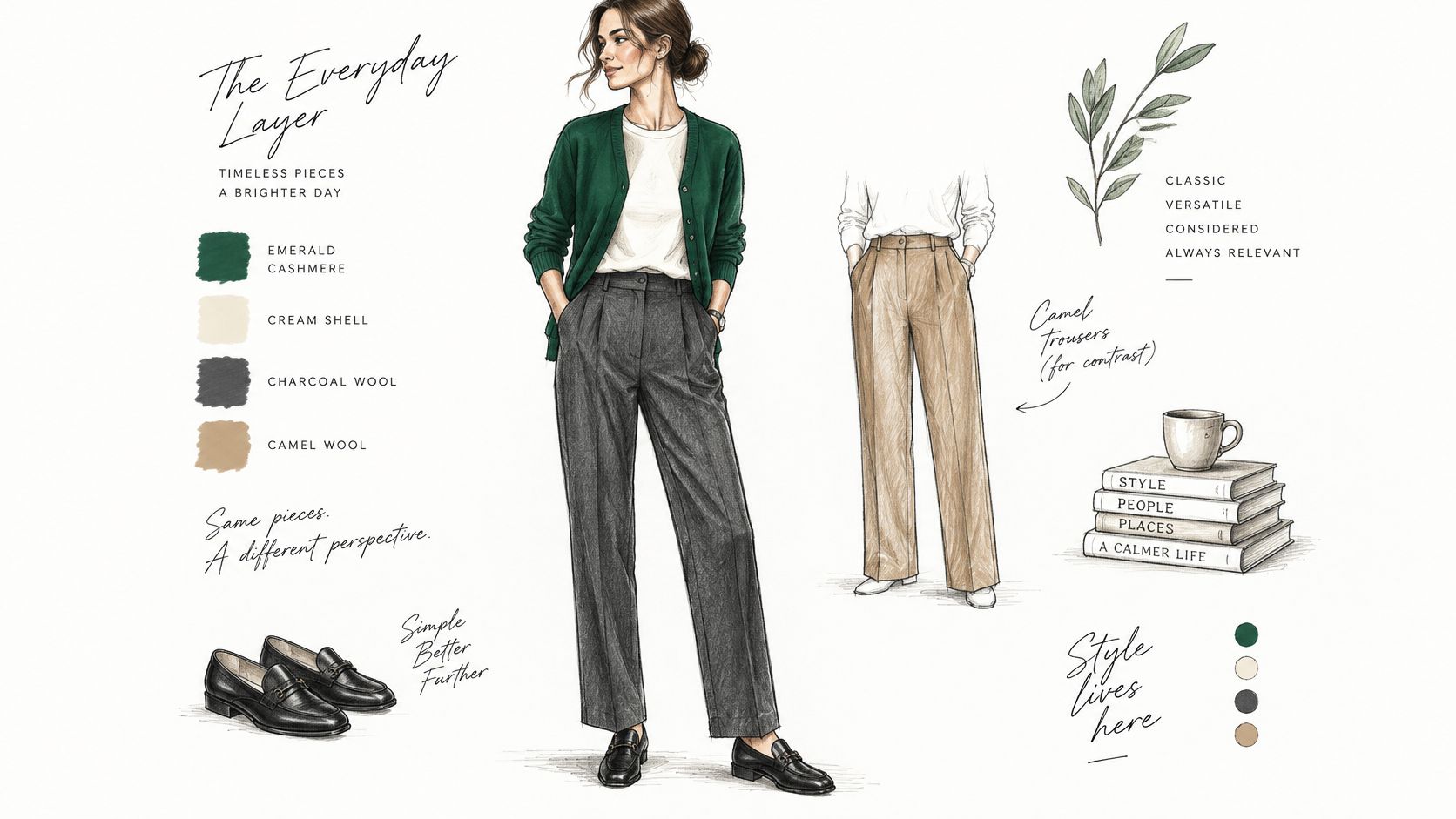
This illustration shows a straightforward neutral base for a stronger green.
Build around familiar clothes
With a black dress: Wear an emerald cardigan open over a black slip dress, with gold drop earrings and simple shoes. The uninterrupted dark base keeps the outfit calm. Choose a cardigan hem that doesn't end awkwardly at the dress's widest point.
With grey trousers: Put sage over a cream shell and wide-leg grey trousers, then add suede loafers. Soft textures make this combination feel coherent. If the cardigan is loose, keep the shell smooth and close-fitting so the waist doesn't disappear under fabric.
With camel tailoring: Layer forest green over a white poplin shirt and camel trousers. Leave the shirt collar relaxed rather than fastening everything tightly at the neck. Brown leather shoes make the warm trousers feel connected to the rest of the outfit.
Adjust the finish, not the whole wardrobe
Dark denim is an easy base for sage and olive on weekends. An ivory crew-neck softens the neckline; black creates a sharper boundary. A fine dark-chocolate knit can work underneath earthy green, provided the cardigan has enough room through the sleeves.
Jewelry and footwear change the mood without adding much complexity:
- Warmer finish: Gold jewelry and brown leather sit comfortably with olive and forest.
- Cooler finish: Silver and grey suede work neatly with sage and mint.
- Cleaner layering: A plain shell keeps attention on the cardigan's color and texture.
Bright red or fuchsia can compete with green, especially when both pieces are saturated. That combination can be intentional, but it isn't the easiest starting point for a versatile wardrobe.
Also watch competing patterns. A striped top beneath a strongly textured, tweed-like knit can look busy before you've added a scarf or bag.
Let the cardigan carry the color. Keep the surrounding clothes neutral until you know how much contrast you enjoy.
Fit, Cut and Length Decisions
Start with the shoulder line. On a classic set-in sleeve, the seam should sit near your shoulder without pulling toward your neck or slipping down your arm. A deliberate dropped shoulder is different, but the neckline should still lie flat rather than slide backward.
Cashmere won't disguise a poor fit. Button strain, twisting side seams and a hem that catches on your hips become more obvious as you move.
Green cashmere cardigan cuts, lengths and best uses
| Cut | Length | Fit and layering room | Best for |
|---|---|---|---|
| Classic button-front | Around the hip | Defined shoulders; closes comfortably over a shell | Office and smart casual |
| Open-front | Hip to upper thigh | Loose drape over dresses and tees | Layering and travel |
| Cropped | At the waist or upper hip | Short body; pairs with high-waisted bottoms | Petite frames and high-waisted trousers |
| Longline or duster | Mid-thigh to knee | Coat-like coverage over a shirt or dress | Cold days and evening wear |
| Oversized boyfriend | Hip length, wide body | Roomy; a belt can add definition | Weekends and relaxed layering |
A cropped cardigan changes where your torso appears to end. It often works well with high-waisted trousers, but check the gap when you reach overhead. A petite shopper may prefer that proportion without wanting a tight fit.
Longline styles need a different check. Walk, sit and turn sideways in the mirror. The cardigan should fall past your hips rather than bunch above them.
Try it over the right layer
Wear the shirt you plan to put underneath. A cardigan that fits over a thin camisole may bind over a poplin sleeve, particularly at the upper arm.
- Button-front check: Fasten it and sit down. Gaps between buttons mean you need more room or a different cut.
- Open-front check: Let your arms hang naturally. The fronts should drape rather than retreat toward your sides.
- Sleeve check: Bend your elbows. The knit shouldn't grip the forearm or push the underlayer into ridges.
If you're between sizes, the smaller option can give a structured button-front a cleaner line, but only if it closes without strain. For open or oversized styles, choose the larger size only when the extra drape looks intentional.
Reading Fiber Specs and Pilling Signs
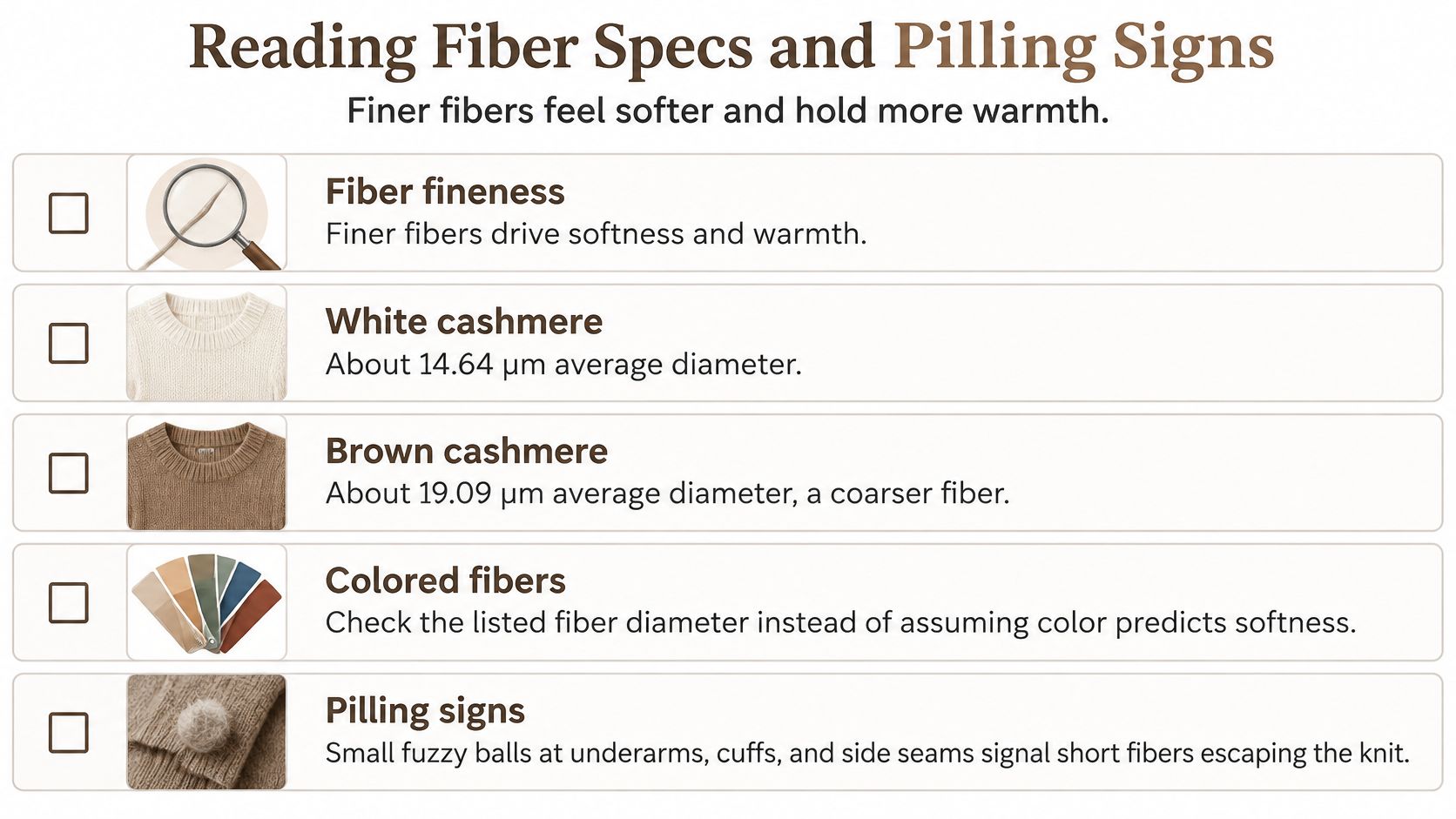
Fiber diameter is a useful starting point for softness. In peer-reviewed cashmere testing published by Taylor & Francis, white cashmere averaged approximately 14.64 µm, while brown cashmere averaged about 19.09 µm; the tested colored fibers also had lower tenacity and elongation than their white equivalents.
Those are findings for the tested fibers, not universal specifications for every white or brown cashmere garment. A green cardigan's finished color doesn't identify its fiber diameter.
Use this visual checklist to separate fiber characteristics from surface appearance.
Translate specifications into shopping checks
Ask whether the starting fiber was white or naturally colored before it was made green. Naturally brown cashmere isn't green without further color processing. Also ask for the mean diameter and average fiber length, rather than accepting a grade label as the whole specification.
For pilling, Cashmere Custom's technical guide identifies fibers shorter than approximately 7.5 mm as associated with increased pilling in tested cashmere knitted fabrics. Short fibers can work free from the yarn more readily, but construction and abrasion matter too.
Fiber and build specs to check before buying a green cardigan
| Specification | Stronger sign | Warning sign | Why it matters |
|---|---|---|---|
| Mean fiber diameter | A stated fine-fiber specification | No disclosure; softness implied only by a purity claim | Helps assess next-to-skin comfort |
| Average fiber length | Long-staple or longer average disclosed | No length information or substantial short-fiber content | Short fibers can migrate and form pills |
| Yarn | Tightly spun, even ply | Loose, uneven or excessively fuzzy yarn | Affects shedding and stability |
| Stitch density | Compact, even knit | Unintended gaps or stretched ribbing | Helps cuffs and elbows retain shape |
| Green origin | Starting fiber color and dye route explained | Shade origin unclear | Makes processing claims easier to assess |
| Early shedding | Limited loose surface fuzz | Heavy shedding and large pills early | Can indicate loose yarn or short-fiber content |
Inspect the knit, not just the softness
Hold the body fabric toward the light without stretching it. Look for unintended thin patches, uneven stitches and a placket that waves instead of lying straight. Deliberately airy knitting isn't automatically defective, but it trades structure for lightness.
Check underarms, cuffs and side seams for surface tangles on a shop sample. Some pilling is compatible with good cashmere; heavy early shedding deserves closer questioning. Green dye alone doesn't explain either result.
Our guide to choosing a high-quality cashmere sweater offers further buying checks. For an additional visual reference, use the video alongside your inspection of the actual garment.
Occasions Where Green Cashmere Works Best
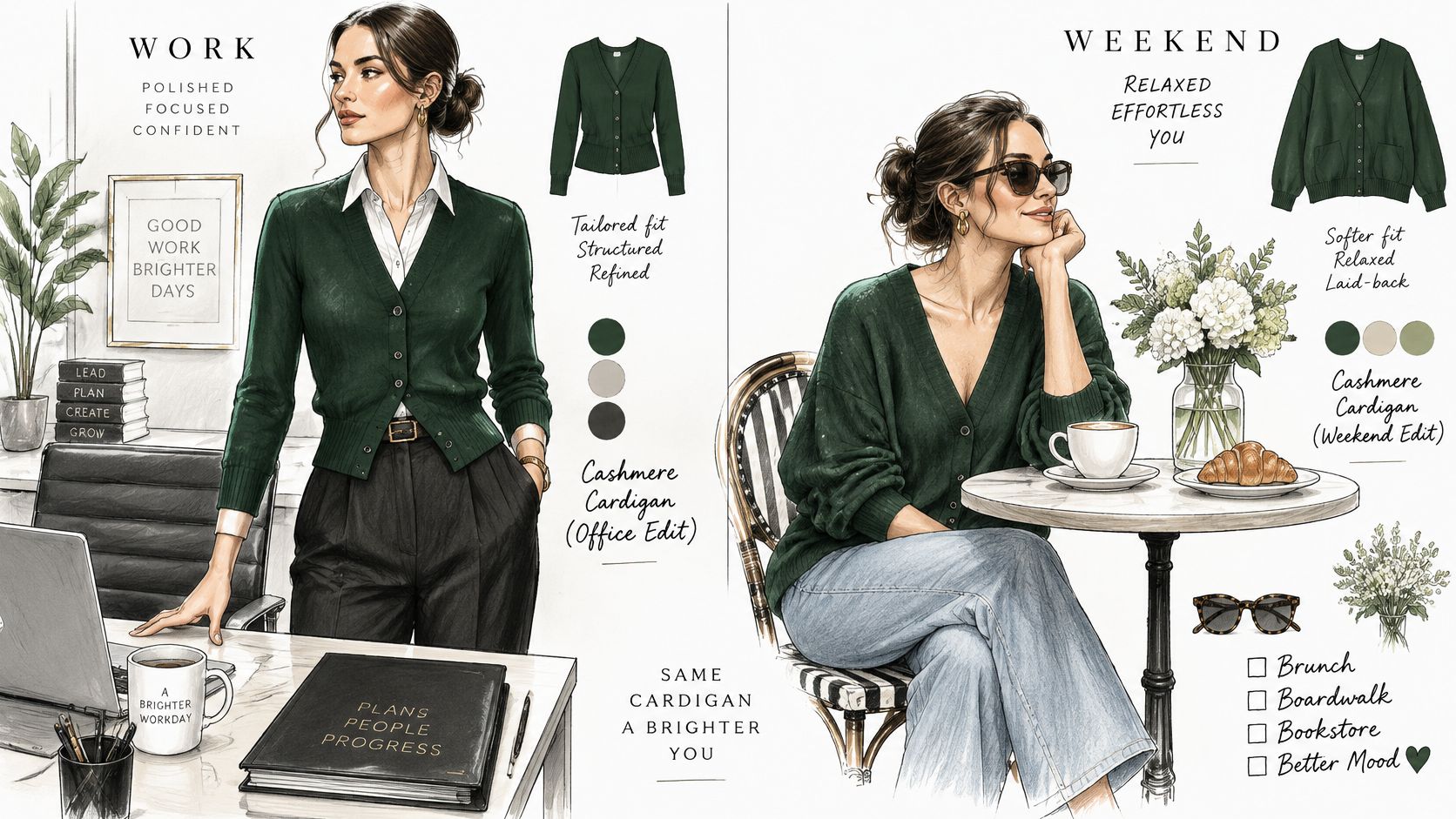
Match the cardigan's structure to the setting before choosing how bold the green should be. A smooth button-front looks more controlled at a client meeting than a loose, slouchy knit, even when both are the same shade.
The illustration shows how changes underneath can move green cashmere between work and weekend wear.
Green cashmere cardigan choices by occasion
| Occasion | Shade to choose | Cut | Dress level |
|---|---|---|---|
| Office and client meetings | Forest or emerald | Classic button-front | Smart |
| Weekend errands and coffee | Sage or olive | Open-front or oversized | Casual |
| Dinner and evening events | Deep emerald | Open-front or fur-collar style | Dressy |
| Holiday gatherings | Emerald or forest | Longline | Festive |
| Cold-weather travel | Olive or forest | Open-front | Practical |
| Spring transition | Sage or pale mint | Cropped or button-front | Light |
For office wear, pay attention to the cardigan when it's closed. You should be able to reach across a desk without the front pulling apart. For dinner, an open neckline and a fluid base layer often matter more than decorative buttons.
A fur-collar style is a styling option, not a guarantee that a particular retailer offers it in green. Check shade availability before building an outfit around a specific design.
Choose for your busiest kind of day
Travel calls for easy removal and enough sleeve room over your base layer. A long duster may look appealing standing up but feel cumbersome in a narrow seat. An open-front at a manageable length is often easier to handle.
Versatility check: Choose the cut for the occasion you dress for most often. Change the bottoms and shoes for the less frequent one.
A forest button-front can move from sharp trousers and loafers to dark denim and trainers. A very oversized cardigan is harder to make formal, so don't buy one expecting accessories to supply all the structure.
How to Care for Green Cashmere So the Color Lasts
Avoid unnecessary washing, but don't confuse careful care with never cleaning the garment. Sweat, food marks and body oils still need attention.
An independent laundry study published in PLOS ONE tested 37 apparel textiles across five household washes, with wool textiles releasing an average of 165 ± 44 milligrams of microfibers per kilogram per wash. That isn't a cashmere-specific shedding rate, but it establishes that natural-fiber clothing isn't shed-free.
A gentle routine that preserves shape
- Air between wears. Lay the cardigan over a clean drying rack away from heat so moisture can escape.
- Spot-clean small marks. Dab with a damp cloth and a little wool-safe detergent. Don't scrub the knit.
- Wash when needed. Persistent odor or visible soil calls for cleaning rather than another airing.
- Keep washing cool and gentle. Use a pH-neutral wool or cashmere detergent. Hand-wash without rubbing; use a delicate machine cycle only when the garment label permits it.
- Press out water. Support the wet cardigan, then roll it in a clean towel. Don't wring.
- Reshape and dry flat. Align the placket and smooth the sleeves away from direct sunlight and radiators.
- Store clean and folded. Use dry, breathable storage and inspect regularly for moth activity. Cedar or lavender may supplement storage care, but they aren't substitutes for cleaning and inspection.
Our cashmere care instructions provide a useful reference before washing. If the garment requires professional attention, CleanOnline, North York's Premium Dry Cleaners, explains how to compare wet cleaning and dry cleaning so you can discuss the appropriate method with a cleaner.
Does pale green fade faster than emerald?
The color name alone won't answer that. Dye class, dye quality, light exposure, detergent and heat matter more than whether the label says olive, emerald or pale green.
Remove pills from a dry garment with a cashmere comb, using light strokes while supporting the fabric. Pulling pills by hand can draw more fiber out of the yarn.
Compare Shades on the Color Chart and Pick Your Size
Green dye says nothing about environmental performance. A Textile Exchange life-cycle assessment found no significant climate-impact difference between nomadic and farmed systems per kilogram of clean dehaired cashmere. Ask about traceability, herd management, dyeing, repairability and expected garment life rather than treating either production label as a guarantee.
Use this final visual as an ordering prompt, then confirm current listing details.
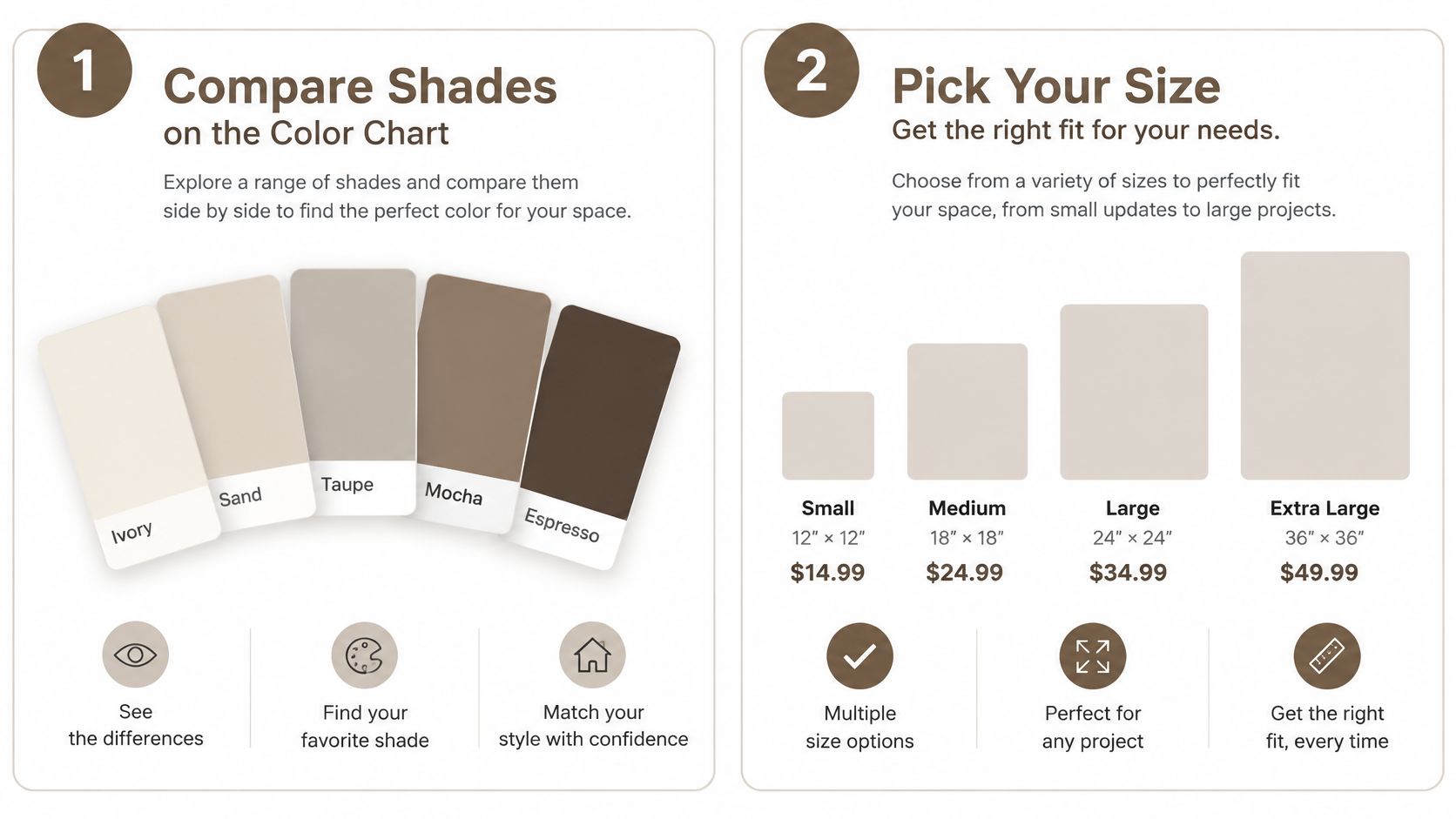
- Compare the shade: Open our color chart and shortlist greens that suit your usual base layers.
- Confirm the fit: Compare garment measurements with a cardigan you already like.
- Review the specifications: Check fiber disclosure, construction details and available sizes before paying.
Our Women's Cashmere Round Neck Cardigan is on sale for $129.00 USD, with a regular price of $259.00 USD, and is available in 7 colors. Confirm the available shade rather than assuming every style comes in your preferred green.
Cashmere Boutique offers cashmere cardigans and other knitwear for women and men, with color and size guidance to support your choice. Visit Cashmere Boutique to compare available styles and choose a green that works with your coloring, wardrobe and layering habits.