

How to Wash a Coat: Wool, Cashmere and Synthetic Care
A coat needs cleaning, the care tag is hard to read, and the washing machine is sitting right there. Before you fill it, check what the label allows and how the coat is built. The outer fabric may tolerate water while its lining, padding, leather trim, or glued layers do not.
The safest way to decide how to wash a coat is to consider the label, every layer of the garment, and the drying method together. A washable symbol isn't a blanket approval for a hot cycle, and a coat that can be washed may still need a cleaner if its construction can't handle water.
Table of Contents
- Which Washing Method Your Coat Can Take
- How to Hand Wash a Wool or Cashmere Coat
- Machine Washing Synthetic and Technical Coats
- When Construction Rules Out Washing at Home
- How to Dry and Reshape a Coat Without Distortion
- Treat Stains and Store the Coat Clean
- Confirm the Method Before You Fill the Tub
Which Washing Method Your Coat Can Take
Start with the care label, before water touches the coat. It sets the permitted cleaning and drying methods, and the fiber content on the inside seam helps you work out whether those instructions are practical for the whole garment.
A number inside a washing tub gives the maximum water temperature in degrees Celsius. It's a ceiling, not a target: if the label allows a temperature higher than you need, a cooler suitable wash is usually the gentler choice. A hand symbol means gentle hand washing at no more than 40°C. Bars beneath the tub signal reduced agitation, including the very gentle treatment associated with wool and silk cycles. The symbols belong to a care-label system that contributed to the international ISO 3758 standard, which arranges care instructions for washing, bleaching, drying, ironing, and professional textile care, as described in the GINETEX care-symbol guide.
The words on the label matter, too. “Dry Clean” alone doesn't necessarily rule out washing, but “Dry Clean Only” does. When a coat has mixed fibers, read the full composition rather than deciding from the outer shell alone. A wool or cashmere face fabric can be paired with a polyester lining, leather trim, padding, or bonded layers that need a different approach.
| Label or coat type | Method | Water and drying | Home washing? |
|---|---|---|---|
| Tub with bars, wool or delicate cycle | Machine on reduced agitation | Maximum temperature shown on tub; follow label for drying | Yes, if the label permits |
| Hand symbol, no more than 40°C | Gentle hand wash | Lukewarm water, about 30°C; dry flat if the material requires it | Yes |
| “Dry Clean” without “Only” | Hand wash or qualified cleaner | Test for dye transfer first; use low agitation if washing is permitted | Yes, with caution |
| “Dry Clean Only” | Professional dry cleaning | No water washing | No |
| Coat with down, leather trim, or glued interlining | Professional cleaning unless the label clearly permits another method | Water and heat can put the construction at risk | Usually no |
For a coat whose label permits home care, choose the least aggressive compatible method, then follow its drying instructions. A detailed cashmere care guide can also help you distinguish care for washable cashmere items from care for cashmere coats.
Before deciding, photograph the label and check the fiber content on the inside seam. That gives you a record of both the instructions and the materials if you need to ask a cleaner about the coat's construction.
How to Hand Wash a Wool or Cashmere Coat
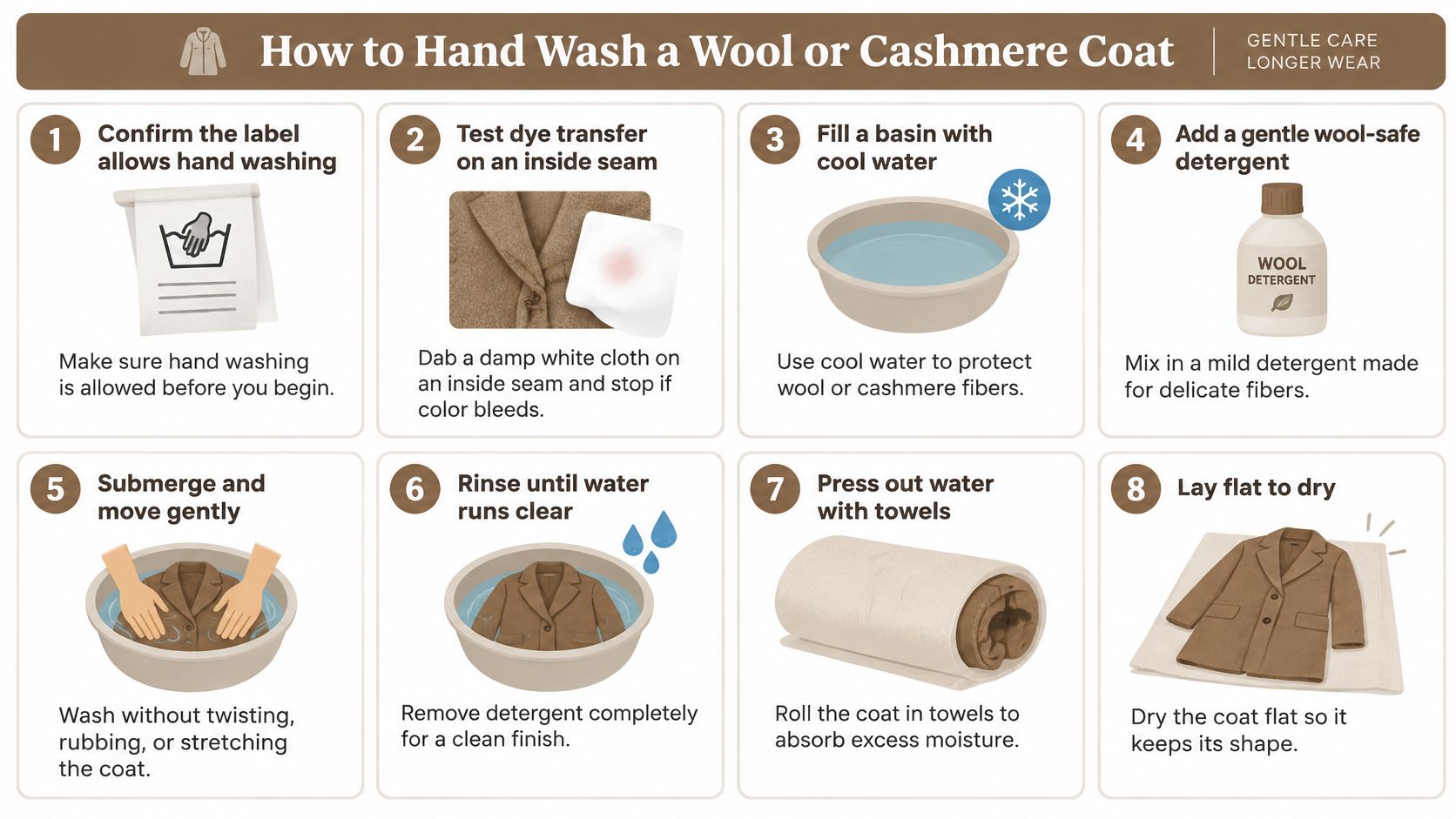
Hand washing is appropriate only if the permanent label allows it and the coat's construction can tolerate water. Wool and cashmere can felt or change dimensions when heat, rubbing, twisting, or abrupt temperature changes make fibers interlock. A Woolmark guide to washing wool recommends gentle handling, lukewarm rinsing followed by cold rinsing, pressing out water rather than wringing, and flat drying for wool garments.
- Confirm the label and test the dye. Make sure hand washing is allowed. Dab a damp white cloth on an inside seam; if color transfers, stop and take the coat to a cleaner.
- Prepare the coat. Turn it inside out, close zips and buttons, empty the pockets, and brush away surface dust with a soft clothes brush. Grit trapped against the fibers can scratch or rub them as the coat moves in water.
- Prepare the basin. Fill a clean basin with lukewarm water at about 30°C and mix in a neutral wool detergent. For cashmere items that are suitable for home washing, Cashmere Boutique recommends hair shampoo; don't use bleach.
- Soak and move gently. Submerge the coat fully and let it soak for about 10 minutes. Move it through the water carefully, without rubbing, twisting, or pulling, since friction can encourage wool fibers to felt.
- Rinse thoroughly. Rinse first in lukewarm water, then in cold water, supporting the coat as you lift it. Cashmere Boutique recommends conditioner in the final rinse for cashmere items, but don't add fabric softener.
- Press out the water. Press the coat gently against the side of the basin, or lay it on a towel and roll it up to absorb moisture. Never wring or twist it; those motions can stretch the fabric and distort the shape.
- Reshape and dry flat. Lay the coat on a clean, dry towel and arrange the shoulders, sleeves, and hem while it's damp. Keep it flat as it dries so the weight of the wet fabric doesn't pull it out of shape.
A good result is a coat with no dye on the test cloth, a soft hand, and the same length and shoulder line it had before washing. For cashmere coats specifically, Cashmere Boutique advises professional cleaning rather than washing at home, even though its guidance allows hand washing for some other cashmere items.
Machine Washing Synthetic and Technical Coats
A synthetic shell may tolerate a machine cycle while its lining or filling does not. Start with the care label, then check that the coat's other materials and components can handle the same wash. A standard cotton program is not a safe default: GINETEX's account of garment-care standardization describes common programs at approximately 95°C for boiling whites and 60°C for colored or non-colorfast textiles, settings that can be too harsh for delicate garments.
If the label allows machine washing, choose a short, cool cycle at or below 30°C and a low spin. A front-load machine may be preferable where available, since machine action can release fibers from fabric. Keep washes limited: synthetic fabrics can shed microfiber, and a laundry ball should not be assumed to reduce that release. Shorter, cooler cycles are a practical way to limit heat and agitation.
| Coat fabric | Cycle and temperature | Spin and load | Note |
|---|---|---|---|
| Polyester or nylon shell | Short, cool cycle at 30°C or below | Low spin; front-load if possible | Air-dry on a hanger away from heat |
| Fleece | Short, cool cycle at 30°C | Low spin; no laundry balls | Wash only when needed |
| Wool blend with a machine-wash label | Wool or delicate cycle at 30°C | Low spin, in a mesh bag | Dry flat; never tumble |
| Down-filled puffer | Gentle cycle at 30°C | Low spin; front-load | Make sure the filling dries fully before storage |
| Pure cashmere coat | Do not machine wash | No machine load | Dry clean |
Follow the coat's label if it calls for a gentler method than the table suggests. Wash only when the coat is dirty; brushing away surface soil can sometimes avoid a full wash.
When Construction Rules Out Washing at Home
A washable label doesn't guarantee that a coat's structure can handle a home wash. Water, agitation, and drying can affect the lining and internal supports differently from the outer fabric. Before filling a tub, check for features that could lose shape, separate, or hold moisture.
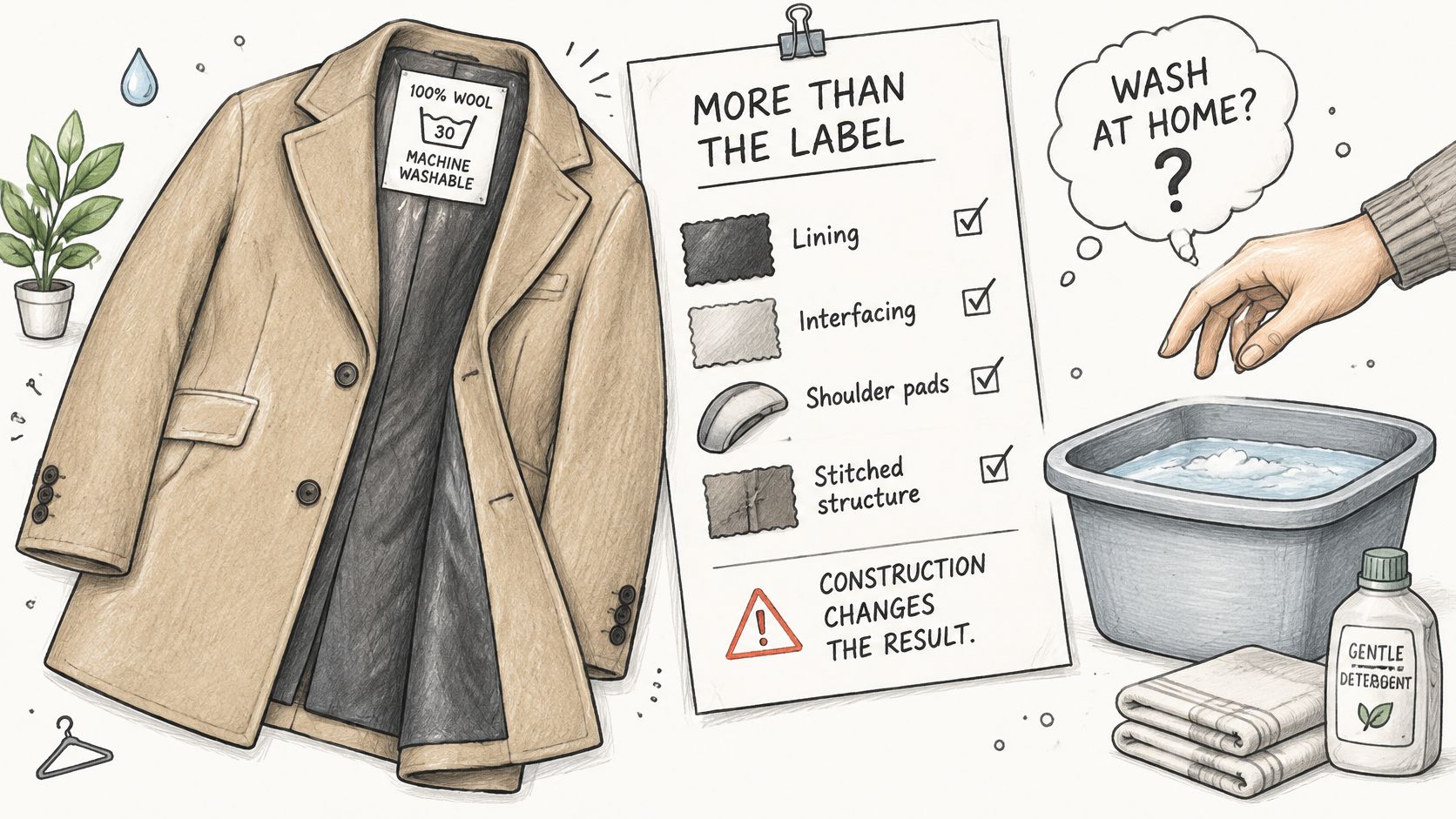
Take the coat to a professional cleaner if any of these checks apply:
- The label says “Dry Clean Only.”
- The coat has glued or bonded interlining that could separate in water.
- It has a shaped collar, structured shoulders, or padded lining that could distort.
- It has leather, suede, or fur trim that water or heat could damage.
- It has down or another filling that could clump or remain damp inside.
- The shell and lining use different fibers that may shrink at different rates.
- The coat is older, with weak seams or dye that may not hold.
A shell can look washable while hidden layers aren't. If you're unsure whether the lining and outer fabric can be cleaned safely as one garment, professional cleaning is the safer choice than testing the coat at home. Cashmere Boutique advises that cashmere coats, jackets, and pants shouldn't be washed at home, and recommends dry cleaning for cashmere coats and fur items.
The short video below gives another visual look at coat-care considerations.
When you book a cleaner, ask whether the shell and lining can be cleaned together. That conversation helps clarify the treatment for a mixed-material coat before anyone starts cleaning it.
How to Dry and Reshape a Coat Without Distortion
A wet coat weighs far more than it does dry, and that weight decides whether it keeps its shape. Follow the care label first for drying, since direct heat and hanging a saturated knit coat by its shoulders can stretch the fabric and pull the hem out of line.
| Coat material | Drying method | Reshaping step | Heat or tumble |
|---|---|---|---|
| Knit cashmere or wool | Flat on a dry towel, inside out and out of the sun | Pull the hem, cuffs, and collar into shape | None |
| Woven wool or wool blend | Wide padded hanger in shade | Square the shoulders and lapels | No direct heat |
| Synthetic shell | Ventilated hanger or flat, away from radiators | Smooth the seams and zip panels | Low heat only if the label allows |
| Down-filled puffer | Flat or hanging until fully dry | Fluff the baffles by hand | Low tumble with dryer balls only if the label allows |
Lay a knit flat on a dry towel, inside out, away from sun and radiators. Pat the sleeves, hem, and collar into position with your hands and recheck them as drying progresses. I recommend swapping a damp towel for a dry one early, because trapped moisture slows drying and leaves knit limp.
A woven wool or wool-blend coat can go on a wide padded hanger in a shaded, ventilated spot. Square the shoulders, close the front, and straighten lapels and seams while damp. Hang a synthetic shell where air circulates on both sides, away from direct heat.
Down is the one exception, and only when the label permits machine drying. Use low heat with dryer balls if allowed, then confirm the filling is dry through to the center. Loosen any clumped baffles by hand before storage. Never put a coat in the dryer to hurry a flat-dry instruction.
Leave the coat until fully dry before storing it. Damp storage turns musty fast and can dull the finish. If normal friction leaves pills once the coat is dry, lift them with light strokes in one direction using a plastic de-pilling comb or fabric shaver. For related knit guidance, see Cashmere Boutique's guide to drying sweaters.
Treat Stains and Store the Coat Clean
A stained coat goes to the cleaner before it goes into storage. Cashmere Boutique recommends cleaning cashmere garments before storage because fresh stains oxidize during storage and may attract moths. For a cashmere coat or jacket, that means professional cleaning, not home treatment.
Blot a fresh mark lightly with a clean, dry cloth to lift surface liquid. Skip rubbing, water, dish soap, bleach, and home solvents. Those steps can spread the stain, leave rings, or damage fiber and color, and shaped construction makes home spot removal a poor trade. I recommend bagging the coat and booking a cleaner promptly, while telling them what caused the stain.
Once the coat is clean and completely dry, fold it carefully or pack it neatly in tissue paper or a plastic bag. Keep it in a closet away from moisture, direct light, and dust. A well-sealed plastic storage box works well for summer storage. Check periodically for moth activity with help from Cashmere Boutique's guide to protecting cashmere from moths.
Confirm the Method Before You Fill the Tub
Use this final checklist before choosing a wash method:
- Read the permanent care label and note every symbol.
- Identify the fibers in the shell, lining, and filling.
- Check for glued layers, shaped supports, trim, or other delicate construction.
- Choose hand washing, machine washing only if the label permits it, or professional cleaning.
- Test for dye transfer on an inside seam before using water.
Let cashmere rest for two or three days after a day's wear before wearing it again. If your coat came from Cashmere Boutique, check its care instructions for the recommended method.
Save this checklist in a note on your phone. If any construction check gives you pause, book a professional cleaner before washing the coat.
Cashmere Boutique offers cashmere coats, clothing, accessories, and home textiles, alongside care guidance for its garments. Explore the collection at Cashmere Boutique and check the care advice for the piece you're considering before you decide how to clean it.