

How to Protect Cashmere from Moths: A Simple Guide
You pull a favorite cashmere sweater from its summer box and spot a faint hole near the cuff. The damage may have started long before you noticed it, which is why protecting cashmere takes more than hanging a moth trap and hoping for the best. The reliable routine is to clean garments before storage, keep the storage area clean, and make it difficult for moths to reach the fibers.
Table of Contents
- Seasonal Cleaning and Storage Routine
- Why Moths Target Cashmere and How Long They Take
- Traps and Repellents Compared with Sealed Storage
- Freezing Infested Cashmere Safely
- Deciding Whether to Treat, Repair or Replace Moth Damage
Seasonal Cleaning and Storage Routine
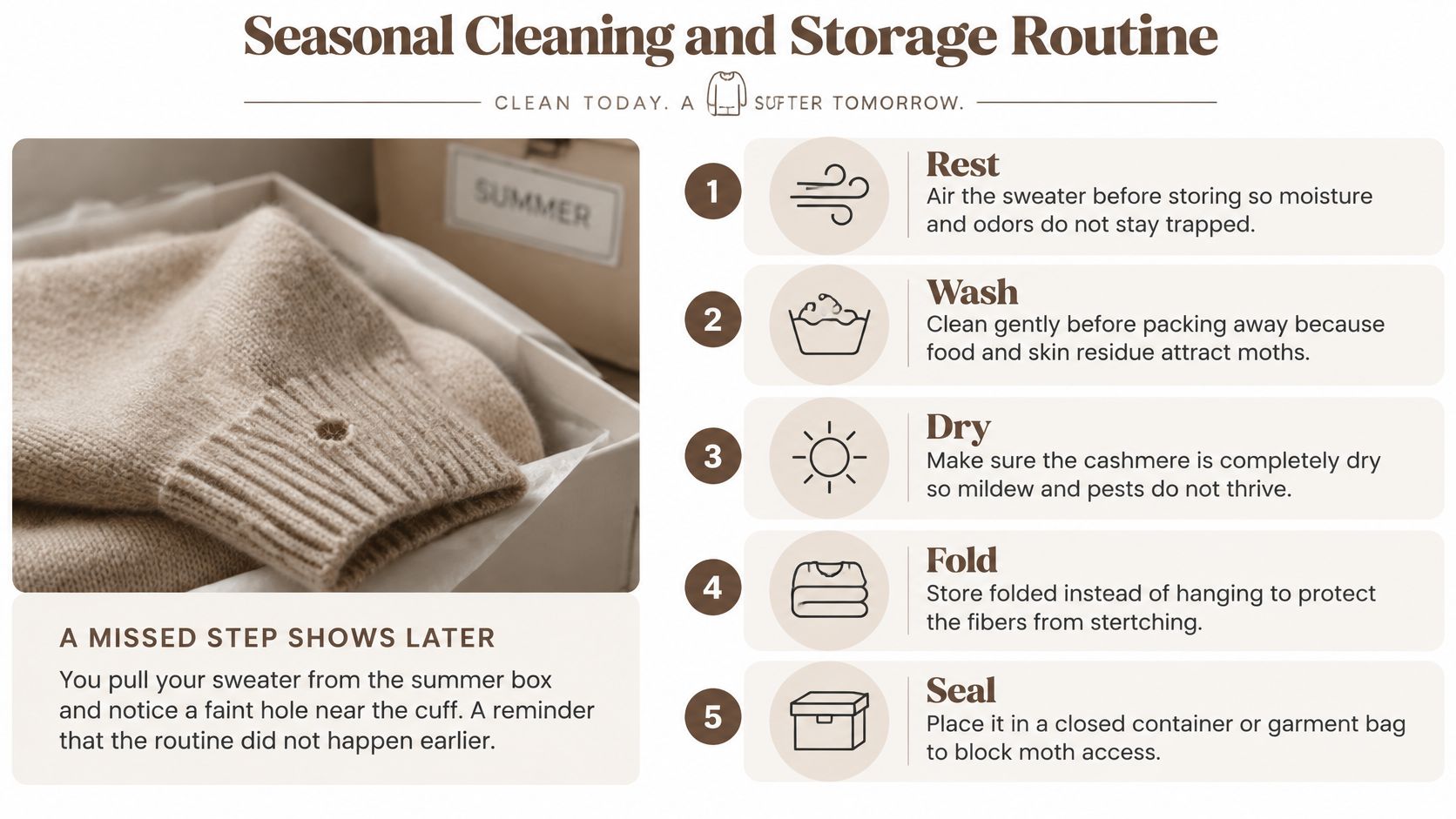
A sweater with a new hole is a frustrating sign that something went wrong earlier: perhaps the garment went away with a food spot, or the storage box held dust and lint. A seasonal routine helps prevent those oversights. The essential order is rest, clean, dry, fold, vacuum, then seal.
The seasonal checklist
- Rest between wears. Air a cashmere garment after wearing it so perspiration and body oils don't keep accumulating in the fibers. Cashmere Boutique recommends letting a garment rest for a few days after a day's wear.
- Clean before storage. Wash or dry-clean each piece before packing it away. Fresh stains can oxidize during storage and may attract moths, so don't rely on a garment looking clean. Dry-clean coats, jackets, pants, and pashminas. Hand-wash sweaters only when the care instructions allow it.
- Make sure it's completely dry. Moisture trapped in a folded garment can encourage mildew. Don't seal cashmere away until it's dry throughout, including at seams and thicker folds.
- Fold rather than hang. Fold knits, or pack them neatly in tissue paper or a suitable bag. Hanging can stretch the fabric under its own weight.
- Vacuum the storage space. Clean closet floors, shelves, drawer corners, and the strip beneath baseboards before returning garments. Dust, lint, and debris in tucked-away places can give pests places to hide.
- Seal summer storage. Store pure cashmere sweaters in a well-sealed, dry, see-through plastic box. Keep the box in a closet away from light, dust, and dampness. A sealed container blocks moth access, but only when the garment inside is clean and dry.
For item-specific guidance before washing, use Cashmere Boutique's cashmere care instructions. If you're comparing broader household pest-prevention ideas, The Green Advantage pest prevention guide offers useful context, but don't let general advice override the care requirements of delicate knitwear.
Hand-washing without damaging the knit
Hot water can kill insects in textiles that tolerate it, but that doesn't make it safe for cashmere. Michigan State University Extension says laundering susceptible textiles in water above 120°F for 20–30 minutes kills all insect life stages; cashmere can felt or shrink at that temperature, so use a gentler method instead (Michigan State University Extension's clothes-moth guidance).
- Use lukewarm water and mild hair shampoo. Wash colored pieces separately to limit dye transfer, and don't use bleach.
- Rinse gently. A little hair conditioner in the rinse can soften the fibers. Don't scrub or twist the knit.
- Remove water carefully. Press the garment gently between your hands or in a towel. Twisting can distort its shape.
- Dry flat and reshape while damp. Keep it away from direct heat and sunlight, which can shrink or distort cashmere.
The central rule is simple: sealing works only after cleaning and drying. Repeat the routine when you change over seasonal clothing, and follow the garment's care instructions whenever they're more specific.
| Common cashmere care belief | What the evidence shows | Safer action |
|---|---|---|
| Hot water kills moths, so wash everything hot | Water above 120°F for 20–30 minutes kills all insect life stages in textiles that tolerate it, according to Michigan State University Extension. | Cashmere can't take that heat. Hand-wash it in lukewarm water. |
| Cedar or botanical scent protects cashmere | Repellents don't replace cleaning, dry storage, or validated treatment. | Clean, dry, and seal first. Treat scent as a secondary layer. |
| Sun-drying after washing is fine | Direct heat and sunlight can shrink or distort cashmere. | Dry flat indoors, away from heat and sunlight. |
Why Moths Target Cashmere and How Long They Take
A cashmere garment can look untouched when it goes into storage, yet larvae may be feeding in a seam or hidden nearby. Moth larvae consume keratin, a protein found in animal fibers such as wool, hair, fur, silk, and feathers. The larvae cause most clothing damage, while adult moths lay eggs.
| Clothes moth life stage | Typical duration | What it means for your cashmere |
|---|---|---|
| Egg hatch | A few days | Eggs can hide in seams and folds and hatch before damage shows. |
| Larval feeding stage | Several weeks to about two months | Most damage happens as larvae feed on keratin fibers. |
| Pupation | Several weeks | Pupae may form in cracks and closet corners, away from the garment. |
| Full cycle, favorable conditions | Roughly 1–3 months | A missed season can allow a new generation to develop. |
| Larval stage, unfavorable conditions | Many months, potentially longer | A long quiet period doesn't rule out an active population. |
The Utah State University Extension clothes-moth guidance describes how these stages can continue out of sight. Eggs and larvae may be hidden in folds, seams, closet corners, carpets, and stored packaging. A sweater may show no damage while larvae feed in a concealed seam or pupate in a crack beside the closet.
Inspect by season, not just by sight
At each seasonal change, unfold stored cashmere and check the seams, cuffs, and collars. Look for small cases, fine debris, and irregular holes. Check nearby textiles too, including wool accessories, rugs, and upholstery. If you open a storage box between seasonal changes, inspect its contents then as well.
Cleaning before storage is the foundation of prevention. Perspiration, food residue, and skin oils can make a textile more attractive to larvae, so clean garments before packing them away. Occasional checks can miss eggs and larvae during their long, concealed stages; seasonal cleaning and inspection give you regular opportunities to find signs before damage spreads. For a broader explanation of moth risks around the home, FullScope Pest Control's homeowner moth guide provides additional context. A clean, dry garment in a well-sealed container keeps moths from reaching the cashmere to lay eggs.
Traps and Repellents Compared with Sealed Storage
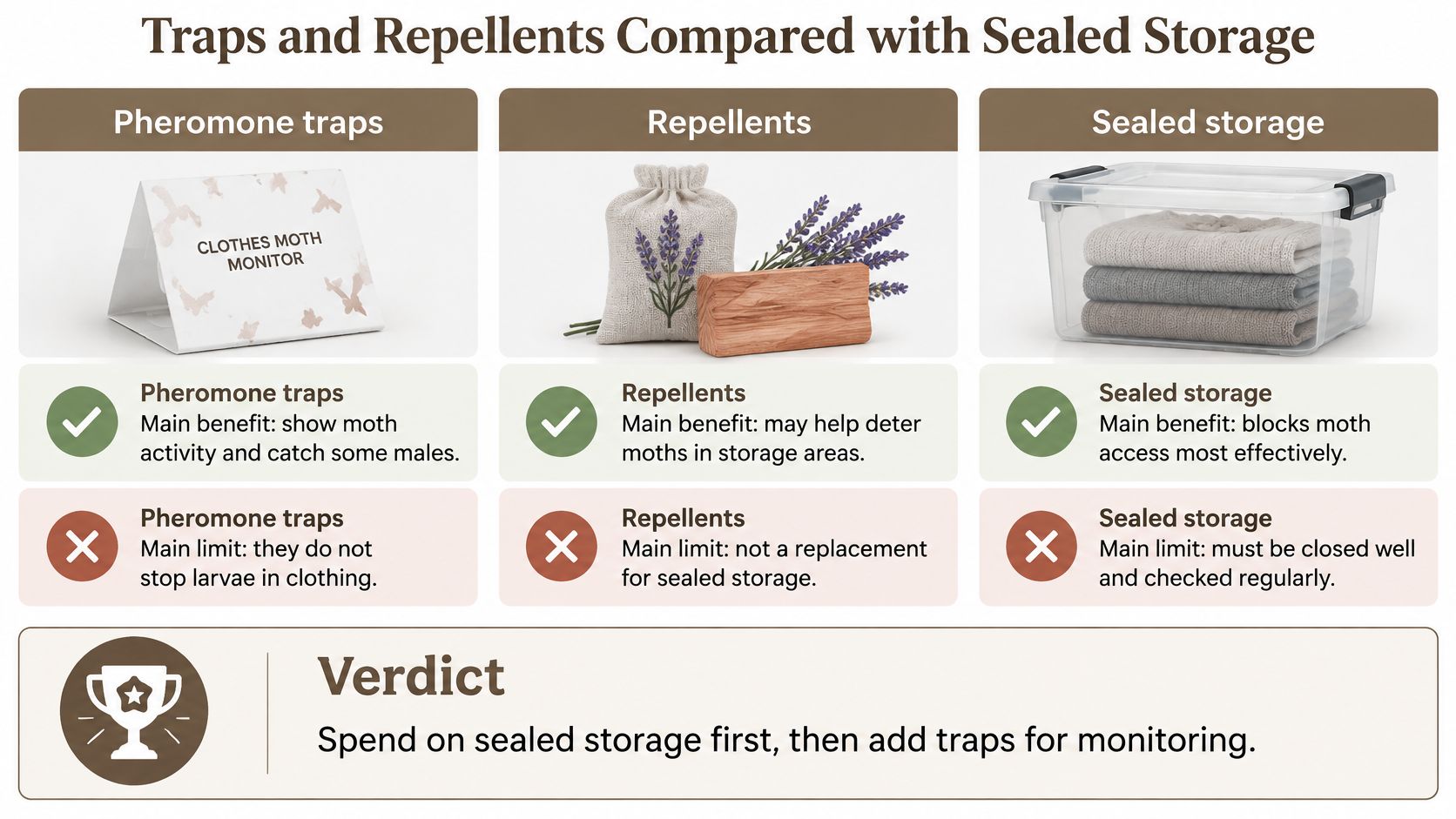
Pheromone traps are monitors, not a moth-proofing system. Their lures primarily attract male webbing clothes moths, so a catch can signal activity and remove some adult males. But traps don't remove eggs or feeding larvae, and they don't shield cashmere from moths. The Rutgers clothes-moth guidance also notes that traps are species-specific: a trap intended for webbing clothes moths won't attract casemaking clothes moths.
A trap catch doesn't prove that a cashmere garment has holes, but it's a reason to look more closely. Inspect nearby wool and cashmere, rugs, upholstered furniture, and lint accumulations. Larvae can be tiny and hard to see, and they may leave a garment to pupate in cracks. If you keep catching moths after cleaning the area and securing your clothing, move from monitoring to treatment, such as controlled freezing or professional help.
Cedar and botanical products may add scent, but don't treat them as a substitute for cleaning and sealed storage. The same goes for any product that promises to solve an infestation without addressing the garments and storage area.
What each option can and can't do
- Pheromone traps: Useful for spotting some adult male activity. They won't protect clothing from eggs or larvae.
- Repellents: May provide an additional deterrent around storage. They don't make an unclean garment safe to store.
- Sealed storage: Creates a physical barrier against moth access. It only helps when the container closes well and the garment is clean and dry.
Practical rule: If a trap catches a moth, inspect the surrounding area and treat the catch as a prompt to investigate, not as proof that the trap has solved the problem.
Use traps to monitor activity, not as protection for the cashmere itself. The video below offers another look at moth prevention methods; weigh any product suggestion against the basic need to clean and secure susceptible textiles.
Freezing Infested Cashmere Safely
Freezing can treat an infested, non-washable garment when the item stays at the required temperature for the full treatment period. The freezer's air temperature alone is not enough: the garment's coldest point must reach the target.
| Target temperature | Hold time | Source guidance | What it means in practice |
|---|---|---|---|
| -18°C (0°F) | At least 1 week | University of Kentucky extension guidance | Hold the garment at the target for the full period. |
| -18°C at the coldest core | At least 2 weeks | Museum conservation guidance | The garment's core must reach the target, not just the freezer air. |
| Below 4°C (40°F) | No kill step | Extension guidance | Cooling may make larvae inactive, but does not eradicate them. |
A careful freezing protocol
- Check that the garment is dry and suitable for freezing. Do not freeze damp cashmere. Delicate, embellished, or structurally unstable pieces may need specialist advice.
- Seal it in a sturdy plastic bag. Remove excess air without compressing the knit.
- Check the freezer temperature. Use a thermometer to confirm it can maintain the target. Do not rely on the freezer setting alone.
- Allow the item to cool through. Thick blankets and folded coats take longer to reach the target at their coldest point.
- Hold it at the target for the full period. Avoid overloading the freezer or packing items tightly together.
- Warm the sealed package gradually. Wait until it reaches room temperature before opening, which helps keep condensation off the cashmere.
- Make sure the garment is fully dry before storing it. For a non-washable cashmere coat or jacket, dry cleaning is recommended rather than home washing.
Avoid ovens, dryers, radiators, and uncontrolled hot-air treatments, which can shrink, felt, distort, or affect the dye. For an irreplaceable garment, consult a textile conservator before freezing. To understand how brushing affects a sweater's surface, see Cashmere Boutique's guide to brushed cashmere sweaters.
Deciding Whether to Treat, Repair or Replace Moth Damage
Use this triage to decide what to do with each garment:
- No visible signs of activity: If you find no holes, larvae, or webbing, clean and dry the item, seal it, and set a date to check it again.
- Possible activity or uncertain storage history: Treat the item before storing it. For a suitable non-washable garment, use a controlled freezing protocol; choose professional treatment if it can't safely be frozen.
- A small hole in a sweater: Treat the garment first, then check that no live larvae remain. A skilled repairer can darn a small hole or attempt invisible mending.
- Extensive damage or a valuable coat or heirloom: Consult a professional textile conservator or repairer. Restoration may take more work than the item warrants, so get an assessment before committing.
Don't mistake pilling for moth damage. Pilling is a normal result of friction and can be removed with a cashmere comb or fabric shaver. Moth damage is more likely to appear as irregular holes, often in concealed spots near seams and collars. If you aren't sure, examine the surrounding fabric and inspect other animal-fiber items stored nearby before deciding that the garment only needs a surface tidy-up.
Keep a simple care log with cleaning, inspection, and freezing dates. That makes it easier to tell whether a garment has been treated and when it needs its next check. Cashmere Boutique provides FAQs about cashmere quality and care; its cashmere pullover guide is another useful resource when you're deciding how to handle a particular knit.
Before putting a garment away, check its composition and care instructions, clean it appropriately, and seal it only when it's fully dry. Visit Cashmere Boutique to explore its cashmere apparel, accessories, pashminas, and home textiles, along with care guidance for looking after your pieces.