

The White Wrap Sweater Style and Care Guide
Most advice about a white cashmere wrap sweater is wrong. It tells you to treat it like a display piece, then acts surprised when you never wear it, or when the first real outing leaves you with gaping front panels, a fuzzy waist tie, and a collar that looks tired after two washes.
A better approach is simpler: manage friction, fit, and cleaning with intent. White has stayed relevant in fashion for a long time, and the New Zealand Fashion Museum's record of white clothing in mid-19th-century dress guidance, the 1939 seaside look with a white jacket and navy trousers, and the white-heavy styling of the 1980s, 1990s, and beyond all show that white works because it's familiar, layered, and adaptable, not because it's precious (New Zealand Fashion Museum). A white wrap sweater fits that lineage perfectly. It can look polished, soft, and modern in one move, if you stop handling it like a fragile novelty and start treating it like a smart, adjustable layer.
Table of Contents
- Rethinking White Cashmere for Everyday Wear
- Evaluating Cashmere Weight and Fiber Quality
- Securing the Perfect Wrap Fit and Coverage
- Styling the White Wrap Sweater for Any Occasion
- Mastering Layering for Transitional Climates
- Preventing Yellowing Pilling and Stretching
- Building a Timeless Capsule Around Your Wrap
Rethinking White Cashmere for Everyday Wear
A white wrap sweater earns its place when you wear it often, not when you save it for a special lunch and a lot of anxiety. The wrap shape is built for layering, and layering is what turns luxury knitwear into something you reach for on a Tuesday.
Stop treating white as a restriction
White cashmere is easiest to wear when you manage the things that wear it down. Keep the layers smooth, avoid rough textures at the waist, and choose pieces that do not fight the sweater's drape. That is a better rule than protecting it so much that it never leaves the closet.
The silhouette does real work on its own. The front overlap, tie, and soft drape create shape without stiffness, which is why this style still feels current in comfort-led dressing. When the knit sits cleanly across the body, the result looks calm, refined, and expensive without trying too hard.
Practical rule: If you control what rubs against the sweater, you can wear it several times a week instead of saving it for occasions.
Treat white cashmere as a daily layer, not a display piece. The goal is not to baby it. The goal is to wear it with discipline, keep the front panels aligned, and stop the waist tie from becoming a rough spot that pills early. Handle that well, and the sweater stops being fussy and starts acting like a dependable uniform piece.
Evaluating Cashmere Weight and Fiber Quality
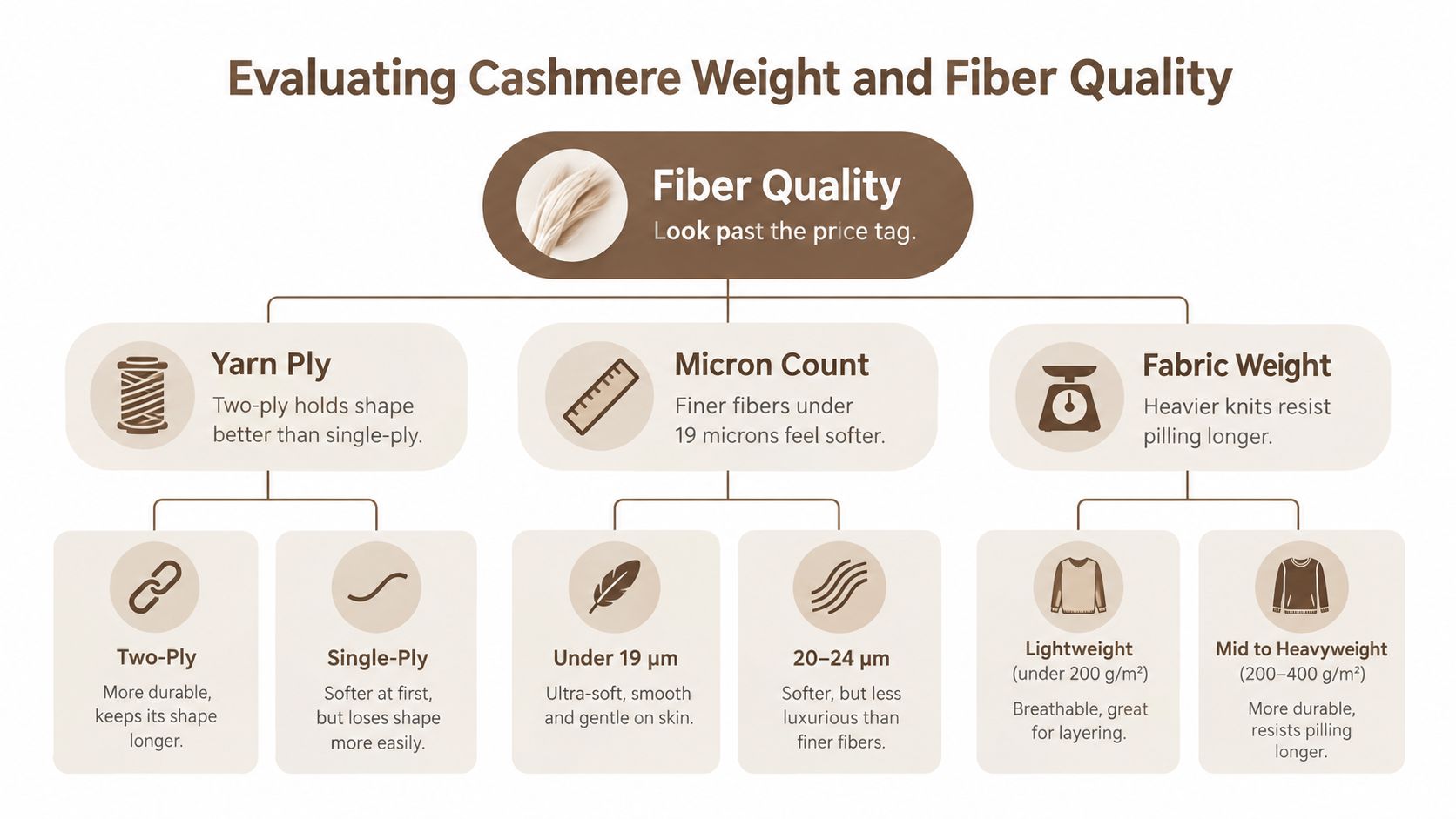
Quality starts with the fiber, not the label language. Cashmere is generally defined by an average fiber diameter of no more than 19 microns, while premium fibers can sit around 14 to 15.5 microns; finer fibers bend more easily and usually feel less prickly against skin (Sustainable Fibre). If a seller only says “Grade-A” and gives you no real fiber details, you're buying on mood, not information.
What to ask for before you buy
Don't stop at softness. Ask for the mean fiber diameter, coefficient of variation, fiber length, and the proportion of fibers above 30 microns. Those are the numbers that tell you whether the knit will feel even, hold its shape, and avoid that scratchy, inconsistent hand that cheap cashmere sometimes hides behind finishing.
For a wrap sweater, that matters even more because the garment is under constant tension at the overlap and tie. A loosely knitted or brushed surface may feel lovely in the fitting room, but it can wear down faster where the front panels cross and where the waist tie keeps moving. A tighter, better-controlled knit gives you a cleaner drape and less early abrasion.
Weight, construction, and thermal behavior
Cashmere also performs differently depending on fabric construction and blend ratio. In a controlled textile study, fabrics with at least 10% cashmere showed higher thermal resistance and lower thermal absorptivity, which means they felt warmer on contact, and a 20% cashmere fabric had the highest air permeability among the tested samples (DergiPark textile study). That combination tells you something useful: warmth doesn't require a bulky sweater.
A wrap sweater should feel soft first, but hold its body second. If it collapses at the tie or skims the torso too loosely, the knit is working against the silhouette.
Choose by composition, gauge, and finish. A fully fashioned, tightly milled knit will usually give better structure than an open, slouchy one. If you want a white wrap that earns repeat wear, buy the version that looks controlled on a hanger and stays controlled on a body.
How to choose high-quality cashmere sweater
Securing the Perfect Wrap Fit and Coverage
A wrap sweater should close cleanly without forcing the front panels into a tight V that looks strained or transparent. The key is not bigger sizing by default. The key is better overlap. White knitwear is unforgiving, so if the front pulls, gaps, or distorts, you'll see it immediately.
Check the fit in motion, not just in the mirror
Stand in front of a mirror and close the wrap the way you would wear it. The neckline should stay stable, the bust should feel covered without compression, and the waist tie should sit where the garment naturally wants to cinch, not where you hope it will behave.
Then sit down. The front panels shouldn't fly open when your torso shortens, and the hem shouldn't climb so high that the tie starts to feel like a restraint. Reach forward, bend slightly, and carry a bag strap over one shoulder. If the sweater shifts too much in those positions, it's going to annoy you all day.
Choose adjustability over vanity sizing
The best wrap fit usually comes from the right amount of overlap, not a larger size. Going up too far often ruins the shoulder line, makes the sleeve look sloppy, and increases the chance that the front behaves like a bathrobe instead of a polished knit. If the fit is almost right but needs help, use a lightweight camisole underneath or a discreet pin only where it preserves the drape.
A white wrap also needs honest bust coverage. If the knit is pulling across the chest, the fabric can turn slightly sheer in stress points, and that defeats the whole point of wearing white. You want enough room to move, enough overlap to keep the closure secure, and enough structure that the sweater still looks intentional when you're walking, sitting, or leaning over a desk.
Fit check: If the wrap looks good only when you're standing perfectly still, it doesn't fit well enough.
Styling the White Wrap Sweater for Any Occasion
A white wrap sweater works hardest when it looks deliberate, not cozy in a lazy way. The trick is to match the styling to the setting. Same sweater, different discipline.
A clean white wrap with well-cut trousers reads as office-ready if the tie sits neatly and the front panel lies flat. Add structured wool pants, slim loafers, or a sharp belt elsewhere in the outfit, and the sweater becomes a polished layer instead of loungewear. Keep the neckline secure and the sleeves neat. The whole point is to look composed, not overbuilt.
Cashmere duster cardigan styling ideas
Build the outfit around contrast
For evening, let the knit soften harder fabrics. A silk skirt or fluid satin trouser gives the sweater an elegant tension, especially when the white top half is offset by a darker or richer base. The contrast keeps the look from sliding into “blanket chic,” which happens fast with wrap knits if everything in the outfit is soft and shapeless.
For travel, keep the look practical and quiet. Dark denim works, but only if the dye is stable and the denim is clean. White cashmere and untested dark fabric are a bad combination when you're dealing with friction, seat backs, and armrests. If you want easy movement, build the outfit around smooth layers and low-friction surfaces.
Use accessories to direct the mood
A white wrap sweater can feel relaxed or refined depending on what you put next to it. Fine jewelry makes it sharper. A leather belt bag makes it more casual. A structured coat over the top makes it look like a real outfit, not a home layer that escaped outdoors.
- For the office: Pair it with crisp trousers and closed shoes, then keep the tie neat and the hem aligned.
- For dinner: Use a silk or satin bottom and let the knit sit close to the body.
- For travel: Choose soft but smooth layers underneath so the wrap doesn't catch or pill.
- For weekend wear: Add denim only if the sweater won't rub against fresh dye or rough seams.
The best styling choice is always the one that protects the knit while making it look expensive. If the outfit needs constant fixing, it's not styled properly.
Mastering Layering for Transitional Climates
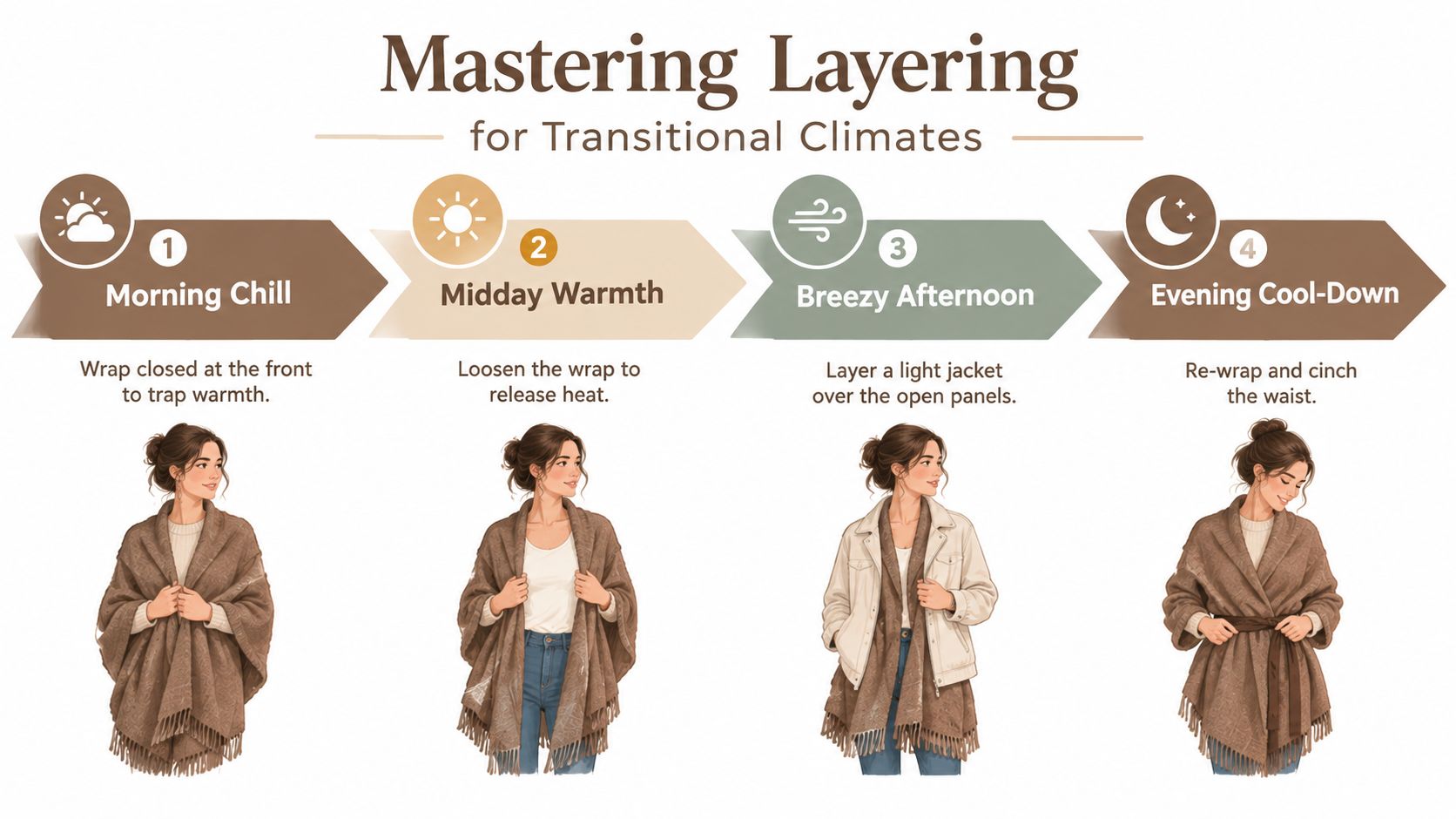
A white wrap sweater earns its place in weather that keeps changing. The overlap traps still air, so the warmth comes from structure, not bulk. Cashmere's thermal behavior lets the knit sit close to the body and still feel light when the fabric is chosen well.
Build the day around temperature shifts
Use the white wrap sweater as a responsive layer. In the morning, close it fully so the front panels hold warmth at the torso. By midday, loosen the tie a touch if the room gets hot. Step outside into wind, and add a light jacket over the open front. At night, cinch the waist again and let the knit do the insulating work.
The right version depends on how you move between indoors and out. A more open knit breathes more easily. A denser knit holds more heat. Neither is automatically better. Pick the one that matches your day.
Keep the base layer quiet
The base layer should disappear under the knit. Use smooth camisoles, fine tees, or slim long sleeves with low texture and no bulky seams. Anything lacy, ribbed, or rough creates friction and shows through white cashmere in the worst way.
If the underlayer catches, the wrap will not drape cleanly. Smooth is safer than decorative.
A coat or blazer works only if it leaves room in the shoulders and across the front panels. When the outer layer crushes the knit, the wrap loses shape fast. White cashmere shows that pressure faster than darker knits do, so keep the top layer roomy and clean.
The same rule applies to bags and straps. If they rub the tie or front edge all day, they will wear the sweater down where it matters most.
Preventing Yellowing Pilling and Stretching
White cashmere stays bright when you control wear and care early. Friction and careless handling do most of the damage. A white wrap sweater makes that harder because the front edges, tie, and underarm overlap all rub against skin, coats, and bags. Treat those zones like high-contact areas.
Use restraint before you reach for the wash
Keep makeup, hand cream, fragrance, and dark bag straps away from the front overlap. Skip rough denim seams when you can, and do not let the knit sit against damp coats or dyed accessories for long stretches. White cashmere shows lazy habits fast.
A small mark calls for spot-cleaning first. If the sweater smells fine and only looks creased from wear, air it out. Cashmere resists odor and wrinkles better than many people expect, so washing after every wear is unnecessary and hard on the shape.
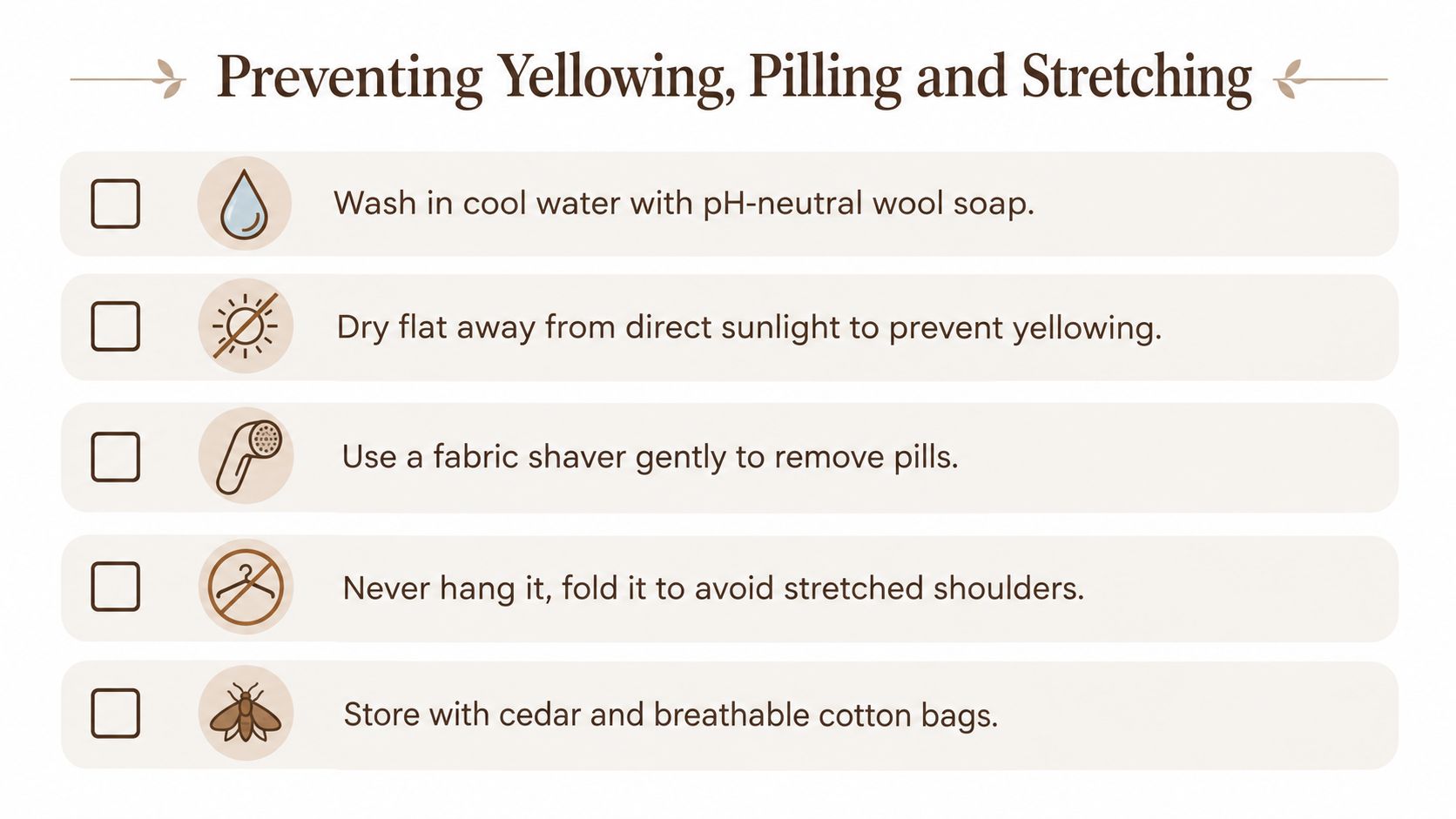
For full cleaning, follow the CFDA's guidance for cashmere care, which recommends washing infrequently, using cool water, avoiding agitation, bleach, and strong detergents, and drying flat; it also warns that combs and shavers can damage fibers (CFDA cashmere care guide). See our complete cashmere care instructions for washing and storage specifics. The wrap shape needs extra attention at the edges and belt channels so they do not stretch while drying.
Fillaree's bleach-free laundry guide is useful if you want more ways to keep whites bright without bleach.
Dry flat, store smart, and stop the pilling spiral
Never hang a wet or freshly washed wrap sweater. Gravity will distort the shoulders, lengthen the front panels, and pull the tie area out of shape. Dry it flat, reshape it gently, and keep it out of direct sunlight so the white does not dull unevenly.
- Wash in cool water with a wool-safe detergent.
- Dry flat on a clean towel, away from sunlight.
- Remove pills gently with a fabric shaver only when needed.
- Fold it for storage rather than hanging it.
- Store it breathing, not sealed in a way that traps moisture.
A brush or shaver should be reserved for occasional touch-ups. If pilling keeps returning in the same place, friction is usually the cause rather than a defective garment, so adjust how you wear it before questioning the knit.
Building a Timeless Capsule Around Your Wrap
A white wrap sweater earns a permanent place in a serious wardrobe because it does real work. It softens denim, sharpens trousers, layers cleanly under a coat, and still looks appropriate for evening. Few knitwear pieces move through that many settings without losing polish.
Choose future cashmere with a sharp eye. Look for clear fiber information, construction that holds the shape, and a fit that works while standing, sitting, and moving. If the sweater only looks right in a perfect mirror pose, skip it. If it stays elegant in motion, keep it.
Keep the rotation disciplined
Wear it often, but not carelessly. Rotate it between wears so moisture can leave the fibers. Keep rough textures away from the overlap and the waist tie, where friction creates pilling fastest. Wash only when the garment needs it. Those habits preserve both the look and the life of the knit.
Keep bright white cashmere bright without overworking it. Spot clean when you can, and use Fillaree's bleach-free laundry guide for gentler whitening methods when a full wash is not the answer.
White has range and clarity, which is why it still belongs in a refined wardrobe. A white wrap sweater remains one of the smartest luxury basics you can own.
The result is a piece that anchors the closet instead of drifting on the edge of it.