
Cashmere Wrap Dress Guide: Fit, Fabric and Care
You're looking for a dress that can handle a desk meeting, dinner afterward, and a chilly journey home without a complete outfit change. A cashmere wrap dress sounds right, until the neckline shifts when you sit, the waist knot feels bulky, or you wonder how to wash that long knitted skirt without stretching it. The difference between an easy wardrobe staple and an expensive frustration usually comes down to fabric, overlap, and shape control, not styling alone.
Table of Contents
- What a Cashmere Wrap Dress Is and Why the Wrap Works
- How Cashmere Fabric Behaves in a Wrap Dress
- Measuring for a Wrap Dress That Fits
- Choosing a Wrap Dress Silhouette for Your Body Shape
- Layering a Cashmere Wrap Dress Through the Seasons
- How to Wash and Store a Cashmere Wrap Dress
- Checking Traceability and Welfare Claims Before You Buy
What a Cashmere Wrap Dress Is and Why the Wrap Works
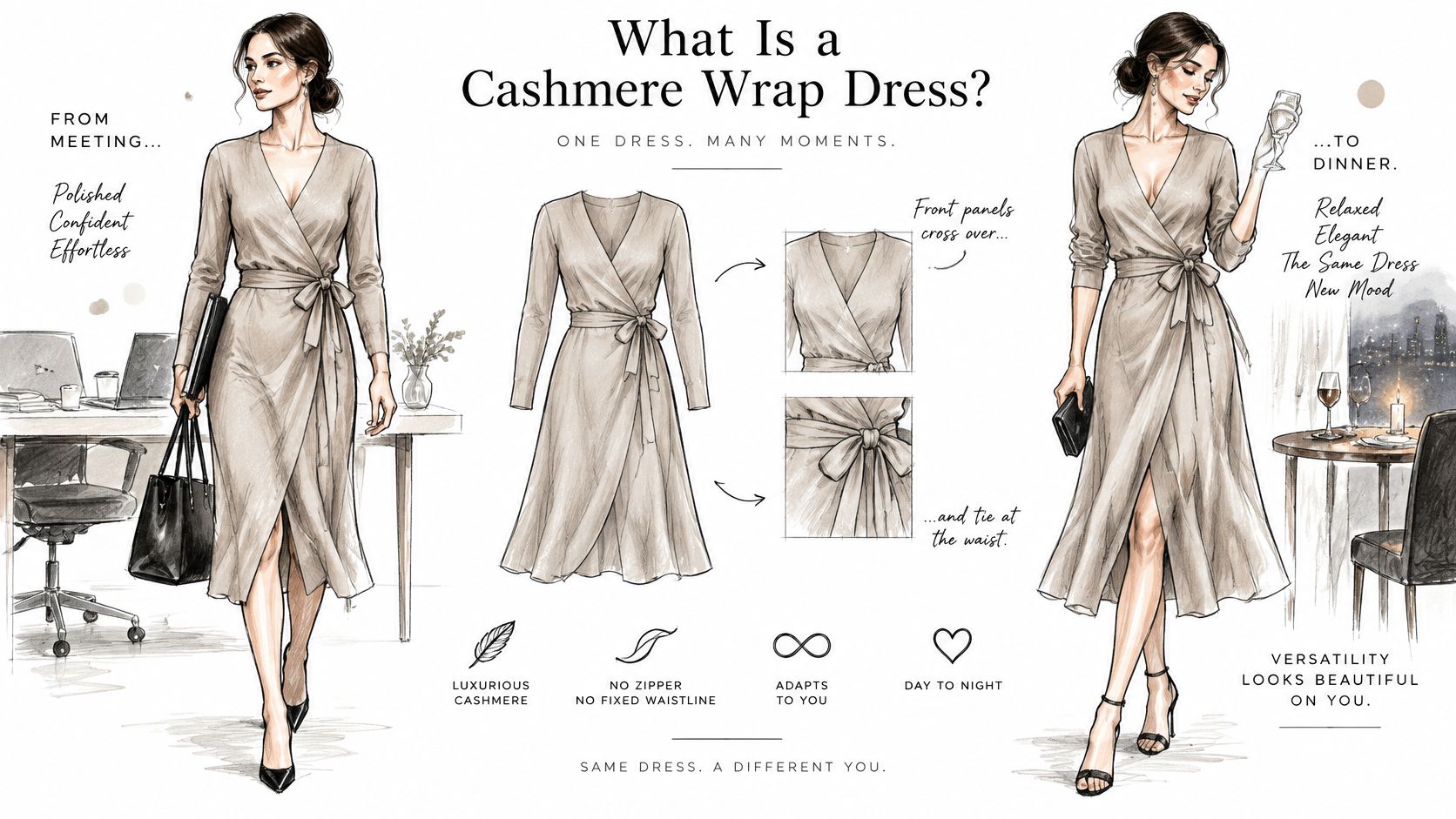
A cashmere wrap dress is a knitted dress whose front panels cross over and fasten with a waist tie. Unlike a fixed-waist knit dress, a true wrap lets you adjust the closure without relying on a zip or a precisely fitted waistband.
The mechanics are straightforward. The front overlap provides coverage, the tie establishes the waist, and the skirt falls from the hip rather than being held in place by rigid tailoring.
For a working day followed by dinner, that means you can change shoes and outerwear without rebuilding the outfit. It doesn't mean the dress fits every body automatically, because the shoulders, sleeves, and front-panel width remain fixed.
Why the Construction Has Lasted
Diane von Furstenberg introduced her knitted jersey wrap dress in 1974, and historical accounts describe approximately 5 million dresses sold within two years, according to Stylist's history of the wrap dress. That success established the appeal of an adjustable silhouette that looked structured without conventional tailoring.
Cashmere changes the feel of that construction. Its softness and insulation make the dress useful for transitional weather, while the knitted fabric produces a gentler outline than a crisp woven wrap.
This illustration shows the intended shift from office to evening.
Recognizing a True Wrap
Look for these construction features rather than relying on the product name:
- An overlapping front with enough fabric beneath the visible edge.
- A functional tie, not merely a decorative belt.
- An adjustable waist that changes the closure tension.
- A skirt extending below the waist, whose weight needs support during care.
A faux wrap may resemble this shape but have a permanently stitched front. That can offer more predictable coverage, though it sacrifices some adjustment.
If you're assessing a garment for sewing or alteration, Display Guru's dress form roundup is useful for choosing a form on which to examine panel balance and tie placement. Still, judge the finished dress on a moving body, not just a stationary form.
How Cashmere Fabric Behaves in a Wrap Dress
Fiber diameter helps explain softness, but it doesn't tell you whether a dress will keep its shape. Fine fibers bend readily against the skin; the yarn and knitted structure determine how well the garment manages movement and repeated tension.
A wrap dress makes those differences noticeable. The neckline must remain stable, the tie must tolerate knotting, and the skirt must drape without becoming limp or excessively transparent.
Fabric Specifications and What They Mean in a Wrap Dress
| Specification | Typical value or range | Effect in a wrap dress |
|---|---|---|
| Fiber diameter | Approximately 14–15.5 microns for the stated fine-grade product specification | A soft hand and reduced prickle, but not a durability guarantee |
| Commercial cashmere ceiling | Generally at or below 19 microns | Fineness helps distinguish the expected cashmere feel |
| Fiber length | Seek control of short fibers, particularly those below approximately 7.5 mm | Short fibers are particularly associated with pilling |
| Yarn ply | Single-ply or multi-ply | Changes fabric body, coverage, breathability, and warmth alongside knit density |
| Knit type | Plain knit or looser open knit | Changes airflow and drape; open structures need careful shape control |
| Construction finish | Reinforced waist tie and side seams | Helps manage repeated tension around the closure |
| Fabric weight | Product-specific weight, read alongside ply and knit density | Weight alone doesn't predict warmth |
The numerical references need context: peer-reviewed cashmere textile research places commercially recognized cashmere generally at or below 19 microns, gives fine knitting grades around 14–15 microns, reports 14.5–16.5 microns for Chinese and Mongolian sources, and identifies fibers shorter than approximately 7.5 mm as particularly associated with pilling. The slightly broader fine-grade range in the table is a product specification, not a universal grading rule.
Cashmere's shorter, smoother scales provide less inter-fiber cohesion than wool's. That contributes to fluid drape and a soft surface, but also creates a trade-off around abrasion, fuzz, and pill formation.
Inspect More Than the Label
Grade A is a starting point, not proof of a well-engineered dress. Ask whether the seller describes composition, yarn construction, and finishing, rather than treating the grade as a complete quality assessment.
Inspect the garment under good light. Look for a reasonably even, low-hairiness surface, consistent stitches, and a tie attachment that doesn't pull the surrounding fabric into a point.
Then stretch a discreet area gently and release it. The knit should recover rather than remain visibly widened; don't pull hard enough to distort it.
Buying rule: Choose softness together with stable construction. A beautifully soft swatch isn't enough if the neckline and tie attachments can't support the finished dress.
Measuring for a Wrap Dress That Fits
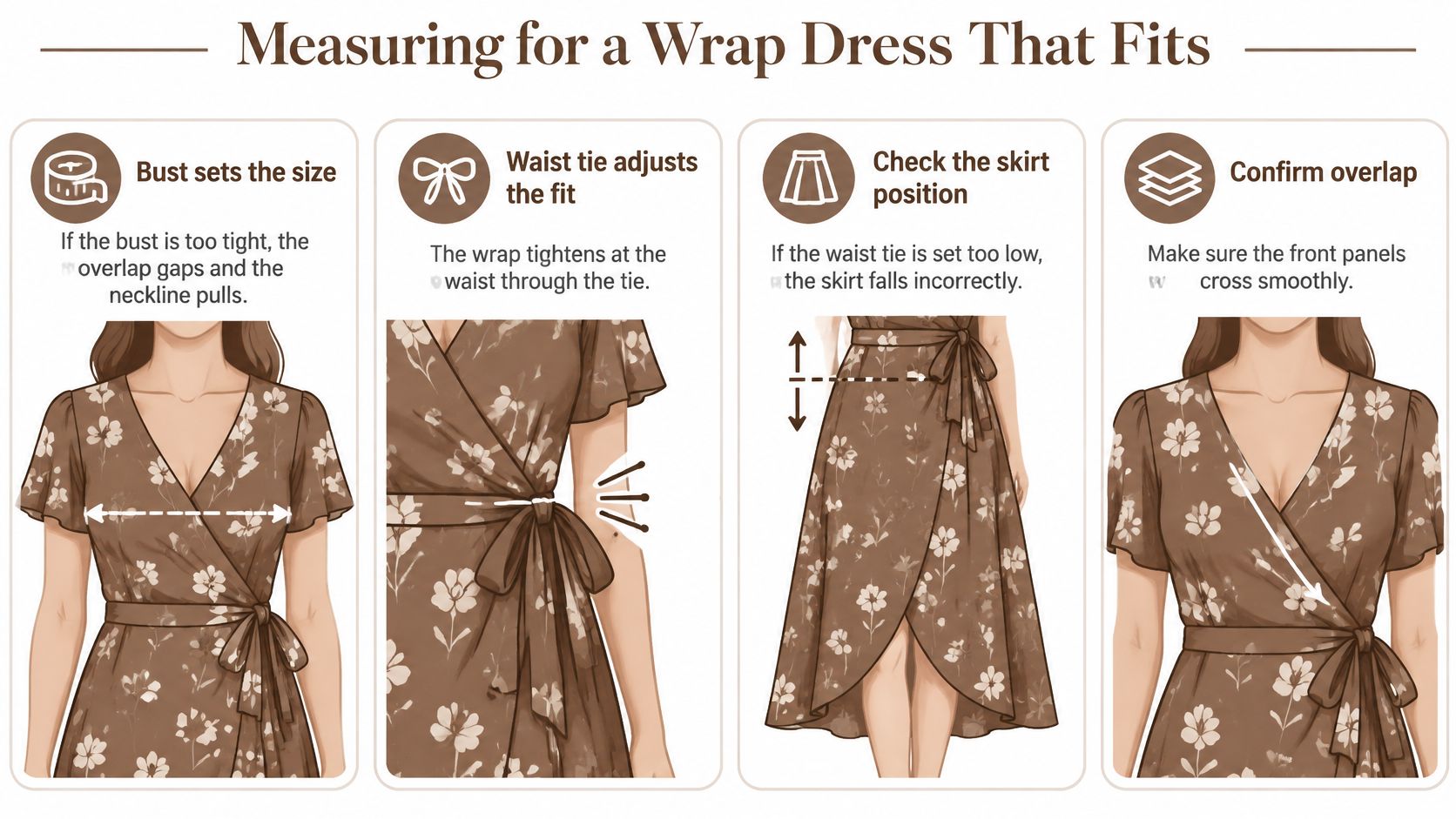
The bust usually sets the size; the tie handles waist adjustment. If the bodice is too narrow, tightening the belt won't solve the problem. It can pull the neckline sideways while reducing the fabric available for coverage.
Use a flexible dressmaking tape over the undergarments or slip you expect to wear. Keep the tape level and comfortably in contact with your body, without compressing it.
Measurements That Set the Fit of a Cashmere Wrap Dress
| Measurement | Where to take it | What it controls |
|---|---|---|
| Bust | Fullest point, tape level, arms relaxed | Overlap depth, neckline position, and bodice strain |
| Waist | Narrowest natural point, or the crease formed when bending sideways | Tie position and skirt balance |
| Hip | Fullest point around the seat and hips | Skirt room and smooth drape |
| Length | Shoulder to the chosen hem | Hem position relative to the knee or calf |
| Upper arm | Fullest point with the arm relaxed | Sleeve comfort and movement |
Compare these measurements with the specific brand's published size chart. Check whether its figures describe the body or the finished garment, because those aren't interchangeable.
No product-specific bust, waist, or hip chart is available here, so there's no reliable centimetre range to copy. If a listing omits those figures, request the chart and garment measurements rather than translating a generic small, medium, or large into an assumed fit.
Use this visual checklist while taking measurements.
Test the Dress in Motion
Cashmere knit can relax during wear, but stretch isn't a reason to size down. A dress that depends on constant stretching for coverage starts with too little usable fabric.
Before removing the tags, test it with the footwear and underwear you intend to use:
- Set the tie naturally. Fasten it at your waist, then loosen it slightly and check whether the bodice remains balanced.
- Sit normally. Cross and uncross your legs, checking both the neckline and the skirt opening.
- Raise your arms. Watch for armholes that drag the entire dress upward or sleeves that bind.
- Walk and turn. Look for a front edge that swings open rather than returning smoothly into place.
- Inspect the back. Horizontal pulling or a sharply riding hem can reveal insufficient hip room.
If the tie sits too low, the bodice can blouse unevenly and the skirt can drop out of alignment. Don't force a fixed belt opening into a position the garment wasn't designed to accommodate.
Choose the size that fits the bust without strain, provided the shoulders and hips also have room. Let the tie refine the waist, not rescue the wrong size.
Choosing a Wrap Dress Silhouette for Your Body Shape
The waist tie works a little like a drawstring: it gathers fabric where you want the eye to rest. But pulling it tighter doesn't necessarily create a better shape, especially when a thick knot adds bulk at the front.
The useful choices are tie position, neckline depth, and skirt length. Treat body-shape categories as styling starting points, not rules about what you're allowed to wear.
Wrap Dress Silhouette Choices by Body Shape
| Body shape | Feature to emphasise | Tie placement | Wrap depth and length |
|---|---|---|---|
| Hourglass | Defined waist | At the natural waist | Medium to deep neckline wrap with secure coverage; knee length |
| Pear | Shoulders and neckline | Slightly above the natural waist, if the construction allows | Deeper neckline, generous panel coverage, and a midi skirt that clears the hips |
| Apple | Legs and neckline | Just below the natural waist only if it sits comfortably | Moderate neckline depth and a fluid midi skirt |
| Rectangle | Waist definition | Securely at the natural waist, without cinching hard | Deeper neckline and a knee-length skirt |
| Petite | Balanced proportions | At the natural waist | Knee or above, with reduced bulk but adequate overlap |
Neckline depth and panel overlap are different things. A deeper V can create a longer visual line through the upper body, while generous underlying coverage keeps the dress practical.
Likewise, a petite wearer doesn't need less coverage. The aim is to avoid unnecessary layers of thick fabric around the waist, not to choose a front that barely closes.
Adjust the Recommendation to the Garment
For a fuller middle, lowering the tie may feel comfortable in one dress and pull the skirt off balance in another. If the belt loops or waist shaping resist that position, choose a different cut rather than fighting the construction.
A shallow neckline can create a more contained upper-body outline. A deeper V can work well with a smooth camisole when you want the visual effect without relying on an exposed neckline.
These are styling choices rather than corrections to a body. The discussion of cashmere dresses as a blend of comfort and style offers a broader way to think about wearing the fabric beyond occasion dressing.
Use a few proportion checks:
- Keep the waist believable. Place the tie where the dress hangs cleanly, rather than following a body-shape label rigidly.
- Watch the hemline. Avoid a short skirt edge ending at the widest part of the hip if you want an uninterrupted line.
- Assess the silhouette seated. A balanced standing pose shouldn't be the only position in which the outfit works.
For mixed proportions, prioritize the measurement that limits the fit. That's often the bust for the bodice and the hips for the skirt, with the waist adjusted only after both are comfortable.
Layering a Cashmere Wrap Dress Through the Seasons
Choose a seasonal outfit around knit structure and your indoor environment, not just the weather forecast. A dress that feels comfortable outdoors can become oppressive in a heated office if you add several insulating layers.
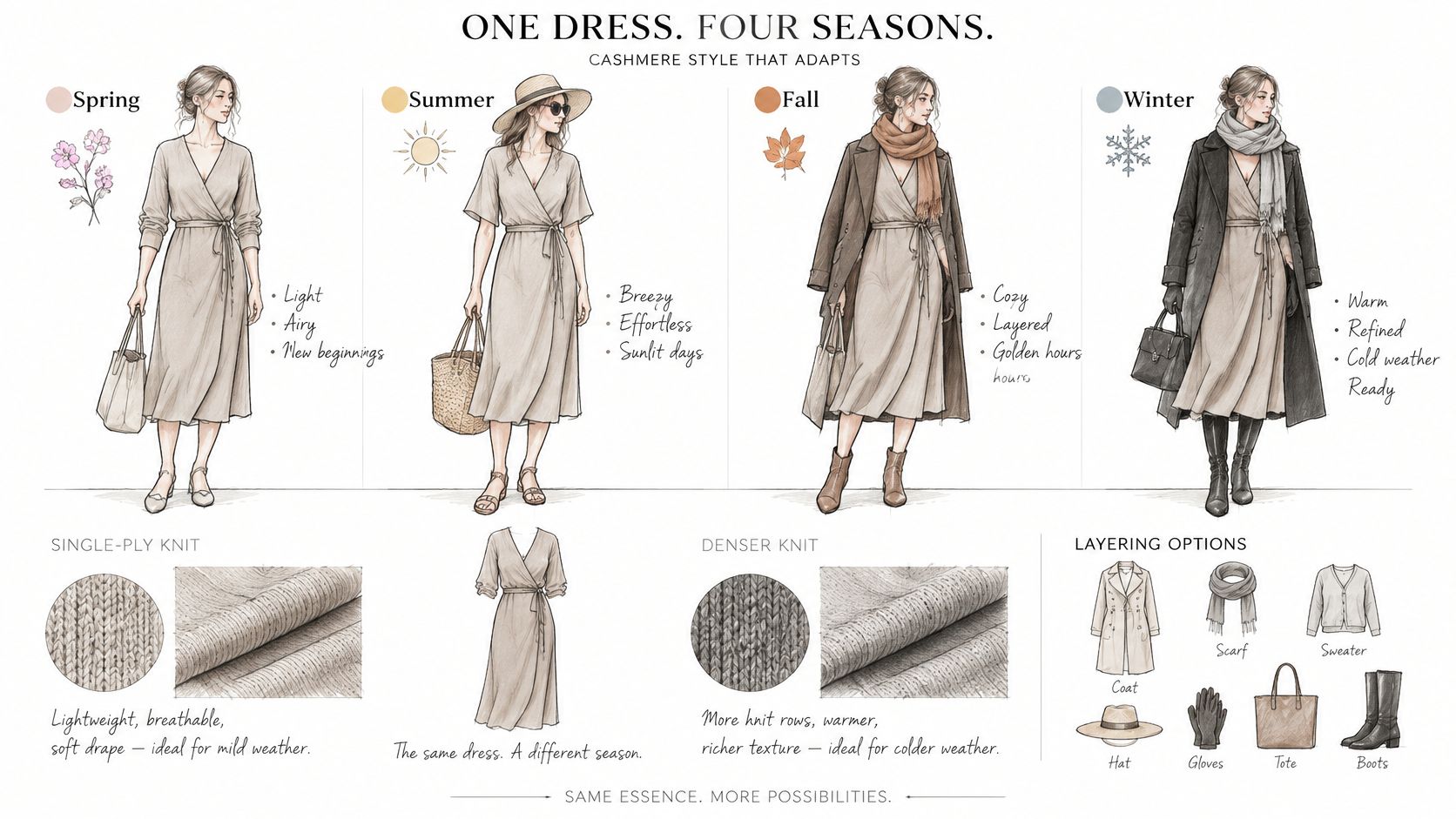
These combinations show how to change the supporting pieces without changing the whole silhouette.
Match the Knit to the Conditions
Experimental work on cashmere knitted fabrics found that knit type, loop tightness, and yarn ply altered thermal resistance, airflow, and water-vapor transport, as described in this cashmere thermal-comfort study. Plain knits had the lowest thermal resistance among the structures tested, while looser constructions increased air permeability.
For spring and early autumn, consider a lighter single-ply knit with tights and ankle boots. For winter, a denser multi-ply construction can work with opaque tights and a long coat, provided the overall outfit doesn't become too warm indoors.
On cool summer evenings, use a lightweight dress with a smooth sleeveless underlayer or a light jacket. Check transparency in daylight before assuming that a fine knit offers enough coverage.
If you prefer separating the layers rather than wearing a knitted dress, these white wrap sweater styling ideas offer an alternative approach to adjustable knitwear.
The video below provides another visual reference alongside those outfit choices.
Reduce Friction Between Layers
A coat that fits over a thin blouse may be too close over an overlapping knitted skirt. Watch for rubbing at the hips, shoulders, and underarms, especially when you walk or carry a bag.
Follow these layering rules:
- Allow room at the hips. Choose a coat that closes without pressing the skirt tightly against its lining.
- Separate hard hardware from the tie. Keep belt buckles, rough zips, and bag fittings away from the knot and waist fabric.
- Avoid loading the front overlap. Carry a bag on the shoulder rather than across the closure, but reposition it if the shoulder strap rubs.
The best seasonal choice is the knit that breathes comfortably in your climate. The heaviest dress isn't automatically the most useful one.
How to Wash and Store a Cashmere Wrap Dress
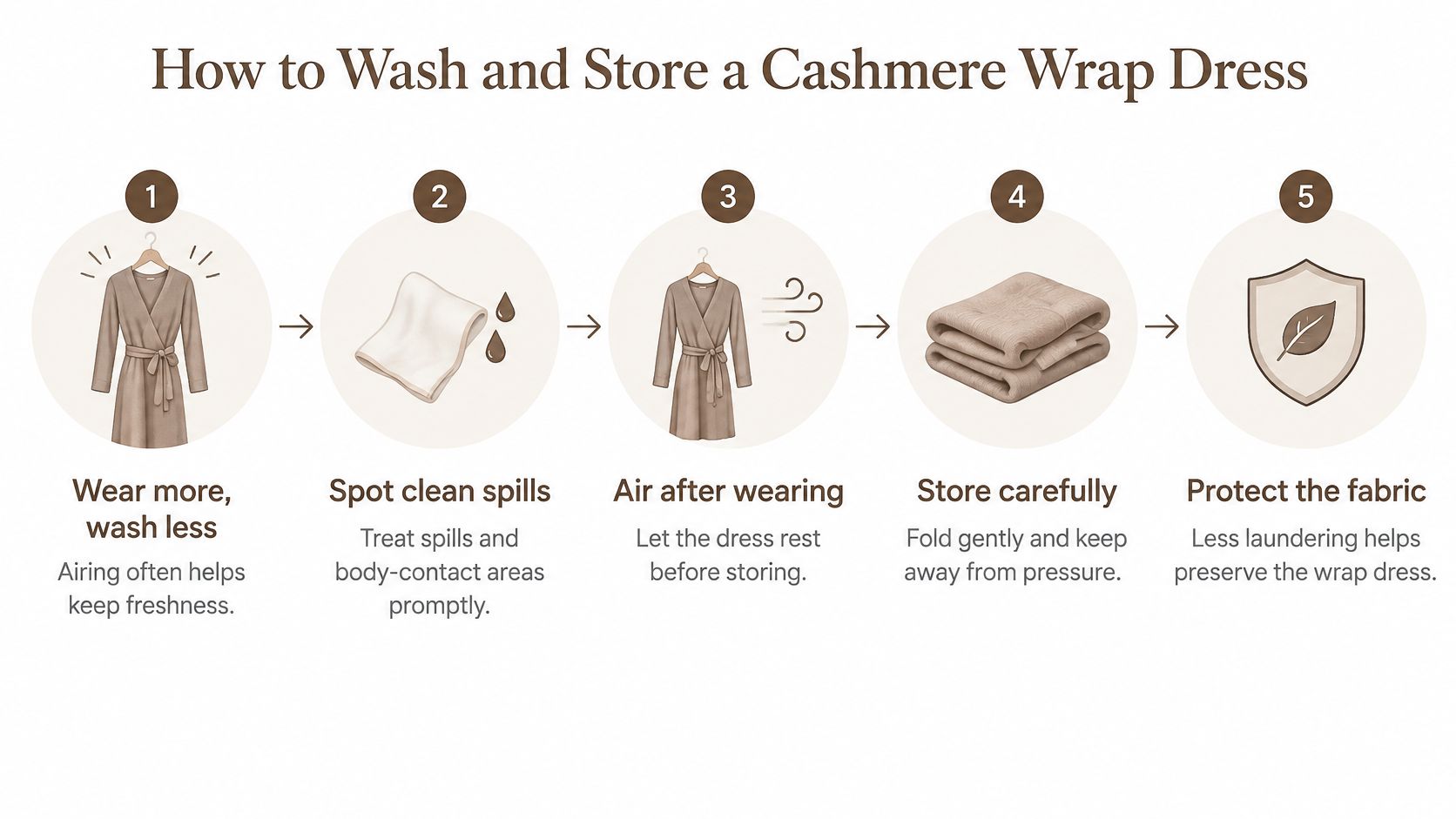
Wash for soil, not because you've worn the dress. Airing between wears can reduce unnecessary laundering, provided you treat spills and inspect body-contact areas promptly.
Cashmere is more vulnerable during wet handling, and agitation can cause distortion, felting, or shrinkage, according to the Helping Hand detailed cashmere-care guide. A dress needs particular care because its wet skirt can pull on the bodice and waist attachments.
Decide Whether a Full Wash Is Appropriate
Read the composition and care label before choosing a method. A lined dress, contrasting trim, embellishment, or dry-clean-only instruction can rule out the hand-washing routine below.
Check the underarms, neckline, and any spill marks rather than following a fixed washing calendar. Wearing a slip may reduce direct contact, but it doesn't guarantee that the dress needs no cleaning.
Keep this care reminder near your laundry supplies.
A Shape-Conscious Washing Routine
Before wetting the dress, lay it flat and record its shoulder-to-hem length, skirt width, and tie length. Photograph the tape positions so you can reshape it consistently afterward.
- Spot-treat first. Blot suitable marks with a clean cloth and cool water, testing an inconspicuous area before using detergent; don't scrub.
- Untie the closure. If hand washing is permitted, use cool water and a cashmere shampoo, keeping detachable ties with the garment so they receive the same treatment.
- Support the whole skirt. Lower the dress into the basin without leaving fabric dangling over the edge, and keep soaking brief.
- Press out moisture. Lift the garment with both hands supporting its weight, then roll it gently in a clean towel without wringing.
- Dry flat and reshape. Arrange the skirt and ties without tension on a dry towel, matching your recorded dimensions and avoiding radiators or direct sun.
- Fold for storage. Let the dress dry completely before folding it on a shelf; never suspend it from its tie or leave the skirt hanging over a drying rack.
Consult our cashmere care instructions alongside the garment label. For persistent odors, oily stains, bleeding dye, or complicated trim, use a cleaner experienced with cashmere rather than experimenting.
Manage Pills Without Thinning the Knit
Early pilling isn't automatically proof of inferior fiber. Loose surface fibers can work free during initial wear, particularly where the tie, arms, and skirt rub.
Lay the dry dress on a firm, flat surface before using a fabric shaver on its gentlest suitable setting. Test inside the hem, make light passes, and avoid seams, ties, and loose stitches; never shave fabric while wearing it.
Care priority: Preserve the fabric, not an artificially flawless surface. Aggressive depilling can do more harm than leaving a little fuzz.
Long-term care also starts with sourcing transparency. Just Style's report on verified cashmere traceability describes the Good Cashmere Standard's welfare, environmental, labor, and management scope, alongside TextileGenesis tracking from origin to finished product. Those systems address provenance, not permission to wash a particular garment.
Checking Traceability and Welfare Claims Before You Buy
The fabric specification can't answer whether the fiber is traceable or whether an animal-welfare claim has been independently verified. Those require evidence separate from softness, construction, and fit.
Keep the product page open while checking its supporting information. A broad statement about responsible sourcing isn't the same as confirmation that the particular garment is covered.
A Product-Page Checklist
- Composition label. Find the cashmere percentage and the names of any other fibers, rather than assuming that cashmere in the title means pure cashmere.
- Origin and processing. Look for the country of fiber origin as well as where spinning, knitting, and finishing took place.
- Named verification. Distinguish a welfare or sourcing standard, such as the Good Cashmere Standard, from a traceability platform such as TextileGenesis.
- Claim scope. Check whether the statement applies to this product, a supplier, or only part of the seller's range.
- Purchase terms. Read shipping and returns conditions before ordering a fit-sensitive garment.
A Grade A label or micron figure doesn't confirm those points. Treat each as a separate line of evidence, and don't infer certification from a premium description.
Also distinguish a wrap accessory from a wrap dress when browsing. Our Pure Cashmere Ruffle Wrap is an accessory, currently on sale for $119.00 USD, with a regular price of $239.00 USD, and is available in 2 colors; its name doesn't indicate a dress construction.
Confirm composition and sourcing claims before deciding on size. Then use your measurements, the relevant size chart, and a realistic movement test to choose a garment you can wear comfortably rather than one you'll spend the day adjusting.
Cashmere Boutique offers women's dresses, robes, pashminas, sweaters, and coats, alongside men's sweaters, robes, and coats. Visit Cashmere Boutique to explore the collections, then compare the garment's composition, sizing information, and care requirements with the way you intend to wear it.