
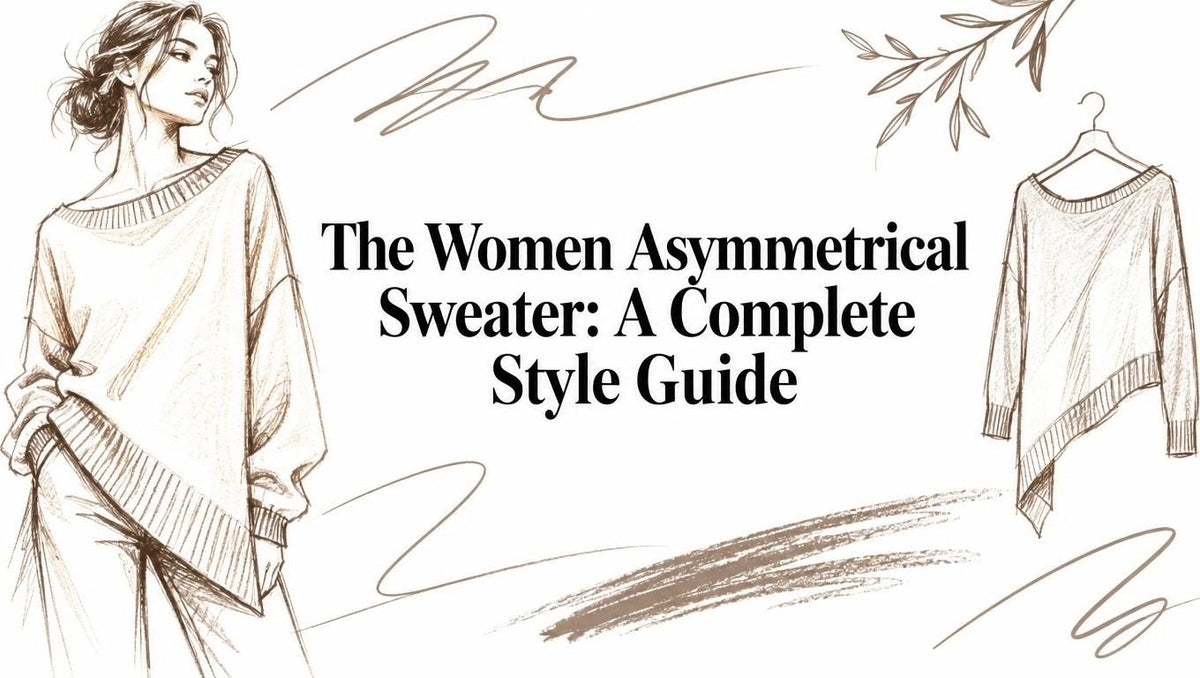
The Women Asymmetrical Sweater: A Complete Style Guide
You're standing in front of a closet full of sweaters that all behave the same way, and still nothing feels quite finished. The shoulders line up, the hems are even, the shapes are safe, yet the outfit doesn't have a point of view. A women asymmetrical sweater solves that problem by giving the eye somewhere specific to land, whether through a slanted hem, an off-center neckline, or a drape that moves a little differently from the rest of the wardrobe.
Table of Contents
- The Appeal of the Uneven Hem
- From Deconstruction to Luxury Craftsmanship
- Exploring Silhouette Options
- Why Cashmere Suits the Asymmetrical Design
- Navigating Fit for Naturally Uneven Bodies
- Styling Rules for Asymmetrical Knitwear
- Investing in Timeless Design Over Fleeting Trends
The Appeal of the Uneven Hem
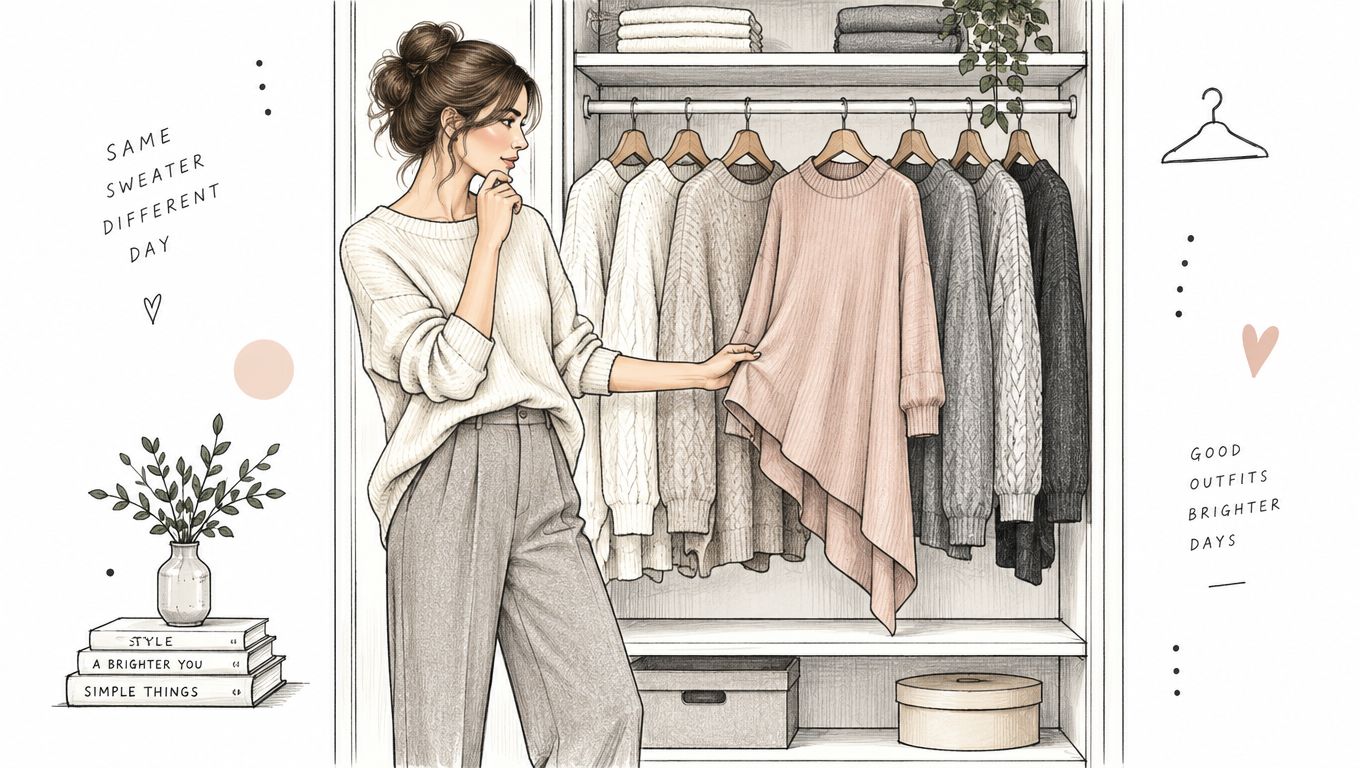
The first time a client tries on an asymmetrical sweater, the reaction is usually quiet, not dramatic. She looks in the mirror, tilts her head, and notices that the garment changes the whole balance of the outfit without needing prints, hardware, or extra layers. That's the appeal of this shape, it creates interest through structure rather than decoration.
Why the shape feels modern
The uneven line reads as intentional. In women's fashion, that matters because it can soften a look that would otherwise feel too expected, especially when the rest of the wardrobe is built on straight-leg denim, fitted trousers, and neutral shoes. A diagonal hem or off-center neckline gives those familiar pieces a new job.
Practical rule: the sweater should look designed, not accidental. If the cut feels random, the shape loses its authority.
That sense of intention is why asymmetry can feel more polished than loud. You don't need a lot of styling to make it work, because the garment is already doing the visual work. Pair it with clean lines and let the sweater be the architecture in the outfit.
Where it earns its place
The best asymmetrical sweaters do two things at once. They create a focal point and they still behave like knitwear, meaning they can be worn often rather than saved for a single look. That balance makes them especially useful for women who want one memorable piece instead of a closet full of trend items.
A women asymmetrical sweater also reads as more personal than a standard crewneck. It suggests taste, not effort. When the shape is handled well, it can make even the simplest jeans look considered.
From Deconstruction to Luxury Craftsmanship
Asymmetry in knitwear did not emerge because the industry wanted novelty for its own sake. The late twentieth century brought a broader turn toward deconstructed and irregular fashion, and the Victoria and Albert Museum identifies Japanese designers, especially Rei Kawakubo of Comme des Garçons, as central to that movement in knitwear Victoria and Albert Museum. Kawakubo helped make irregularity read as deliberate.
The museum's example of a Kawakubo jumper with asymmetrically placed holes makes the point clearly. At first glance, the holes seem random, but they were planned that way, which shows how asymmetry became a controlled design method rather than a production accident. The same VAM history notes that this logic also fits the wider 1980s shift toward oversized silhouettes, batwing sleeves, and unconventional proportions. For premium knitwear, the value lies in how deliberately the irregularity is composed.
Why craftsmanship matters here
A slanted hem or off-center neckline asks more of the pattern than a standard block. The garment has to sit on the body while still feeling relaxed, so the construction has to be precise. In a luxury cashmere sweater, that precision is part of the appeal, because the shape signals authorship.
A disciplined cut can feel more luxurious than a busy one. It gives the eye structure and keeps the design from slipping into costume. For shoppers weighing a premium piece, that is the useful lens. The best asymmetrical sweater frames the body and still leaves room for movement.
Exploring Silhouette Options
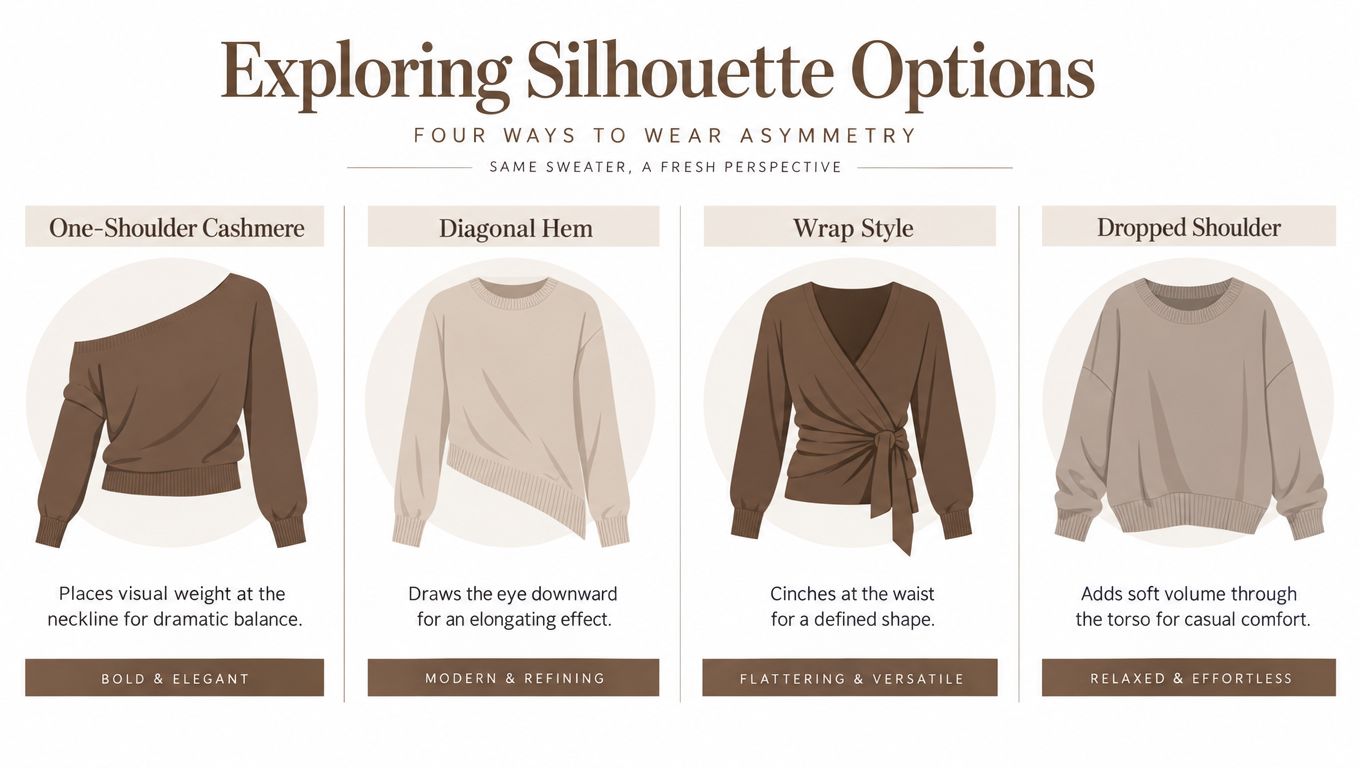
Not every asymmetrical sweater does the same thing, and that's where people often make the wrong choice. One cut emphasizes the shoulders, another stretches the line of the body, and another relaxes the torso enough to feel easy on a long day. The right version depends on where you want the visual weight to sit.
One-shoulder and diagonal hem
A one-shoulder sweater creates the strongest statement. It exposes part of the neckline, so it works best when the rest of the outfit stays clean: well-cut trousers, slim skirts, or a simple high-rise jean. A diagonal hem feels softer and more wearable for daytime, because it draws the eye downward and gives the body a longer line without demanding attention at the shoulder.
Wrap and dropped-shoulder shapes
A wrap style is the most obviously defining at the waist, which helps if you want shape without going fully fitted. A dropped-shoulder version leans casual, and it's the easiest to live in if you want the asymmetry to feel subtle rather than directional.
For a related silhouette with more length and layering ease, see this cashmere duster cardigan reference. It's useful if you like an elongated line but don't want the neckline to do all the work.
If the asymmetry is bold at the top, keep the lower half calm. If the hem is the feature, keep the neckline simple.
That's the true test. Pick the version that supports your posture and your routine, not just the one that looks strongest on a hanger.
Why Cashmere Suits the Asymmetrical Design
Asymmetry reads best when the fabric supports the line instead of fighting it. Stiffer knits can tug the shape out of balance, make the hem sit awkwardly, or turn a deliberate cut into something that looks accidental. Cashmere handles the uneven architecture with more grace because it drapes cleanly, feels light on the body, and still gives the garment enough body to hold its form.
Fiber fineness does a lot of that work. Commercial cashmere samples have been measured at roughly 13.6 to 19.2 microns, and a comparative textile study reported white cashmere at 14.64 microns, finer than wool at 20.39 microns and yak fiber at 22.06 microns Scielo textile study. Finer fibers bend more easily, which matters around the neck and shoulder, where an angled opening presses most directly against the skin.
What to check beyond the fiber label
Micron count helps, but it does not tell the whole story. The same comparative study found that yarn twist, knit gauge, stitch density, finishing, and short-fiber content also affect hand and shape retention. That is why a cashmere piece can still disappoint if the construction is loose or unstable.
For a premium women asymmetrical sweater, a fine-gauge knit usually handles diagonal lines better than a very open structure. The uneven shape places localized tension on seams and hems, so a stable knit gives the garment a better chance of keeping its line through regular wear.
A women asymmetrical sweater earns its luxury status when the knit supports the design as well as the feel. The best pieces do both.
For a practical buying checklist on material quality, this guide to choosing high-quality cashmere is a useful place to compare fiber expectations with construction details.
Navigating Fit for Naturally Uneven Bodies
A sweater that looks refined on a hanger can still feel wrong the moment it meets a real body. Shoulders sit at different heights, one arm reaches differently, posture shifts the fall of fabric, and an asymmetrical design makes those differences more visible, not less.
The strongest fit guidance starts with separate measurements. If one shoulder sits lower, the neckline may need to anchor to the higher side, or the garment can look as if it is sliding when it is not. If the hem is diagonal, check whether the shorter side clears the hip cleanly or catches and creates drag. For a worked example of a classic cut in a rich neutral, see this brown cashmere sweater for women and compare how its even hem behaves against a diagonal one.
What asymmetry can solve
Research on clothing design treats body asymmetry as a real fit problem, not a minor exception. It also notes that mainstream clothing is often not well adapted to unusual body dimensions, and that dressing ease can matter as much as appearance for some disabled and older consumers Juniper Publishers. The same analysis, drawing on 520 women from the 6,814-person SizeUSA database, found that left-right differences can require pattern alterations, and related research says a shoulder-slope difference greater than 1/8 inch may justify an asymmetric pattern.
That matters in practical wear. A sweater with an off-center neckline can work with a lower shoulder instead of fighting it. A diagonal hem can sit more cleanly on a body that is not perfectly level.
The most useful fit questions are simple:
- Shoulder alignment: Does the neckline sit where you want it, or does it drift?
- Hem behavior: Does the longer side hang smoothly, or does it twist?
- Movement: Does it stay comfortable when you sit, reach, or layer underneath?
- Side-specific needs: Can it accommodate a bra strap, prosthesis, wheelchair posture, or limited shoulder movement?
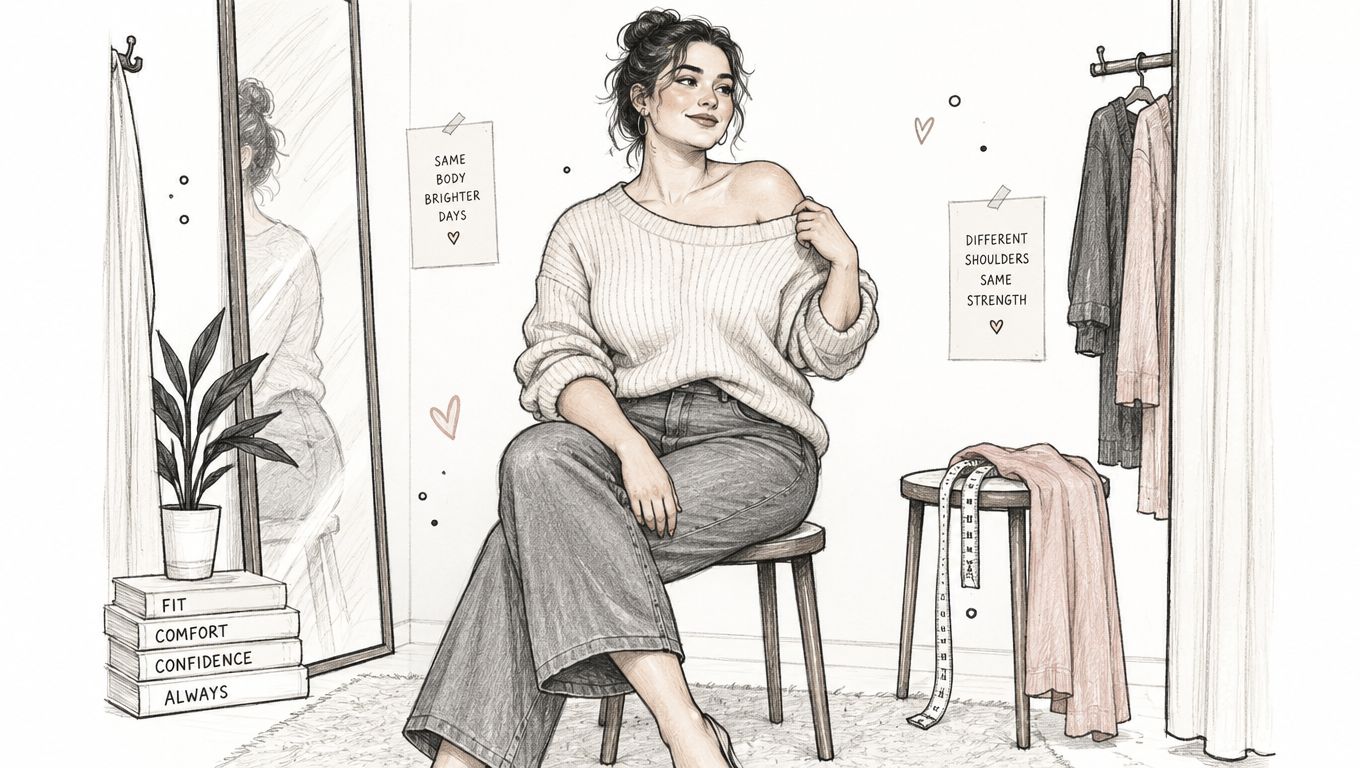
A good asymmetrical sweater should cooperate with your body, not ask it to correct itself. That is the difference between a design detail and a fit solution.
A simple test helps. If the sweater looks interesting but feels fussy when you move, it is the wrong cut.
Styling Rules for Asymmetrical Knitwear
The safest styling rule is also the most effective one, let the sweater be the focal point. If the knit already introduces a diagonal line, a slash neckline, or an uneven hem, the rest of the outfit should calm things down. Clean bottoms and restrained accessories usually make the sweater look more expensive.
A women asymmetrical sweater works especially well with fitted trousers, straight-leg denim, or a pencil skirt. Those shapes don't compete with the cut, so the sweater keeps its line. If you pair an uneven hem with volume on the bottom, the outfit can lose clarity fast.
Layering without losing the shape
Outerwear needs room. A structured coat can work over asymmetrical knitwear, but only if it's cut generously enough to avoid bunching at the shoulder or side seam. If the coat is tight through the upper body, the sweater's line gets compressed and the effect disappears.
Scarves need the same kind of restraint. A heavy loop scarf can crowd a slanted neckline, while a slimmer layer leaves the opening visible. Jewelry works best when it reinforces the shape instead of repeating it, which is where a set from the JewelryBuyDirect winter collection can be useful for finding cleaner, seasonally appropriate pieces.
Practical rule: the more directional the knit, the simpler the rest of the outfit should be.
That also applies to underlayers. With one-shoulder styles, bra compatibility should be checked before the sweater goes into regular rotation. If the silhouette is meant to be the statement, underpinnings shouldn't fight for attention.
Keep the outfit disciplined and the sweater looks intentional. Let the rest of the look whisper.
Investing in Timeless Design Over Fleeting Trends
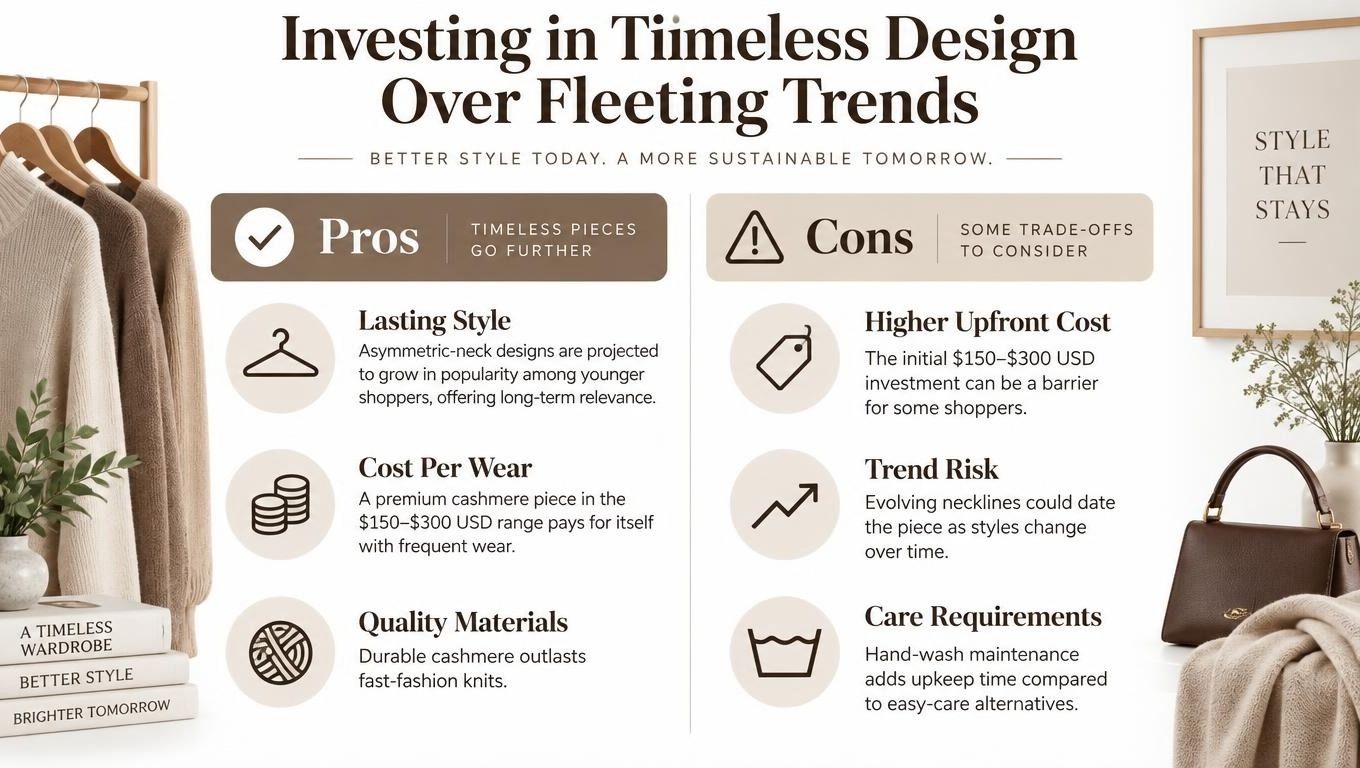
Trend reports point to asymmetric-neck styles gaining attention in upcoming seasons, especially among younger shoppers Heuritech trend report. That doesn't automatically make every asymmetrical sweater a wise buy. A piece can be current and still be awkward to wear if the neckline limits layering, the hem catches under outerwear, or the fabric can't hold its shape.
The better question is whether the sweater earns repeat wear. Premium cashmere has a stronger case when the design is distinctive but not brittle, and when the cut feels relevant beyond one styling cycle. An asymmetrical silhouette with clean construction can stay interesting because it changes the mood of familiar pieces, not because it depends on novelty.
How to judge value
The most useful investment test is simple. If you can imagine wearing the sweater with denim, well-cut trousers, and under a coat, it has range. If it only works for a specific event or a highly curated outfit, it's closer to a fashion moment.
There's also the maintenance side. More directional necklines and hems tend to demand more attention in wear, so the buy only makes sense if the construction is strong enough to justify the upkeep. In cashmere, that usually means you're paying for fabric quality, balanced patterning, and the kind of design that still looks thoughtful after the first season.
A women asymmetrical sweater is worth buying when it adds clarity to your wardrobe, not clutter. If it makes your simplest clothes feel more composed, it's doing real work.
If you want one piece that combines sculptural design, thoughtful cashmere, and a silhouette that holds up beyond a passing trend, visit Cashmere Boutique. You'll find cashmere styles that make asymmetry feel deliberate, wearable, and refined. It's the right place to look if you're choosing one unconventional sweater that can carry a lot of your wardrobe with very little effort.